
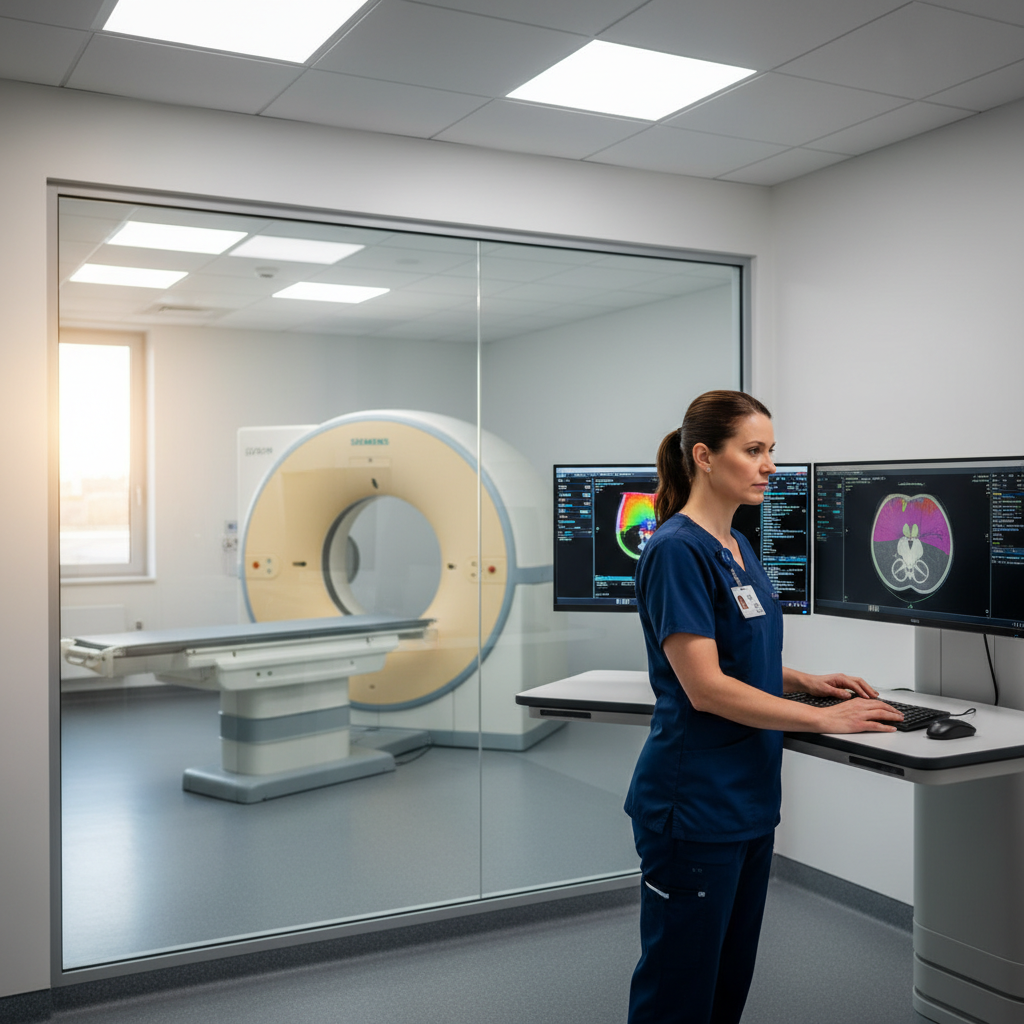
If you are already working as a nuclear medicine tech, you have noticed the shift. PET/CT scans are no longer the specialty procedure tucked into a corner of the department — they are becoming standard oncology protocol, cardiac workup staples, and neurological diagnostic tools. Employers are actively seeking dual-credentialed technologists who can handle both traditional nuclear medicine studies and the growing PET/CT caseload.
Adding PET CT certification to your nuclear medicine tech credential is not just a resume booster. It is a strategic career move that opens doors to higher pay, more flexible scheduling, and travel opportunities across the country. The good news? The pathway is clear, and 2026 is an ideal year to make it happen.
This guide walks you through every step — from understanding the training requirements to passing the exam to negotiating your new salary once you are dual-credentialed.
Why PET/CT Credentialing Matters in 2026
The demand for PET/CT imaging has grown steadily over the past decade, driven by advances in oncology treatment planning, early Alzheimer detection, and cardiac viability studies. Many hospitals and outpatient imaging centers now require or strongly prefer technologists who hold both the Nuclear Medicine Technology Certification Board (NMTCB) or American Registry of Radiologic Technologists (ARRT) nuclear medicine credential and a PET specialty certification.
Here is what dual credentialing unlocks:
- Salary increase: Technologists with PET certification typically earn $4–$8 more per hour than those with nuclear medicine credentials alone. In high-demand markets, that gap widens further.
- Job mobility: Travel nuclear medicine tech assignments often require PET/CT competency. Dual credentials make you eligible for premium contracts in competitive metro areas.
- Scheduling flexibility: Facilities with combined nuc med and PET/CT departments prefer cross-trained staff who can float between modalities, which often translates to better shift options.
- Future-proofing: As imaging technology evolves, employers increasingly expect technologists to demonstrate expertise across multiple modalities. PET/CT is the logical next step for nuc med professionals.
Step 1: Meet the Eligibility Requirements
Before you can sit for a PET certification exam, you need to ensure you meet the baseline qualifications. Both the NMTCB and ARRT offer PET specialty credentials, and the requirements are similar but not identical.
NMTCB PET Certification
To qualify for the NMTCB PET exam, you must hold a current CNMT (Certified Nuclear Medicine Technologist) credential and document at least 300 hours of PET/CT clinical experience within the past three years. Those 300 hours can come from on-the-job training, a structured clinical rotation, or a combination of both.
ARRT PET Certification
If you hold the ARRT(N) credential in nuclear medicine, you can apply for the ARRT PET certification by completing 16 continuing education credits specific to PET imaging and documenting hands-on clinical experience. The ARRT does not require a specific hour count but does require you to log procedures across key competency areas.
Most technologists find the NMTCB pathway more straightforward if they are already CNMT-certified, but your choice may depend on which credential your current or future employer values more. Check job postings in your target market to see which certification appears most frequently.
Step 2: Complete Your Clinical Training Hours
The 300-hour clinical requirement is where most technologists invest the bulk of their preparation time. If your current facility has a PET/CT scanner, ask your manager about setting up a structured training rotation. Many departments are willing to cross-train existing nuclear medicine staff, especially if it helps them fill scheduling gaps.
If your facility does not have PET/CT capabilities, you have a few options:
- Partner hospital rotations: Reach out to larger hospitals or imaging centers in your area and inquire about externship or observer opportunities. Some facilities welcome credentialed nuc med techs who want to build PET competency.
- Formal PET training programs: Several universities and imaging schools offer short-term PET/CT certificate programs that combine didactic coursework with supervised clinical hours. These programs typically run 8–12 weeks.
- PRN or per-diem work: Some technologists pick up PRN shifts at facilities with PET/CT scanners specifically to log hours. This approach takes longer but offers flexibility if you are working full-time elsewhere.
Keep detailed logs of your procedures. You will need to document the types of scans you performed, the radiopharmaceuticals used, and the supervising technologist or physician. This documentation is required when you submit your certification application.
Step 3: Study for the PET Certification Exam
Once you have logged your clinical hours, it is time to prepare for the written exam. Both the NMTCB and ARRT PET exams cover similar content areas, but the question formats and emphasis differ slightly.
Core Content Areas
Expect questions on:
- PET radiopharmaceuticals (F-18 FDG, Rb-82, others) — production, handling, quality control
- Patient preparation protocols and contraindications
- PET/CT scanner physics and instrumentation
- Image acquisition, reconstruction, and artifact recognition
- Radiation safety and dose optimization specific to PET
- Clinical applications in oncology, cardiology, and neurology
Study Resources
Most successful candidates use a combination of:
- Official NMTCB or ARRT exam content outlines (free downloads from their websites)
- Review courses offered by professional organizations like SNMMI (Society of Nuclear Medicine and Molecular Imaging)
- PET-specific textbooks such as Fundamentals of Nuclear Medicine Dosimetry or PET/CT: A Case-Based Approach
- Practice exams and question banks (available through third-party test prep companies)
Plan for 6–8 weeks of focused study if you are working full-time. Many technologists find that setting aside 1–2 hours per day, five days a week, is enough to feel confident on exam day.
Step 4: Schedule and Pass Your Exam
Once you feel prepared, submit your application and schedule your exam. Both NMTCB and ARRT exams are computer-based and administered at testing centers nationwide. You will receive your results immediately upon completion — a huge relief after weeks of preparation.
The NMTCB PET exam consists of 115 scored questions, and you need a scaled score of 75 or higher to pass. The ARRT PET exam has 100 questions with a similar passing threshold. Most candidates report that the exams are challenging but fair, especially if you have solid clinical experience to back up your studying.
Step 5: Negotiate Your New Salary and Explore Opportunities
Once you pass your PET certification exam, update your resume, your LinkedIn profile, and your employee file at work. If you are staying with your current employer, schedule a meeting with your manager to discuss a pay adjustment. Come prepared with market data — search job postings for dual-credentialed nuclear medicine techs in your region and note the salary ranges.
If you are ready to explore new opportunities, this is an ideal time to consider travel assignments or permanent relocation to high-demand markets. Cities with large cancer centers, academic medical centers, and outpatient PET imaging networks consistently seek dual-credentialed technologists. Expect to see offers in the $38–$52/hour range for staff positions, and $45–$65/hour for travel contracts, depending on location and experience.
Ready to Take the Next Step in Your Imaging Career?
Adding PET CT certification to your nuclear medicine tech credentials is one of the most strategic moves you can make in 2026. The pathway is well-defined, the investment is manageable, and the career payoff is real — higher pay, better job mobility, and the satisfaction of mastering a high-impact imaging modality.
If you are exploring new roles or want to talk through your options with someone who understands the imaging job market, the Intuites Recruiting Team is here to help. Whether you are looking for your next staff position, considering travel contracts, or just want to know what is out there, we would love to hear from you. Reach out anytime at contact@intuites.healthcare or visit intuites.healthcare to learn more. ✨
#NuclearMedicineTech #PETCTCertification #ImagingCredentials #NucMedCareer #RadiologicTechnology #MedicalImaging #HealthcareCareers #NMTCB #ARRT #PETScanner #DiagnosticImaging #TravelRadTech #ImagingJobs #HealthcareStaffing #Intuites
Looking for a healthcare team that truly sees your value?
The Intuites Recruiting Team is here to listen, support your career, and connect you with roles across the USA — when you're ready.