
The first code, you run. Adrenaline kicks in before your brain catches up. You grab the bag, check the oxygen, position yourself at the head of the bed. Your hands know what to do.
The second code, two hours later, you're still sharp. Tired, but sharp. You call out your vent settings, you watch the monitor, you coordinate with the team. It's what you trained for.
The third code — 4:47 a.m., ten minutes before you were supposed to chart and go home — that one sits different. You do everything right. You always do everything right. And still.
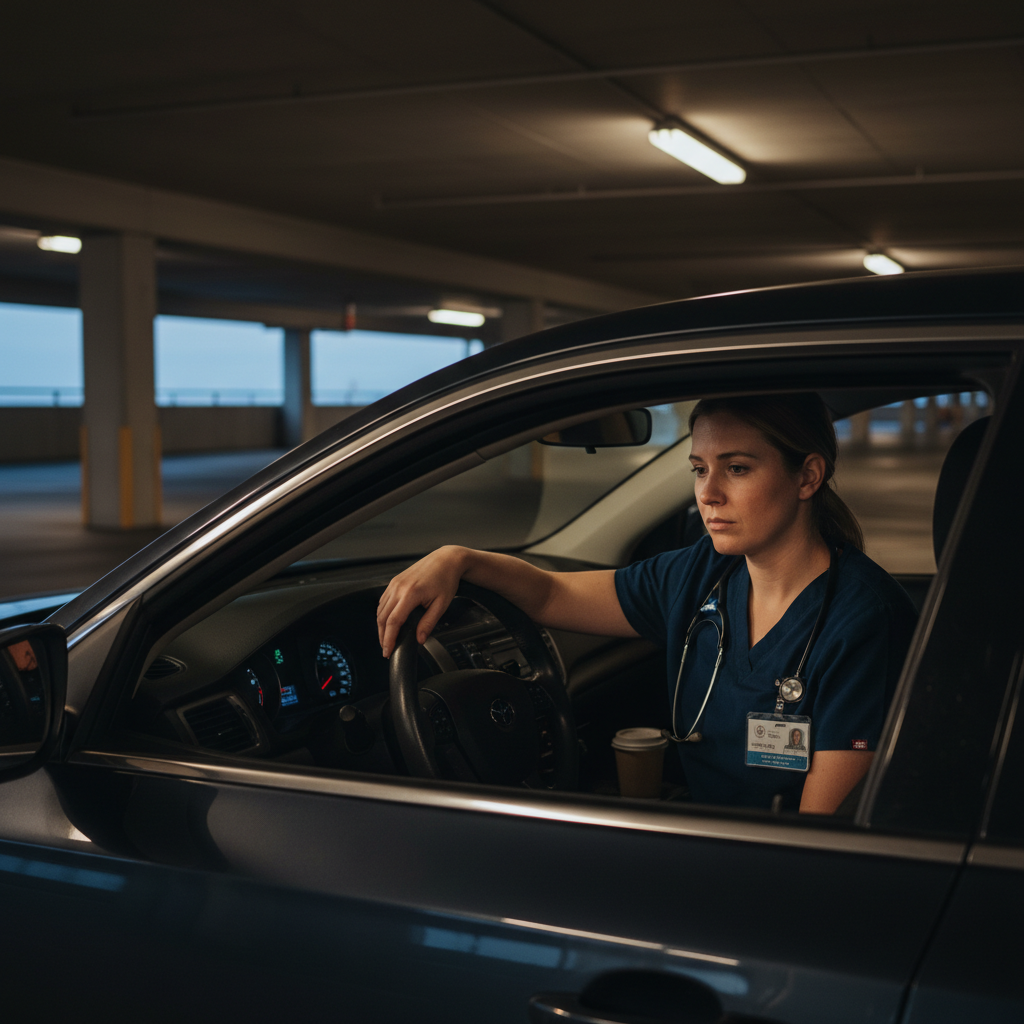
Then you walk to your car in the dark, and you just drive home with the night still on you.
The Part No One Warns You About
Respiratory therapy school teaches you ventilator modes and blood gas interpretation. It teaches you neonatal resuscitation and bronchodilator protocols. It does not teach you what it feels like to be the person who intubates someone for the last time.
It doesn't prepare you for the specific weight of being the airway expert — the one everyone looks to when someone can't breathe, when the oxygen drops, when it's time to make the call about escalating or letting go.
RT burnout isn't always the dramatic kind. It's not always walking off the job or breaking down in the supply room. Sometimes it's quieter. It's the drive home where you can't remember if you stopped at the red light. It's putting your scrubs straight into the wash because you can't stand to look at them. It's texting your coworker “I'm glad you were there tonight” because you both know what that means.
What RTs Witness That Others Don't
You are present at the beginning and the end. You're there for the first breath — sometimes you're the reason there is a first breath. And you're there when breathing stops, when the family hasn't arrived yet, when the code is called and everyone knows it's just protocol now.
Night shift amplifies it. Fewer staff. Longer stretches between moments of lightness. The codes feel different at 3 a.m. The hospital is quieter, which somehow makes it louder when it matters.
Here's what respiratory therapists carry that doesn't show up in job descriptions:
- The memory of every face during every code — not just the patient's, but the nurse's, the resident's, the family member who got there two minutes too late
- The muscle memory of procedures done under pressure, so automatic you could do them in your sleep, which is why you sometimes dream them
- The knowledge that you made the right clinical call, even when the outcome was still loss
- The weight of being the last person to touch someone, to adjust their tube, to suction, to try
Night Shift Reflections: The Drive Home
You don't talk about it right away. Maybe not for hours. Maybe not at all.
You stop for gas and the normalcy feels obscene. People buying lottery tickets and energy drinks. The cashier asks how your night was and you say “fine” because what else is there to say?
You get home and your partner is asleep, or your roommate is making breakfast, or your dog needs to go out, and the world kept spinning while you were in that room doing chest compressions between breaths, counting, watching the monitor, knowing.
Some RTs go straight to bed. Some can't sleep for hours. Some sit in the driveway for twenty minutes before going inside. There is no right way to come down from a night like that.
What matters is that you know: this is part of it. The stamina required isn't just physical. It's the ability to show up the next shift and do it again. To be excellent again. To be the steady one again.
Stamina Isn't the Same as Invincibility
You can be good at your job and still be tired. You can be clinically sound and still feel it. The two things coexist.
Stamina, real stamina, includes knowing when to ask for a minute. When to tag out and let another RT take the next one. When to tell your charge, “I need to step outside.” When to text your group chat at 6 a.m. and say “rough night” and let people send back the heart emoji because sometimes that's enough.
It also means recognizing when the nights are stacking up. When you're not sleeping well even on your days off. When you're snapping at people you love. When the third code isn't the exception anymore — it's just Tuesday.
You didn't get into this work to be a martyr. You got into it because you're good at it, because airways matter, because someone has to be the expert when seconds count. But being the expert doesn't mean you don't get to feel it.
What Helps (When You're Ready)
Not every RT processes the same way. Some need to debrief immediately. Some need silence. Some need dark humor with coworkers who get it. All of those are valid.
What tends to help, over time:
- Finding your people — the RTs, nurses, docs who were in the room and who don't need you to explain
- Protecting your off days fiercely; sleep, sunlight, and something that has nothing to do with medicine
- Talking to someone outside the field when you're ready, whether that's a friend, a therapist, or a partner who can just listen
- Remembering the wins, too — the successful extubations, the patient who walked out, the family who thanked you by name
- Knowing that leaving a job, a shift pattern, or even the bedside for a while isn't failure; it's data
And sometimes what helps is just driving home, windows down, music or silence, and letting the night be what it was. Not minimizing it. Not inflating it. Just acknowledging: that was hard, and I did it, and tomorrow I might do it again.
You're Not Alone in the Car
If you're reading this after a shift like that — after the third code, or the second, or the one that just hit different — you should know: thousands of RTs have driven home in that same silence. Felt that same heaviness. Wondered if they're cut out for this, if it's always going to feel this way, if anyone else gets it.
The answer is yes. We get it. The stamina you have is real. So is the cost.
If you're thinking about a change — different unit, different shift, travel assignments that let you reset between contracts, or even a conversation about what else is out there — that's not weakness. That's wisdom.
The Intuites Recruiting Team works with respiratory therapists all over the country, and we've heard every version of “I love the work, but I need something different right now.” Different can mean a lot of things: days instead of nights, outpatient instead of ICU, short-term travel contracts, or a facility with better staffing ratios. Sometimes just knowing your options helps you breathe easier. If you want to talk through what might fit, reach out anytime at contact@intuites.healthcare or visit intuites.healthcare. No pressure, just real conversation. 🤍
You showed up tonight. You did the work. You made it home. That matters.
#RespiratoryTherapist #RTLife #RespiratoryTherapistStories #RTBurnout #NightShiftReflections #HealthcareHeroes #AlliedHealth #RespiratoryCare #CodeBlue #NightShiftRT #RTStrong #HealthcareStamina #RespiratoryTherapy #MedicalProfessionals #YouAreNotAlone
Looking for a healthcare team that truly sees your value?
The Intuites Recruiting Team is here to listen, support your career, and connect you with roles across the USA — when you're ready.