
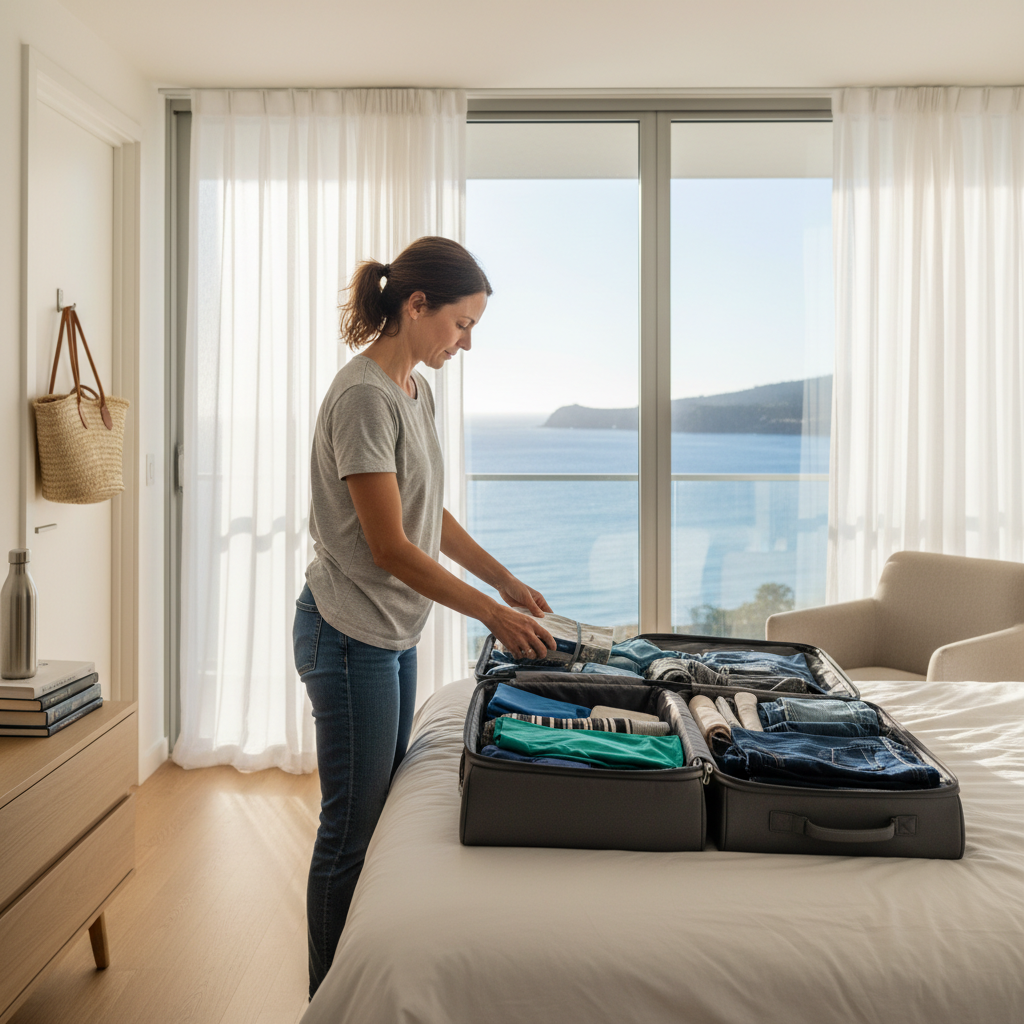
So you landed a coastal travel assignment for the summer. Congratulations—you’re about to trade fluorescent hallways for salt air and sunset commutes. But before you throw your scrubs in a duffel and hit the road, let’s talk about what actually belongs in your suitcase when you’re heading to a beach city.
Coastal travel contracts come with their own quirks. The humidity is real. The housing often lacks the closet space you’d find in the Midwest. And that “fully furnished” apartment? It might have beach-themed decor but zero drawer organizers. This travel nurse packing list is built specifically for summer assignments in places like Charleston, San Diego, Miami, or the Jersey Shore—where the climate, lifestyle, and housing realities are different from your standard landlocked contract.
Here’s what to pack, what to skip, and what you’ll wish you’d brought by week two.
Scrubs and Work Essentials That Survive Humidity
Let’s start with the obvious: your work wardrobe. Coastal humidity is not your cotton scrubs’ friend. If you’re used to packing your favorite soft, well-worn tops, prepare for them to feel damp and clingy the moment you step outside.
Invest in moisture-wicking scrub fabrics—brands like FIGS, Mandala, and Cherokee Infinity offer blends that dry faster and breathe better in sticky climates. Pack at least five to six sets so you’re not doing laundry every other day in a building that may or may not have in-unit washers.
Bring a lightweight jacket or cardigan for over-air-conditioned units. Hospitals near the coast often crank the AC to combat outside heat, and you’ll freeze in the ICU while it’s 85 degrees outside. A thin fleece or zip-up hoodie that fits in your work bag is essential.
Compression socks are non-negotiable, but choose breathable ones. Sweaty feet in twelve-hour shifts are miserable, and coastal facilities often mean more walking between units or even shuttling between buildings near the waterfront.
Housing Realities: What Coastal Rentals Actually Lack
Furnished housing in beach cities tends to prioritize “vacation vibe” over “functional nurse living.” You’ll get a couch, a bed, and maybe some questionable nautical art—but don’t count on practical storage or kitchen basics.
Here’s what to pack or plan to buy in the first week:
- Drawer organizers and storage bins – Coastal apartments often have minimal closet space. Collapsible fabric bins or under-bed storage will save you from living out of your suitcase for thirteen weeks.
- A good fan or portable dehumidifier – Even with AC, coastal humidity lingers. A small fan helps circulate air, and a dehumidifier prevents that musty smell in bathrooms or closets.
- Kitchen staples – Don’t assume you’ll have more than one pot, one pan, and a dull knife. If you cook at all, bring a sharp paring knife, a cutting board, and basic spices. Beach-town grocery stores are pricier than you’re used to.
- Beach towels and a cooler – If you’re near the water, you’ll want to actually enjoy it. Pack a lightweight beach towel and consider grabbing a small cooler at a local store for post-shift beach trips.
- Blackout curtains or a sleep mask – Coastal sunrises are early and bright. If your housing faces east, you’ll be wide awake at 5:45 a.m. whether you want to be or not.
Pro tip: check your housing photos carefully. If the listing shows tile or hardwood floors and minimal rugs, bring slippers or indoor sandals. Sand gets everywhere, and bare floors get gritty fast.
Off-Duty Wardrobe for Beach-City Living
You’re not just working—you’re living in a place where people actually go outside for fun. Your usual leggings-and-hoodie rotation might not cut it when your coworkers invite you to a waterfront happy hour or a Saturday farmers market.
Pack versatile, breathable off-duty clothes. Linen shorts, cotton dresses, and moisture-wicking athletic wear work for both errands and spontaneous beach walks. Bring at least one semi-nice outfit for dinners out or exploring the local food scene—you’ll want to feel put-together without overpacking.
Footwear matters more than you think. You’ll need supportive shoes for work, flip-flops or sandals for everything else, and maybe one pair of casual sneakers for hiking or exploring. Coastal cities often have great walking trails, boardwalks, or bike paths, and you’ll regret not having comfortable shoes for your days off.
Don’t forget a lightweight rain jacket. Summer thunderstorms roll in fast near the coast, and you don’t want to be caught in a downpour between your car and the unit.
The Little Things That Make a Difference
It’s the small stuff that separates a smooth assignment from a frustrating one. These travel nurse essentials won’t take up much space, but you’ll reach for them constantly:
- Reef-safe sunscreen – If you’re near protected beaches, regular sunscreen may be restricted. Bring a mineral-based SPF 50 and reapply obsessively.
- A reusable water bottle with a filter – Coastal tap water sometimes has a distinct taste. A filtered bottle like a Brita or LifeStraw makes hydration easier.
- Bug spray and anti-itch cream – Mosquitoes love coastal evenings. Pack DEET-based spray and hydrocortisone cream for the inevitable bites.
- A small first-aid kit – Blisters from new sandals, minor sunburns, and scrapes from exploring happen. Bring bandages, antibiotic ointment, and ibuprofen.
- Phone charger and portable battery – You’ll be using GPS more than usual, taking photos, and possibly working extra shifts. Keep your devices charged.
If you’re driving to your coastal travel assignment, bring a car phone mount and a good playlist. Coastal traffic can be unpredictable, especially in summer tourist season, and you’ll want navigation that doesn’t drain your battery.
What You Can Skip
Just as important as what to pack is what to leave home. You’re not moving permanently, and coastal housing is usually smaller than you expect.
Skip bulky winter coats, excessive shoes, and your entire book collection. Most beach cities have great libraries, used bookstores, and plenty of outdoor activities that don’t require hauling half your apartment across state lines.
Leave behind expensive jewelry or sentimental items you’d be devastated to lose. Furnished housing is generally safe, but you’re in a temporary space, and things can get misplaced during a quick move-out.
And unless you’re absolutely certain your housing has space, skip the air fryer, Instant Pot, or other small appliances. Coastal kitchens are notoriously tiny, and counter space is at a premium.
Ready to Make Your Coastal Assignment Official?
The right packing list makes all the difference between scrambling to buy basics in an unfamiliar city and settling in smoothly from day one. Whether this is your first coastal travel contract or your fifth summer by the water, packing smart means more time enjoying your assignment and less time stressing over what you forgot.
If you’re exploring travel nurse opportunities along the coast—or anywhere else—our team at Intuites is here to help you find the right fit. We work with nurses at every stage, from first-time travelers to seasoned pros looking for their next adventure. Reach out anytime at contact@intuites.healthcare or visit intuites.healthcare to see what’s available. We’d love to help you land somewhere great. 🌎
#TravelNurse #TravelNursing #TravelNurseLife #CoastalLiving #NursePacking #TravelNurseEssentials #SummerContract #BeachCityNursing #HealthcareTravel #NurseLife #TravelRN #PackingTips #CoastalContract #NurseAdventures #HealthcareStaffing
Looking for a healthcare team that truly sees your value?
The Intuites Recruiting Team is here to listen, support your career, and connect you with roles across the USA — when you're ready.