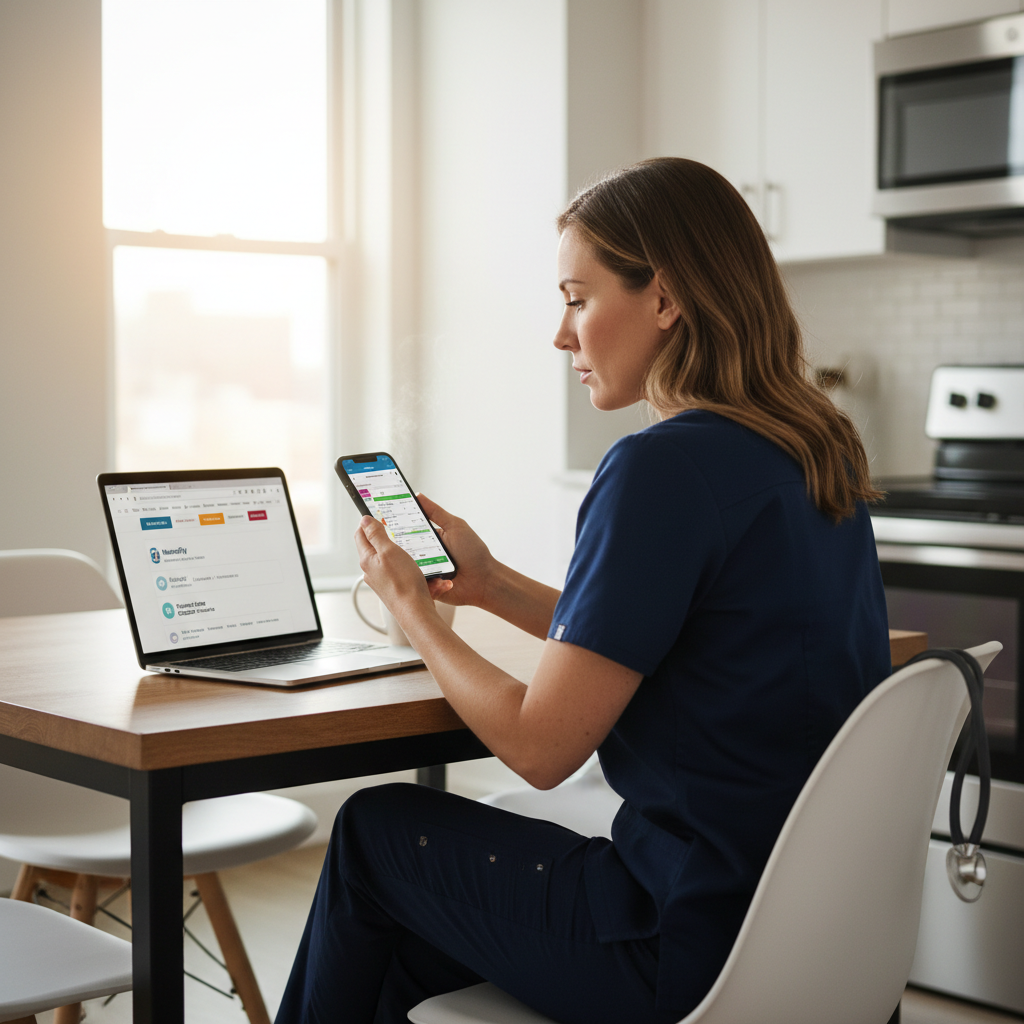
The gig economy hit healthcare hard in 2025, and by mid-2026 the dust is starting to settle. Nurses who picked up PRN shifts through a single agency contact now have a dozen apps competing for their attention — and their next 12-hour block. But not all gig nursing apps are created equal.
If you’re an RN or LPN weighing your options, you’ve probably noticed: some platforms ghost you after onboarding, others nickel-and-dime on mileage reimbursement, and a few genuinely make it easier to fill your calendar at rates that respect your license. This breakdown looks at what’s actually working in 2026 — fill rates, pay transparency, and the reviews that matter from nurses in the field.
Let’s cut through the marketing and see which nurse shift app platforms are winning right now.
What Changed Between 2025 and 2026
Twelve months ago, the gig healthcare platform space was crowded and chaotic. Venture-backed apps were racing to sign up facilities faster than they could vet them, leading to last-minute cancellations, ghost shifts, and pay disputes that left nurses scrambling.
In early 2026, two things shifted the landscape: stricter state-level transparency laws in California, Massachusetts, and New York now require platforms to disclose the facility markup before a nurse accepts a shift. And a wave of M&A activity consolidated several smaller per diem app players, meaning fewer platforms but (in theory) better infrastructure.
The result? Nurses are getting choosier. Fill rates — the percentage of posted shifts that actually get claimed — are now a public metric on some platforms, and RNs are voting with their thumbs. Apps that can’t keep their facilities happy or their nurses paid on time are bleeding users fast.
Platform Tier One: High Fill Rates and Real Transparency
Three platforms consistently post fill rates above eighty-five percent and have introduced full pay breakdowns before you click ‘accept.’
CareRev remains the gold standard for per diem app reliability. Their California and Texas markets are especially strong, with same-day shifts in med-surg and tele frequently paying $60–$72/hour for RNs. The app shows you the gross bill rate, the platform fee, and your net — no surprises. Downsides: limited rural coverage, and their credentialing process still takes about ten business days.
ShiftMed has quietly become the favorite for LPNs and RNs in long-term care and rehab settings. Their 2026 redesign made cancellations visible (facilities with high last-minute cancellation rates get flagged), and they rolled out mileage bonuses for shifts more than twenty miles from your home ZIP. Fill rates in the Midwest and Southeast are consistently in the high eighties. The trade-off: acute care hospital shifts are sparse compared to post-acute.
Clipboard Health expanded aggressively into the Northeast and Mountain West in late 2025. They now cover over forty metro areas, and their ‘Boost’ feature lets you see which shifts have surge pay before you scroll. RN reviews cite fast weekly payouts and responsive in-app support. The catch: some nurses report the app can be glitchy during peak evening hours when shifts drop.
Platform Tier Two: Solid Options with Trade-Offs
These gig nursing apps have strong user bases but come with specific limitations you should know about.
- Nursa: Huge facility network, especially in the South and Texas. But pay transparency is inconsistent — some shifts show full breakdowns, others don’t. Fill rates hover around seventy-five percent. Good for nurses who want volume and are comfortable negotiating.
- Trusted Health: Positioned as a hybrid between traditional travel contracts and per diem gig work. Their ‘Flex’ tier offers local contract-style assignments (four to eight weeks) with benefits. Less useful if you want true one-off shift flexibility, but appealing if you want predictability without a thirteen-week commitment.
- IntelyCare: Strong in the Northeast, especially Massachusetts and Connecticut. LPNs love them for SNF and assisted living shifts. The app is stable and the credentialing is faster than most (under a week). Limitation: almost no acute care hospital presence.
What RNs Are Actually Saying
We pulled reviews from app stores, Reddit's r/nursing, and private travel nurse Facebook groups to see what’s resonating — and what’s frustrating — in real time.
Pay transparency wins trust. Nurses consistently rate platforms higher when they can see the facility bill rate and platform cut upfront. Even if the rate isn’t the highest, knowing the split builds confidence. One ICU RN in Denver put it this way: ‘I’d rather take a $68 shift where I see the math than a $72 shift that feels like someone’s skimming and I don’t know how much.’
Cancellations kill momentum. The number-one complaint across every platform: last-minute facility cancellations with no penalty or cancellation pay. Apps that publicly track facility behavior (and deprioritize repeat offenders) are earning loyalty. Nurses want to know they’re not wasting a day they could have booked elsewhere.
Speed matters more than perfection. Credentialing delays are a close second frustration. Platforms that can get you working within five business days — even if their app UI isn’t the prettiest — tend to retain users. Nurses are pragmatic: a clunky app that pays on time beats a sleek app that leaves you in onboarding limbo for three weeks.
What to Look for When You’re Choosing
If you’re new to gig nursing apps or thinking about adding a second platform to your rotation, here’s what actually matters:
- Geographic density: Does the app have real volume in your metro, or are you seeing the same three facilities recycle the same shifts? Check the app for a week before you complete credentialing.
- Pay structure clarity: Can you see the breakdown before you commit? If not, ask support directly. Platforms that hedge on this question usually have a reason.
- Cancellation policy: What happens if the facility pulls the shift four hours before start? Some apps offer partial guarantee pay; many offer nothing. Know before you block your calendar.
- Payout speed: Weekly is standard now, but a few platforms still do biweekly. If cash flow matters, confirm the cycle upfront.
- Compact state recognition: If you hold an eNLC multistate license, make sure the app actually recognizes it and doesn’t require you to submit state-by-state paperwork for every border you cross.
The Bottom Line for 2026
Gig nursing apps aren’t going anywhere — if anything, they’re maturing. The platforms that survive the next twelve months will be the ones that treat nurses like partners, not inventory. That means transparent pay, reliable facilities, fast credentialing, and consequences for bad actors on both sides of the transaction.
If you’re an RN or LPN exploring per diem work, don’t settle for the first app a friend recommends. Download two or three, compare real shifts in your market, and track which one actually fills your schedule without drama. The winners in 2026 are the platforms that make your life easier — not the ones with the biggest marketing budget.
And if you’re finding that gig work isn’t giving you the stability or income you need, or you’re ready to explore travel contracts with transparent pay and recruiter support that doesn’t disappear after you sign, the Intuites Recruiting Team is here. We work with nurses who want clarity, respect, and real answers — whether that’s a thirteen-week assignment or a local contract that lets you stay near home. Reach out anytime at contact@intuites.healthcare or visit intuites.healthcare. We’re not a gig app, but we do believe you deserve to know exactly what you’re walking into. 🤍
#GigNursingApps #PerDiemNursing #NurseShiftApp #TravelNurse #GigHealthcare #RNLife #NurseLife #HealthcareStaffing #NursingTrends2026 #FlexibleNursing #PRNShifts #NurseJobs #HealthcareGigEconomy #TravelNursing #Intuites
Looking for a healthcare team that truly sees your value?
The Intuites Recruiting Team is here to listen, support your career, and connect you with roles across the USA — when you're ready.