
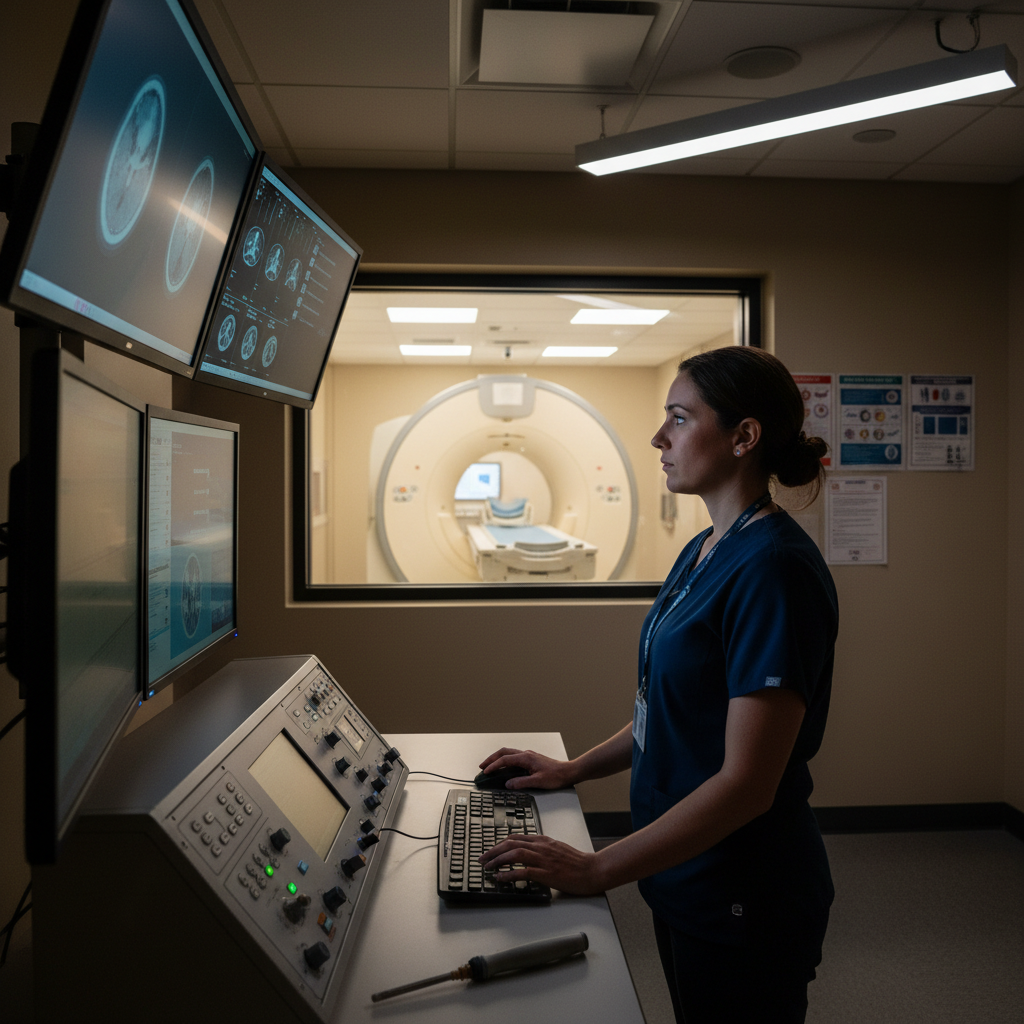
You have screened hundreds of patients. You have caught keys, phones, hair clips, and forgotten insulin pumps. You have stopped family members at Zone III more times than you can count. And then one day, despite every protocol you follow, something ferrous makes it into Zone IV.
It happens faster than you think. A maintenance worker with a wrench. A physician with scissors in their pocket. A patient who swore they removed everything. The magnet does not care about good intentions — and neither does your state licensing board.
Let's talk about the MRI safety zone violations that quietly end careers, and more importantly, how you protect your radiologic tech license when the unthinkable happens.
Understanding MRI Safety Zones and Your Legal Exposure
The American College of Radiology defines four zones around every MRI suite, but Zones III and IV are where your license lives or dies. Zone III is your controlled access point — the last place you can stop a ferrous incident before it becomes a reportable event. Zone IV is the scan room itself, where the magnetic field is always on and always dangerous.
Here is what most techs do not realize: you are personally liable for every object that crosses into Zone IV under your supervision. Not just morally responsible — legally liable. Your state board does not care if the attending physician walked past you with hemostats. They do not care if environmental services was “just going to be a second.” They care that you are the credentialed MRI safety officer on duty, and a breach occurred on your watch.
The Joint Commission tracks these incidents. The FDA tracks these incidents. Your facility's risk management team tracks these incidents. And if a ferrous object becomes a projectile or causes patient harm, your license becomes part of the investigation file.
The Anatomy of a Career-Ending Ferrous Incident
Most MRI techs think the dangerous scenarios involve obvious mistakes — a janitor with a floor buffer, a gurney rolling into the bore. But the incidents that actually end careers are quieter and more insidious.
Consider the CT tech who helps out in MRI during short staffing. They are credentialed, they know the basics, but they have not lived in that magnetic field every day for years. They miss the small oxygen tank a transport team left in the corner of Zone III. A patient codes. In the chaos, someone grabs that tank. It flies across the room.
Or the night shift tech who has screened the same cardiologist fifty times. He always empties his pockets. Except tonight, he has a new pager with a ferrous clip. It is 2 a.m., you are tired, he is annoyed at being questioned again, and you let him through. The pager comes off his belt near the bore. No one is injured, but the magnet quenches. That is a $200,000 incident, and your name is on the safety log.
What Happens After a Zone IV Breach
The immediate aftermath of a ferrous incident follows a predictable sequence, and every step has licensing implications:
- Facility incident report filed within 24 hours — your statement becomes part of your permanent employee record
- Risk management review and root cause analysis — you will be interviewed, possibly multiple times
- State health department notification if patient harm occurred — this triggers automatic licensing board awareness
- Potential FDA MedWatch report for device-related injuries — federal documentation that follows you
- Internal facility investigation and possible credentialing review — your MRI privileges may be suspended pending findings
- Professional liability exposure if the patient or their family pursues legal action
Even if no one was hurt, a serious Zone IV breach often results in mandatory retraining, supervision requirements, or temporary loss of independent MRI scanning privileges. These restrictions must be disclosed on future job applications and can trigger questions during license renewals in states with specific queries about workplace incidents.
Near-Miss Reporting: Your Best License Protection Strategy
Here is the paradox: the techs who report the most near-misses are often the ones who protect their licenses most effectively. Why? Because near-miss reporting creates a documented pattern of vigilance and safety consciousness that becomes your defense if a real incident ever occurs.
A near-miss is any event where a ferrous object reached Zone III or IV but did not cause harm or equipment damage. The physician who walked halfway into Zone III before you stopped them. The patient whose underwire bra made it past your initial screening but you caught it during the final safety check. The cleaning crew that propped the Zone IV door open until you intervened.
Every single one of these should be reported through your facility's safety reporting system. Not because you want to create paperwork, but because you are building a record that shows you take MRI safety zones seriously, that you catch problems before they escalate, and that you prioritize patient and staff safety over convenience or speed.
When a licensing board reviews your file after a ferrous incident, they look at patterns. A tech with zero safety reports looks complacent. A tech with regular near-miss documentation looks engaged and proactive. That difference matters when they are deciding whether to suspend, restrict, or clear your license.
Protecting Your License: Concrete Steps Every MRI Tech Should Take Now
You cannot prevent every possible Zone IV breach, but you can absolutely control how prepared you are when something goes wrong. Start by understanding your state's specific reporting requirements for adverse events. Some states require direct reporting to the licensing board within 72 hours of any incident resulting in patient harm. Missing that deadline can result in additional disciplinary action beyond whatever happened in the MRI suite.
Maintain your own incident log. This is separate from your facility's reporting system. Keep a simple spreadsheet or notebook where you document every near-miss, every time you stopped someone at Zone III, every safety concern you raised with management. Include dates, times, and witnesses. If you ever face a licensing investigation, this personal documentation demonstrates your consistent safety practices and can fill gaps in official records.
Get everything in writing when safety concerns are ignored. If you tell your supervisor that the Zone III access control is failing and staff are bypassing screening, send a follow-up email summarizing that conversation. If environmental services keeps entering Zone IV without proper screening despite your repeated complaints, document it through your facility's safety reporting system. If a physician pressures you to relax screening protocols, report it to your MRI medical director and keep a copy of that report.
Consider professional liability insurance that covers licensing board defense. Your facility's malpractice coverage protects the institution, not your individual license. A separate professional liability policy typically includes coverage for legal representation during state board investigations, which can cost $10,000 to $30,000 even if you are ultimately cleared.
What to Do in the First 48 Hours After a Ferrous Incident
If a ferrous incident occurs on your watch, your actions in the immediate aftermath significantly impact your license outcome. First, ensure patient safety and follow your facility's emergency protocols. Then, before you leave your shift, write down everything you remember while details are fresh. What was the object? Who brought it into the zone? What screening steps did you complete? Who else was present? What happened in what order?
Do not discuss the incident with coworkers beyond what is required for patient care and immediate reporting. Casual conversations can be misremembered or misquoted and may later be used in investigations. Do not post about it on social media, even vaguely. Do not try to “fix” your story or align your account with what you think management wants to hear.
Be completely honest in your incident report. Licensing boards have seen every excuse and every attempt to minimize responsibility. They respect techs who own their role in an incident, explain what went wrong, and articulate what they learned. They suspend licenses of techs who lie, blame others, or show no insight into safety failures.
If the incident is serious — patient injury, magnet quench, or potential litigation — contact a healthcare attorney before giving detailed statements beyond your initial incident report. You have a right to legal counsel, and using that right does not imply guilt. It implies you understand the stakes.
Moving Forward: Your Career After an MRI Safety Incident
Most MRI techs who experience a ferrous incident do not lose their licenses. What separates those who recover professionally from those who do not is usually how they responded in the moment and what they learned from the experience.
If your facility requires retraining or additional supervision, approach it with humility and genuine engagement. If you are required to complete additional MRI safety education, document your completion and keep certificates in your personal files. If you participate in a root cause analysis, focus on system improvements rather than defending your actions.
Some techs find that a ferrous incident, despite the stress and fear, actually makes them better and more conscientious. They develop stronger screening protocols. They advocate more forcefully for safety improvements. They mentor newer techs with real-world examples of what can go wrong and how to prevent it.
Your career is not defined by one incident — it is defined by your entire body of work and your commitment to patient safety. Stay current with ACR MRI safety guidelines. Maintain your certifications. Keep learning. And never let familiarity or time pressure compromise your screening protocols, because your license is worth more than saving two minutes.
If you are navigating a career transition after an MRI safety incident, or if you are simply looking for a workplace culture that prioritizes safety and supports imaging professionals, the Intuites Recruiting Team understands the real pressures you face. Reach out at contact@intuites.healthcare or visit intuites.healthcare to talk with people who know what it is like to work in MRI and who can help you find the right next step. ✨
#MRISafety #RadiologicTech #MRITech #ImagingTech #MRIZoneSafety #FerrousIncident #RadTechLicense #MRISafetyZones #DiagnosticImaging #MRITechnologist #HealthcareSafety #PatientSafety #MedicalImaging #RadiologyLife #MRIZoneIV
Looking for a healthcare team that truly sees your value?
The Intuites Recruiting Team is here to listen, support your career, and connect you with roles across the USA — when you're ready.