
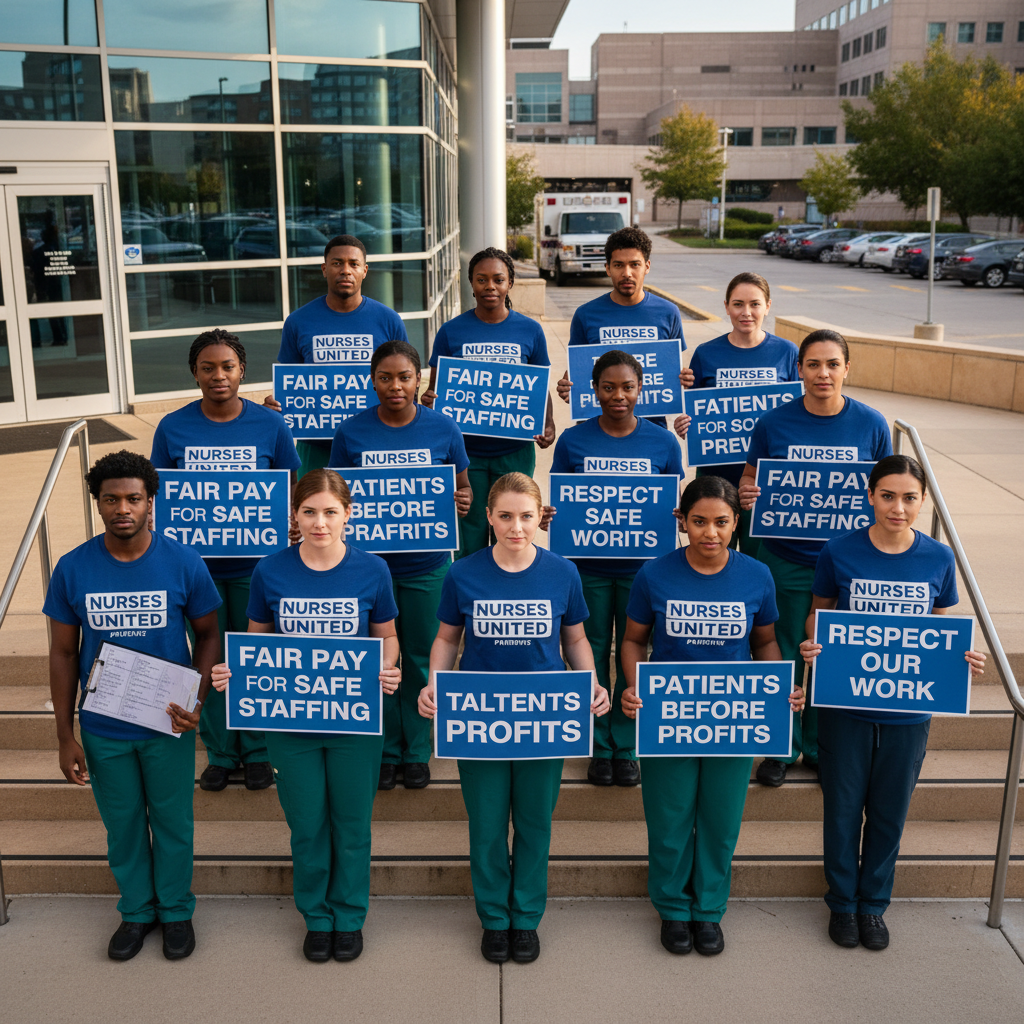
June 2026 is proving to be a pivotal month for nursing labor across the United States. From the Pacific Northwest to the Northeast corridor, nurses are organizing, negotiating, and in some cases walking picket lines to secure better working conditions, safer staffing ratios, and competitive compensation that reflects the demands of modern healthcare.
Whether you’re an RN considering travel assignments, an LPN watching contract talks at your facility, or a CNA wondering how union activity might affect your next job search, understanding the current landscape matters. Here’s where things stand right now.
Major Contract Negotiations Underway
Several large hospital systems are deep in contract talks with nursing unions this month, and the outcomes will likely set benchmarks for facilities nationwide.
In Northern California, the California Nurses Association is negotiating contracts covering approximately 18,000 RNs across five hospital systems. Key sticking points include minimum staffing ratios in emergency departments and step-down units, where nurses report consistent understaffing during evening and night shifts. The union is pushing for language that would impose financial penalties on hospitals that fail to meet agreed-upon ratios, not just during peak census but throughout every shift.
Meanwhile, in New York, nurses at three major medical centers in the Hudson Valley are in their second month of negotiations. The New York State Nurses Association is seeking wage increases that keep pace with the region’s rising cost of living, as well as expanded mental health support services for staff. Early reports suggest management has offered a 12% raise over three years, but nurses are holding out for 15% plus guaranteed preceptor pay for those training new hires.
In the Midwest, Minnesota nurses represented by the Minnesota Nurses Association are negotiating contracts at fourteen hospitals simultaneously. The coordinated bargaining approach is designed to prevent hospital systems from whipsawing individual facilities against each other. Nurses there are focused on securing better retirement benefits and limiting mandatory overtime, which has become a flashpoint as travel nursing rates have cooled and facilities are relying more heavily on core staff to fill gaps.
Recent Strike Activity and Outcomes
June has seen two significant nursing strikes reach resolution, while a third is entering its second week.
In Portland, Oregon, a five-day nursing strike at a 400-bed hospital ended on June 10 with a tentative agreement that includes:
- A 17% wage increase over three years, with higher bumps for night and weekend differentials
- A commitment to hire 85 additional RNs within six months to address chronic understaffing
- A joint labor-management committee with real decision-making authority over scheduling policies
- Increased employer contributions to health insurance premiums, reducing out-of-pocket costs for nurses by an average of $140 per month
In South Florida, a three-day strike by approximately 700 nurses ended June 15 after the hospital agreed to a staffing matrix that limits patient-to-nurse ratios in medical-surgical units to 1:4 during day shifts and 1:5 at night. The agreement also includes a “safe harbor” provision that protects nurses from retaliation if they refuse an assignment they believe is unsafe due to inadequate staffing.
Currently, nurses at a large teaching hospital in Pennsylvania are in their eighth day of a strike over what the union calls “management’s refusal to address violence against healthcare workers.” The nurses are demanding panic buttons in every patient room, mandatory de-escalation training for security staff, and a commitment to press charges against patients or visitors who assault nurses. Negotiations are ongoing, with a federal mediator now involved.
New Organizing Efforts Gaining Momentum
Beyond existing union facilities, June 2026 is seeing a wave of organizing drives at previously non-union hospitals and outpatient settings.
In Texas, where union density in healthcare has historically been low, nurses at two Dallas-area hospitals have filed petitions with the National Labor Relations Board seeking representation elections. Organizers cite the state’s lack of mandated staffing ratios and what they describe as “race-to-the-bottom” pay structures as primary motivators. If successful, these would be the first union wins at acute-care hospitals in the Dallas metro area in more than fifteen years.
Outpatient infusion centers and ambulatory surgery centers are also seeing increased organizing activity. In Arizona, nurses at a chain of dialysis clinics are working with National Nurses United to organize across multiple locations simultaneously. The nurses report that while outpatient settings often offer better work-life balance than inpatient roles, they frequently lack the job protections, benefits, and voice in workplace decisions that union contracts provide.
LPNs and CNAs are also organizing. In Georgia, certified nursing assistants at a 200-bed long-term care facility voted 68-22 in favor of union representation in early June, citing concerns about mandatory overtime, inadequate PPE supplies, and what they described as favoritism in scheduling. It’s part of a broader trend of organizing in the long-term care sector, where CNAs have been particularly vocal about the need for stronger workplace protections post-pandemic.
What This Means for Travelers and Per Diem Nurses
If you work travel or per diem assignments, you might wonder how nursing labor news and union activity affect you.
First, contract negotiations and strikes can create short-term demand spikes. When core staff walk out, facilities often turn to agencies to fill gaps, sometimes offering crisis rates. However, those assignments can be contentious — some unions ask travelers not to cross picket lines, while agencies and hospitals emphasize patient care continuity. It’s a personal decision, but it’s worth understanding the context before accepting a strike assignment.
Second, union wins on staffing ratios and compensation often create upward pressure on traveler pay in those markets. When a hospital agrees to hire more core staff and raise wages, the facility’s reliance on travelers may decrease in the long run, but in the short term, competitive local pay can push agencies to maintain stronger bill rates to attract travelers.
Third, some facilities with strong union contracts prefer to staff with their own per diem pools rather than agency travelers, which can limit available assignments in certain markets. Conversely, non-union facilities competing for staff in union-heavy regions sometimes offer better traveler packages to stay competitive.
Looking Ahead: What to Watch
Several trends are worth monitoring as summer progresses.
National union federations are coordinating more cross-state campaigns, which could lead to larger, more visible actions in the fall. There’s also growing interest in organizing among newer nursing roles — such as telehealth nurses and nurses working for staffing agencies themselves — areas that have traditionally been difficult to unionize due to dispersed workforces.
Legislative activity is picking up, too. In states where unions have strong political influence, we’re seeing bills introduced that would mandate minimum staffing ratios, limit mandatory overtime, and create state-level safe harbor protections. Even if those bills don’t pass immediately, they signal where the conversation is headed.
For individual nurses, staying informed about nursing strike developments, contract outcomes, and organizing efforts in your region or specialty helps you make better decisions about where to work, what to negotiate for, and how to advocate for your own working conditions — whether or not you’re in a union facility.
The landscape is shifting, and June 2026 is a snapshot of a profession in motion. Nurses are using their collective voice to reshape the terms of their work, and the ripple effects will be felt across the entire healthcare staffing ecosystem. ✨
Need guidance navigating your next nursing role in this evolving landscape? Whether you’re exploring travel contracts, per diem opportunities, or permanent placements, the Intuites Recruiting Team is here to help you find positions that align with your values and career goals. Reach out anytime at contact@intuites.healthcare or visit intuites.healthcare to start a conversation. 🤍
#NurseUnion2026 #NursingStrike #NursingLaborNews #RNUnion #TravelNursing #NurseAdvocacy #HealthcareStaffing #NursingContract #CollectiveBargaining #NursesUnited #StaffingRatios #NurseLife #HealthcareWorkers #UnionStrong #NursingCareers
Looking for a healthcare team that truly sees your value?
The Intuites Recruiting Team is here to listen, support your career, and connect you with roles across the USA — when you're ready.