
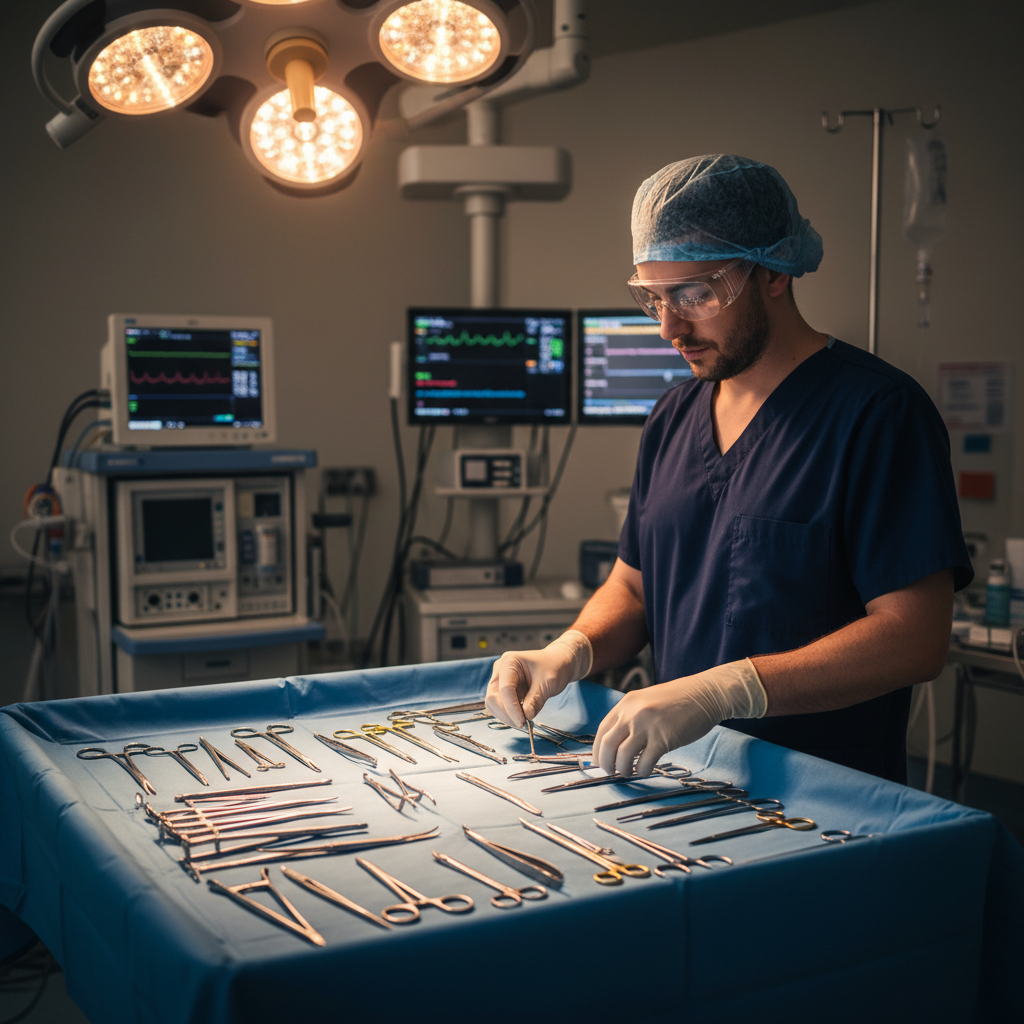
You have passed your CST exam. You have survived your first few months in the OR. Now you are standing at the instrument table thinking: Is this it, or should I specialize?
Here is the truth—general surgery will always have a place, but the surgical tech subspecialties are where the money, the challenge, and the career longevity live. Ortho pays more. Cardiac keeps your skills razor-sharp. Neuro demands precision most people do not have. Robotics is the future, and hospitals are desperate for techs who can run a da Vinci console without breaking a sweat.
But which scrub tech subspecialty actually fits you? Let us skip the career aptitude tests and get straight to it. Five questions. Real talk. By the end, you will know whether you belong in the ortho room with power tools, the cardiac suite with perfusion pumps, the neuro bay with microscopes, or the robotics theater with a joystick.
Question 1: How Do You Handle Physical Demand?
This is not about whether you can stand for twelve hours—we all do that. This is about what kind of physical load you want to carry, literally.
Ortho: You will be lifting trays that weigh thirty pounds. You will hand surgeons mallets and chisels. You will hold retractors during total joint replacements until your shoulders burn. If you like feeling like you worked at the end of a case, ortho is your lane. Bonus: ortho cases often finish on time, and surgeons tend to be straightforward communicators (read: loud, but clear).
Cardiac: Physically lighter than ortho, but the mental load is heavier. You are managing two sterile fields if it is a CABG with saphenous vein harvest. You are tracking heparin doses, perfusion times, and cross-clamp moments. Your hands stay busy, but your brain stays busier.
Neuro: The instruments are small, delicate, and expensive. You will spend hours standing perfectly still while a surgeon works under a microscope. If you have back issues or you get antsy, neuro will break you. If you have the patience of a monk and steady hands, it is meditative.
Robotics: Moderate physical demand, but you are on your feet repositioning arms, swapping instruments, and troubleshooting tech glitches. You will need to be comfortable working around a robot instead of directly at the field. Think less scrubbing, more tech support with a sterile gown on.
Question 2: What Is Your Tolerance for Chaos?
Some subspecialties run like clockwork. Others run like a code blue in a thunderstorm.
Ortho: Predictable. You know the implant reps. You know the tray setup. Even the emergencies—ex-fixes and hip fractures—follow a script. If you like structure and hate surprises, ortho is a safe bet.
Cardiac: Controlled chaos. Everything is planned until it is not. The patient can decompensate. The bypass pump can throw an alarm. You need to stay calm when the room gets loud and the surgeon starts barking orders. If you thrive under pressure and love the adrenaline, cardiac will keep you awake.
Neuro: Slow and steady. Cases can run eight, ten, twelve hours. There is little chaos because there is little margin for error. One wrong move with a micro-instrument near the brainstem and the patient is permanently changed. If you want intensity without the speed, neuro delivers.
Robotics: Moderately unpredictable. The robot will malfunction. The camera will fog. The surgeon will blame you even though it is a software issue. If you are a problem-solver who does not take things personally, you will do fine. If you need everything to just work, robotics will frustrate you weekly.
Question 3: Do You Want to Specialize Further or Stay Flexible?
Some CST career paths lock you in. Others keep doors open.
- Ortho: You can sub-specialize into spine, sports medicine, or trauma. Plenty of room to niche down or stay general.
- Cardiac: You will likely stay cardiac. The skill set does not transfer easily to other subspecialties, but cardiac techs are always in demand and command higher pay.
- Neuro: You can cross-train into spine (which overlaps with ortho) or stay pure neuro. Either way, your resume will open doors at major academic centers.
- Robotics: The most flexible. Robotics is used in urology, gynecology, general surgery, and thoracic cases. Learn one platform, and you can work in four different service lines.
Question 4: What Does Your Ideal Paycheck Look Like?
Let us be honest—this matters. Surgical tech specialties do not all pay the same.
Ortho: Typically pays a premium because of the physical demand and the implant knowledge required. Expect $2–$5 more per hour than general surgery, and ortho travel contracts often hit six figures annually.
Cardiac: The highest-paying subspecialty in most markets. Cardiac scrub techs can earn $30–$40+ per hour staff, and travel rates for cardiac can exceed $3,000 per week. If money is your main driver, go cardiac.
Neuro: Pays well, but slightly below cardiac. You are compensated for the skill and the length of cases, but neuro is not as universally in-demand as cardiac, so the travel market is smaller.
Robotics: Pay is climbing fast. Hospitals are adding robotics programs and cannot find trained techs. Right now, robotics pay is comparable to ortho, and it is trending up. If you want to ride a wave, this is it.
Question 5: Where Do You See Yourself in Five Years?
This is the question that actually matters. Not where you think you should be—where you honestly want to be.
Ortho: If you want to stay clinical, make solid money, and have predictable hours, ortho is a career you can ride into retirement. You will not get bored—joint replacements are only increasing as the population ages.
Cardiac: If you want to be the best at something hard, cardiac is your Everest. You will always be learning. You will always be valued. And you will always have job security, because most techs wash out of cardiac within a year.
Neuro: If you want to work at a prestigious academic hospital and be part of groundbreaking cases—tumor resections, aneurysm clippings, deep brain stimulation—neuro is your path. It is not the highest-paying, but it is the most intellectually respected.
Robotics: If you want to future-proof your career and have the flexibility to move between specialties, robotics is the smartest long-term bet. In five years, most ORs will have at least one robotic platform. Get trained now, and you will write your own ticket.
So What Is Your Answer?
If you want predictability and solid pay, go ortho. If you want intensity and top-tier compensation, go cardiac. If you want precision and prestige, go neuro. If you want flexibility and future demand, go robotics.
There is no wrong answer here—only the wrong fit. And the only way to know for sure is to scrub in on a few cases in each subspecialty and see what makes you feel alive at 7 a.m. on a Monday.
If you are ready to explore surgical tech specialties and want to talk to someone who actually understands the OR, the Intuites Recruiting Team is here. We place surgical techs in all subspecialties across the country—staff, travel, and per diem. Email us at contact@intuites.healthcare or visit intuites.healthcare. We will help you find the right fit, not just the next job. 🤍
#SurgicalTechSpecialties #ScrubTech #CSTCareerPath #OrthopedicSurgicalTech #CardiacSurgicalTech #NeuroSurgicalTech #RoboticSurgery #SurgicalTechnologist #ORJobs #AlliedHealthCareers #TravelSurgicalTech #HealthcareStaffing #IntuitesHealthcare #SurgicalTechLife #CST
Looking for a healthcare team that truly sees your value?
The Intuites Recruiting Team is here to listen, support your career, and connect you with roles across the USA — when you're ready.