
You've mastered the retail pharmacy grind—insurance overrides, drive-through rushes, vaccine clinics on top of filling 300 scripts a day. But lately you've been wondering: what would it be like to work in a hospital? Slower pace, clinical variety, maybe even sterile compounding?
Good news: the pharmacy tech hospital transition is absolutely doable, and summer is the perfect time to make your move. Hospitals ramp up hiring for vacation coverage, new grads are onboarding, and many facilities offer training programs that start in June or July.
Here's your 90-day roadmap to go from retail to hospital pharmacy this summer—with concrete steps, realistic timelines, and the certifications that will get your résumé to the top of the pile.
Why Hospital Pharmacy Is Different (And Why You'll Love It)
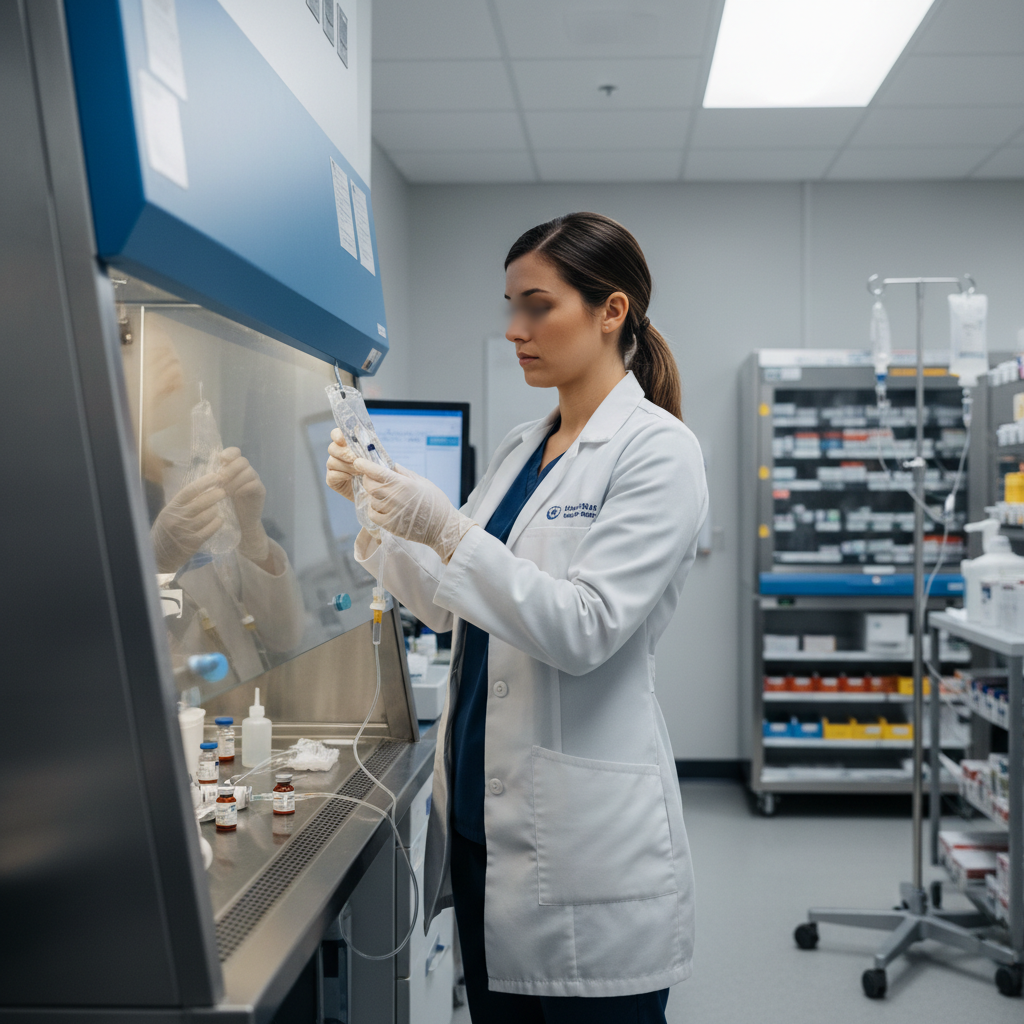
Let's be honest: retail to hospital pharmacy is a significant shift. You're trading customer-facing chaos for clinical collaboration. Instead of insurance rejections, you'll troubleshoot drug interactions with physicians. Instead of counting by fives, you'll compound IVs in a sterile hood.
Hospital pharmacy techs work directly with nursing units, operating rooms, and intensive care. You might fill code cart trays one hour and mix chemotherapy the next. The learning curve is real, but so is the professional growth.
Pay typically increases 15-25% when you make the pharmacy tech career change from retail to hospital, especially if you earn your IV certification. Schedules vary—some hospitals offer straight days, others need weekend or night coverage—but most techs appreciate the team-based environment and the chance to see the clinical impact of their work.
Step One: Get Your IV Certification (Weeks 1-4)
This is the single most important credential for your retail to hospital pharmacy move. IV certification proves you can safely prepare sterile products—the skill hospitals need most and retail doesn't teach.
The Pharmacy Technician Certification Board (PTCB) offers the Compounded Sterile Preparation Technician (CSPT) credential. You'll need your CPhT first, then complete a training program (many are online with in-person lab days) and pass the exam.
- Timeline: Most IV cert programs run 2-4 weeks; budget $800-1,200 for course plus exam fees.
- Where to train: Check local community colleges, hospital continuing-ed departments, or national programs like ASHP-accredited courses.
- What you'll learn: USP standards, aseptic technique, hood operation, hazardous drug handling, and beyond-use dating.
- Pro tip: Some hospitals will hire you before you're certified and train you on the job—but having the cert in hand makes you infinitely more competitive.
Start researching programs this week. Many June cohorts are already enrolling, so act fast if you want to be certified by August.
Step Two: Shadow a Hospital Pharmacy (Weeks 3-6)
You can't interview confidently for a hospital role if you've never seen the workflow. Shadowing gives you the vocabulary, the context, and the stories you need to stand out.
Most hospital pharmacy directors are happy to host retail techs for a half-day shadow—it's good PR and they're always scouting talent. Call the pharmacy directly (not HR) and ask to speak with the lead tech or the director. Explain you're a licensed tech considering the pharmacy tech hospital path and you'd love to observe for 3-4 hours.
What to watch for during your shadow:
- How do they handle STAT orders from the ER or ICU?
- What does the IV room setup look like? (Hoods, workflow, gowning procedure.)
- Who restocks the automated dispensing cabinets on the floors?
- How do techs interact with nurses and physicians—phone? Tube system? EMR messaging?
- What software do they use? (Pyxis, Omnicell, Epic, Cerner—familiarity helps.)
Ask questions. Take notes. At the end, ask if they're hiring or if they know other hospitals that are. This is networking gold.
Step Three: Tailor Your Résumé and Apply Strategically (Weeks 5-8)
Your retail experience does translate—you just need to reframe it. Hospitals care about accuracy, teamwork, and the ability to work under pressure. You've been doing all three; now spell it out.
Retail-to-hospital résumé wins:
- Highlight your error rate or accuracy metrics (“Maintained 99.8% prescription accuracy over 12 months”).
- Emphasize inventory management, especially controlled substances and recalls.
- Mention any clinical programs you supported: immunizations, medication therapy management, diabetes education.
- If you've trained new hires, say so—hospitals value mentorship.
- List your IV cert prominently (even if it's in progress—note “Completing CSPT, anticipated June 2026”).
Where to apply? Start with mid-sized community hospitals (100-300 beds). They're more likely to train new hospital techs than large academic medical centers. Check hospital websites directly, not just Indeed—many facilities post openings on their internal careers page first.
Aim to submit 5-7 applications by mid-July. Follow up one week later with a polite email to the pharmacy manager referencing your shadow experience if you completed one at that facility.
Bonus: Leverage Your Retail Network
Talk to the hospital discharge planners and case managers who call your retail pharmacy. Ask traveling nurses who pick up prescriptions where they've worked. Your health-system competitors often know which hospitals are hiring—and they might even refer you if you've built good relationships.
Step Four: Nail the Interview with Clinical Curiosity (Weeks 9-12)
Hospital pharmacy interviews focus on three things: your willingness to learn, your attention to detail, and your ability to work as part of a care team.
Prepare to answer:
- “Why do you want to leave retail?” (Focus on growth, not complaints. Try: “I want to be closer to patient care and expand my clinical skills, especially in sterile compounding.”)
- “Describe a time you caught a dangerous error.” (Use a real example—drug interaction, wrong strength, allergy flag.)
- “How do you handle a STAT order when you're already behind?” (Prioritize, communicate, ask for help—they want team players.)
Ask your own questions: What does onboarding look like? Will I rotate through different areas—IV room, central pharmacy, OR? How do you support techs who want to specialize in chemotherapy or pediatrics?
If you shadowed, mention it. If you're enrolled in IV cert, mention it. Show you're serious about this pharmacy tech career change, not just escaping a bad retail manager.
Your 90-Day Checklist
Let's bring it all together. Here's your week-by-week action plan to make the retail to hospital pharmacy switch by September:
- Week 1-2: Research and enroll in an IV certification course.
- Week 3-4: Complete IV coursework; reach out to 3-5 hospitals to request shadow opportunities.
- Week 5-6: Shadow at least one hospital pharmacy; take the CSPT exam.
- Week 7-8: Update résumé, write a cover letter template, and start applying.
- Week 9-10: Follow up on applications; prepare for interviews.
- Week 11-12: Interview, negotiate your offer, and give notice at your retail job.
Is it aggressive? Yes. Is it doable? Absolutely—especially if you're motivated and willing to invest in the IV cert up front.
You've Got This ✨
Switching from retail to hospital pharmacy isn't just a job change—it's a career upgrade. You'll gain new skills, work in a collaborative environment, and see the direct impact of your expertise on patient outcomes.
And you don't have to figure it out alone. Whether you're exploring hospital roles in your hometown or considering a travel pharmacy tech contract to try different settings, the Intuites Recruiting Team is here to help. We work with hospitals and health systems nationwide, and we love connecting allied health professionals with opportunities that fit their goals.
Questions about the pharmacy tech hospital path? Want to talk through your timeline or get introductions to hiring managers? Email us at contact@intuites.healthcare or visit intuites.healthcare. We're rooting for you. 🤍
#PharmacyTech #PharmacyTechHospital #RetailToHospitalPharmacy #PharmacyTechCareerChange #IVCertification #HospitalPharmacy #PharmacyTechJobs #AlliedHealth #HealthcareCareers #PharmacyTechLife #ClinicalPharmacy #SterileCompounding #PharmacyTechTraining #HealthcareJobs #IntuitesHealthcare
Looking for a healthcare team that truly sees your value?
The Intuites Recruiting Team is here to listen, support your career, and connect you with roles across the USA — when you're ready.