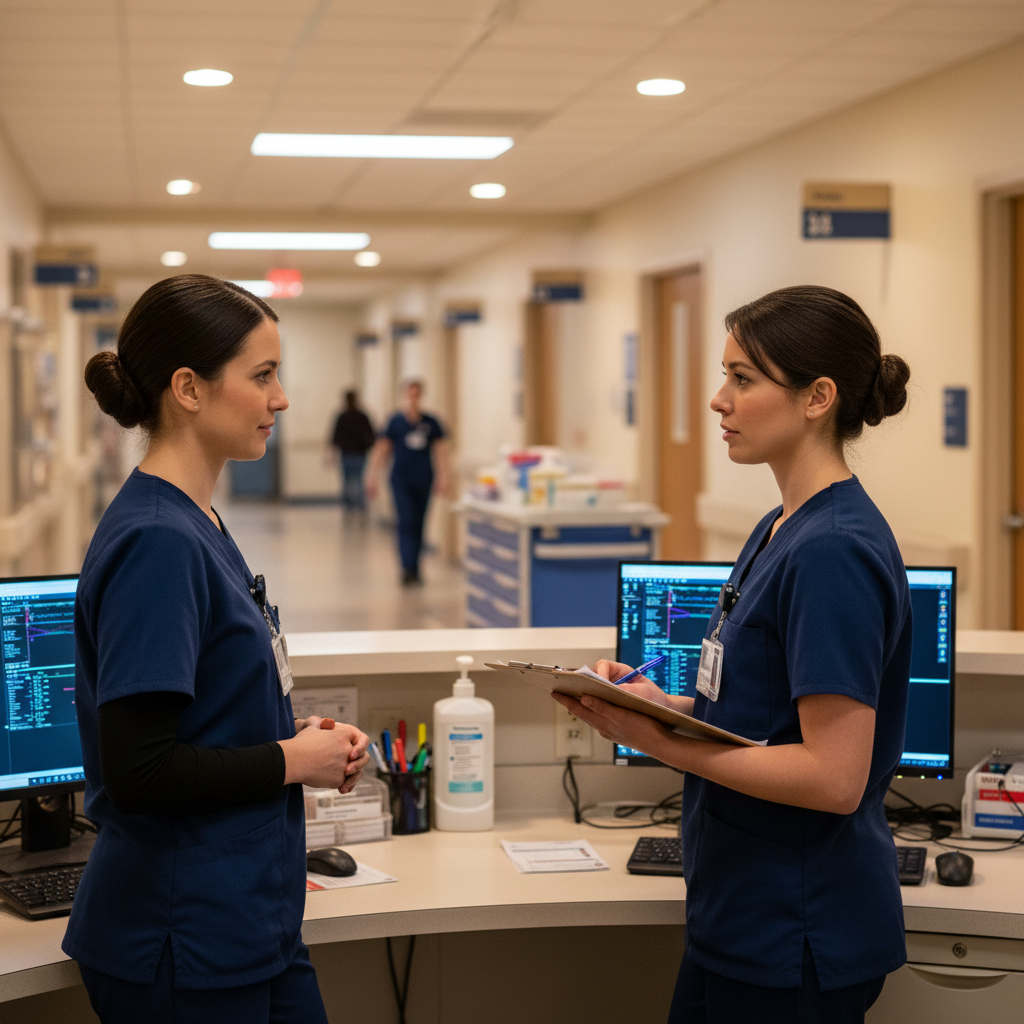
You are three minutes into handoff when your relief nurse asks, “Wait—what was that blood pressure again?” You flip back through your notes. The oncoming shift is stacking up behind you. Someone is paging overhead. And you realize your SBAR handoff just became a game of telephone.
Sound familiar? 🩺
SBAR—Situation, Background, Assessment, Recommendation—is the gold standard for nursing communication and patient handoff. But the framework is only as strong as how you use it. Rushed reports, missing details, and unclear priorities turn even the best structure into noise. The good news? A handful of concrete upgrades can transform your shift report from “good enough” into bulletproof.
Upgrade One: Lead Every Handoff with the One-Sentence Headline
Before you dive into Situation, give your colleague a single-sentence summary that captures the patient’s current state and trajectory. Think of it as the subject line of an email—it primes the listener for what matters most.
Instead of jumping straight into room number and diagnosis, try:
- “Mr. Garcia in 412 is stable post-op day two, but his pain control has been tricky.”
- “Ms. Lee in 307 is a new admit with chest pain—we are ruling out MI and waiting on troponins.”
- “Mrs. Thompson in 210 is doing well, ready for discharge teaching this shift.”
This headline does two things: it gives context before the details flood in, and it helps the oncoming nurse mentally triage while you talk. When you lead with the big picture, the SBAR details that follow land with much more clarity.
Upgrade Two: Anchor Your Assessment with Trends, Not Just Snapshots
The “A” in SBAR often gets reduced to the most recent vital signs or lab values. But a single number tells only part of the story. What your relief nurse really needs is the trend—where the patient has been and where they are heading.
Compare these two Assessment statements:
Snapshot version: “His blood pressure is 142 over 88.”
Trend version: “His blood pressure has been climbing all shift—started at 128 over 82 this morning, now 142 over 88. He missed his noon Lisinopril because he was off the unit for CT.”
See the difference? The second version gives the oncoming nurse a trajectory and a reason. Suddenly, they know to recheck that BP in an hour and follow up on the missed dose. Trends turn static data into a story your colleague can act on.
Make it a habit: for every vital sign or lab you mention, add one sentence about direction. Is it stable? Improving? Worsening? New?
Upgrade Three: Flag the Landmines—Name What Could Go Wrong
Your Recommendation section should not just be a to-do list. It should also be a heads-up about risks, red flags, and “watch this” moments. Think of it as passing along your clinical intuition, not just your task list.
After you cover the plan—med due at 1900, dressing change before bed—add a landmine flag:
- “Watch his respiratory rate—he has been hovering at 22 and gets anxious when it climbs. If he hits 24, he usually needs repositioning and coaching.”
- “She is a high fall risk and keeps trying to get up alone. I have been rounding every 30 minutes.”
- “His IV in the left AC is positional. If it stops flowing, have him straighten his arm before you troubleshoot.”
These are the little things that prevent pages, prevent falls, and prevent your colleague from learning the hard way. When you name the landmines, you are not just handing off tasks—you are handing off safety.
Upgrade Four: Use the Two-Minute Drill for Complex Patients
Some patients do not fit neatly into a five-minute SBAR. Multi-system issues, long medication lists, complicated social situations—they sprawl. When that happens, try the Two-Minute Drill structure:
Minute One: Deliver your headline, the primary problem, and the single most important thing the oncoming nurse needs to know right now.
Minute Two: Rapid-fire the secondary details—other diagnoses, relevant history, upcoming tasks—in priority order.
Then pause and ask: “What else do you need?”
This approach keeps you from front-loading a ten-minute monologue while your relief nurse is still trying to process the headline. It also invites questions early, when there is still time to clarify. Complex patients need structure, not speed. The Two-Minute Drill gives you both.
Upgrade Five: Close the Loop—Repeat Back the Critical Points
Here is the simplest upgrade that almost nobody does: before you walk away, ask your relief nurse to repeat back the one or two most critical pieces of information. Not the whole report—just the must-knows.
“So just to confirm—what is the main thing you are keeping an eye on with Mr. Garcia?”
If they say, “Pain control and watching for signs of infection,” you know the message landed. If they say, “Uh… his blood pressure?” you know you need to clarify before you leave.
This is not about testing your colleague. It is about catching miscommunication before it becomes a patient safety issue. Closed-loop communication is standard in procedural areas for a reason—it works. Bring it to bedside handoff, and watch how many “wait, what?” moments disappear.
Your Handoff Is Your Last Act of Patient Care
A bulletproof SBAR handoff is not about following a script. It is about making sure the next nurse has everything they need to pick up where you left off—safely, confidently, and without gaps. These five upgrades—headline first, trends over snapshots, landmine flags, the Two-Minute Drill, and closed-loop confirmation—turn the SBAR framework from a checkbox into a true communication tool.
Try one upgrade this week. Then add another. Before long, your shift reports will be the ones people actually look forward to receiving. ✨
At Intuites Healthcare Staffing, we know that great nursing communication starts with great nurses—and we are here to support your career every step of the way. Whether you are looking for your next staff role, exploring travel opportunities, or simply want to talk through your options, our recruiting team is ready to listen. Reach out anytime at contact@intuites.healthcare or visit intuites.healthcare. We would love to hear from you. 🤍
#SBARHandoff #NursingCommunication #ShiftReport #PatientHandoff #NursesOfInstagram #RNLife #LPNLife #CNALife #BedsidenNursing #PatientSafety #ClinicalExcellence #NurseLeadership #HealthcareCommunication #NursingTips #TeamworkInHealthcare
Looking for a healthcare team that truly sees your value?
The Intuites Recruiting Team is here to listen, support your career, and connect you with roles across the USA — when you're ready.