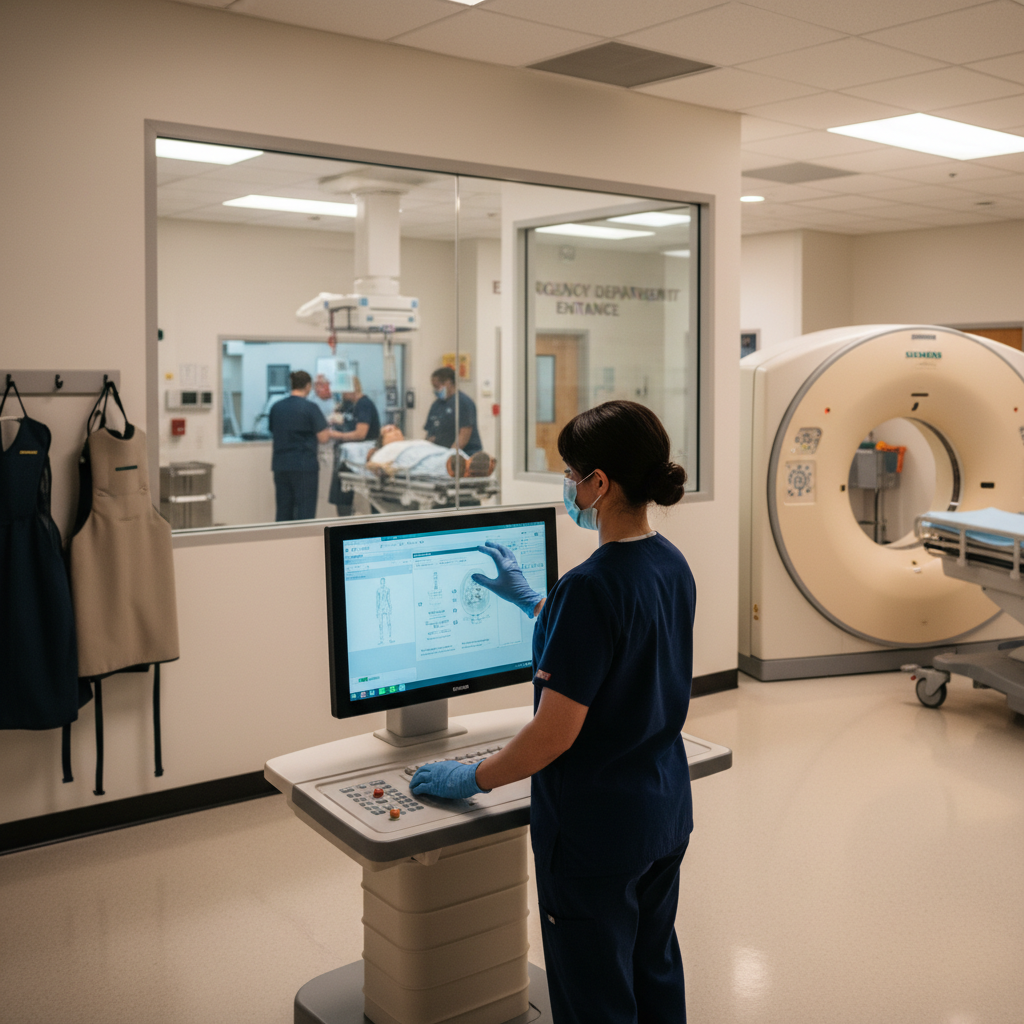
If you've worked a summer in CT, you already know: trauma volumes don't just tick up in July and August — they surge. Memorial Day kicks it off, and by the time Fourth of July fireworks fade, your department is running full tilt through Labor Day.
It's not anecdotal. Emergency departments nationwide report 15–25% increases in trauma cases during Q3, driven by everything from motorcycle accidents and recreational injuries to heat-related incidents and increased pedestrian traffic. For CT techs, that translates to longer shifts, tighter turnarounds, and a steady stream of multi-phase trauma protocols that demand both speed and precision.
Here's what the summer CT trauma volume surge looks like on the ground — and how you can prep your workflow, your team, and yourself before the peak hits.
Why Summer Trauma Volume Climbs Every Year
The pattern is reliable enough that most level-one trauma centers staff up in anticipation. Warmer weather means more people on the roads, trails, and water. Motorcycles come out of storage. Construction ramps up. Kids are out of school. Outdoor recreation spikes.
The result? A predictable uptick in blunt and penetrative trauma, plus orthopedic injuries that require rapid CT imaging to rule out internal bleeding, fractures, and organ damage.
Key drivers of summer trauma volume include:
- Motor vehicle accidents: More road trips, more congestion, more heat-related driver fatigue.
- Recreational injuries: Boating, ATVs, hiking falls, cycling accidents.
- Fireworks and burn injuries: Concentrated around July 4th but extending through backyard gatherings all summer.
- Alcohol-related incidents: Increased social activity correlates with higher rates of assault and accidental injury.
- Heat exhaustion and related trauma: Falls, confusion, and secondary injuries tied to hyperthermia.
For CT techs, the summer surge isn't just about more scans — it's about more complex, time-sensitive scans under pressure.
What the Q3 Surge Means for Your Department Workflow
When trauma volumes climb, every part of your CT workflow feels it. Turnaround times tighten. Protocols get called at odd hours. Your on-call rotation gets busier, and your day shift might not get a real break until September.
Staffing becomes the first pressure point. Many hospitals and imaging centers rely on travel CT techs to cover summer peaks, especially in high-trauma markets like Florida, Arizona, Texas, and California. If your facility hasn't locked in coverage by May, you're likely competing for the same pool of travelers everyone else is chasing.
Right now, travel CT tech rates are holding steady in the $2,200–$2,800/week range for 36–40 hour assignments, with trauma-heavy metro markets occasionally pushing $3,000+ for night or weekend-heavy contracts. That's competitive with last summer, though slightly down from the 2023 peak. If you're considering a summer travel contract, June is still a strong time to negotiate — but prime trauma placements fill fast.
Protocol efficiency matters more in Q3 than any other quarter. Multi-phase trauma scans — chest/abdomen/pelvis with and without contrast, plus potential neuro and cervical spine add-ons — need to flow without hesitation. This is the season to audit your department's trauma protocols, confirm contrast delivery systems are dialed in, and make sure every tech on your roster can execute a full trauma workup independently.
Prep Checklist: What to Lock Down Before July
Smart CT departments don't wait until the surge is underway to tighten operations. Here's what to prioritize now:
- Staffing gaps: If you're short, escalate it now. Facilities that wait until July to post travel contracts often settle for less experienced travelers or pay premium crisis rates.
- Protocol review: Run through your trauma CT protocols with the full team. Make sure everyone knows the facility's preferred contrast timing, reconstruction parameters, and image transfer workflow.
- Equipment checks: Summer is not the time for your injector to fail mid-shift. Schedule preventive maintenance on your CT scanner, power injectors, and backup systems before volume peaks.
- Cross-training: If you have newer techs, pair them with senior staff now. July is too late to discover someone isn't confident running a trauma pan-scan solo.
- Supply inventory: Contrast media, IV start kits, and positioning supplies all run low faster in high-volume months. Coordinate with your supply chain team to over-order for Q3.
If you're a travel CT tech weighing summer contracts, look for facilities that explicitly mention trauma volume in their job descriptions. Those assignments tend to offer the most hands-on experience — and the highest likelihood of extension offers if you perform well under pressure.
Skills That Matter Most During High-Volume Trauma Shifts
Summer trauma isn't the time for slow, methodical imaging. It's the time for confident, accurate, fast work. The techs who thrive during Q3 surges share a few key strengths:
Speed without shortcuts. You need to move patients through quickly, but a missed phase or poor contrast timing just creates a re-scan and doubles your workload. Efficiency comes from knowing your scanner and your protocols so well that you don't have to think — you just execute.
Calm under pressure. Trauma bays get loud. Physicians want images five minutes ago. Family members are anxious. The tech who can stay steady and methodical while chaos swirls around them is worth their weight in gold.
Communication with the ED team. Summer trauma volume means you're working closely with emergency physicians, nurses, and often surgery teams who need images immediately. Being able to give a realistic ETA, flag a critical finding to the radiologist, and keep everyone informed makes the whole system run smoother.
If you're looking to sharpen these skills, summer is actually the best on-the-job training you'll get. High-repetition environments build muscle memory fast.
Travel CT Techs and the Summer Surge Market
For travel techs, summer trauma contracts are some of the most reliable placements of the year. Hospitals know the surge is coming, and they budget for it. That means contracts tend to be straightforward 13-week assignments with clear start dates and predictable volume.
The catch? Competition is real. Facilities want techs with solid trauma experience who can hit the ground running. If your resume shows level-one or level-two trauma center experience, you'll have your pick of offers. If you're newer to trauma CT, consider taking a summer contract at a community hospital with moderate trauma volume to build your confidence before jumping into a major metro trauma center.
Housing stipends remain tax-free under IRS rules as long as you maintain a permanent tax home and work more than 50 miles from it — so if you're considering a summer travel gig, make sure your tax home documentation is current. The IRS hasn't changed the rules recently, but audits do happen, and summer is when a lot of techs take their first travel contract without fully understanding the tax-home requirement.
One trend worth noting: more facilities are offering local per-diem or short-term direct-hire contracts instead of going through agencies. If you live within commuting distance of a trauma center, ask about their internal per-diem pool. Rates are often comparable to travel pay without the hassle of maintaining a tax home or living away from family.
Taking Care of Yourself Through the Surge
High-volume trauma shifts are physically and emotionally demanding. Long hours, back-to-back traumas, and the emotional weight of scanning patients with life-threatening injuries add up fast.
Make sure you're taking your breaks, even when it feels impossible. Hydrate. Eat real food, not just vending machine snacks between scans. If your facility offers any kind of peer support or debriefing after particularly tough cases, use it.
And if you're feeling burned out by August, know that September will ease up. The surge is predictable, and so is the eventual slowdown. Pacing yourself through Q3 is part of the job.
If you're exploring new opportunities — whether that's a travel contract in a high-trauma market, a per-diem role with more flexibility, or a permanent position with better summer staffing support — the Intuites Recruiting Team works with CT techs year-round to find placements that match your goals and lifestyle. Feel free to reach out at contact@intuites.healthcare or visit intuites.healthcare. We're here to help you navigate your next move. 🤍
Summer trauma is coming. You've got this.
#CTTrauma #SummerTraumaSurge #CTTech #RadiologyTech #TravelCTTech #TraumaCT #ImagingTech #CTTechLife #HealthcareStaffing #TravelRadTech #ERImaging #TraumaSeason #DiagnosticImaging #CTScanTech #HealthcareCareers
Looking for a healthcare team that truly sees your value?
The Intuites Recruiting Team is here to listen, support your career, and connect you with roles across the USA — when you're ready.