
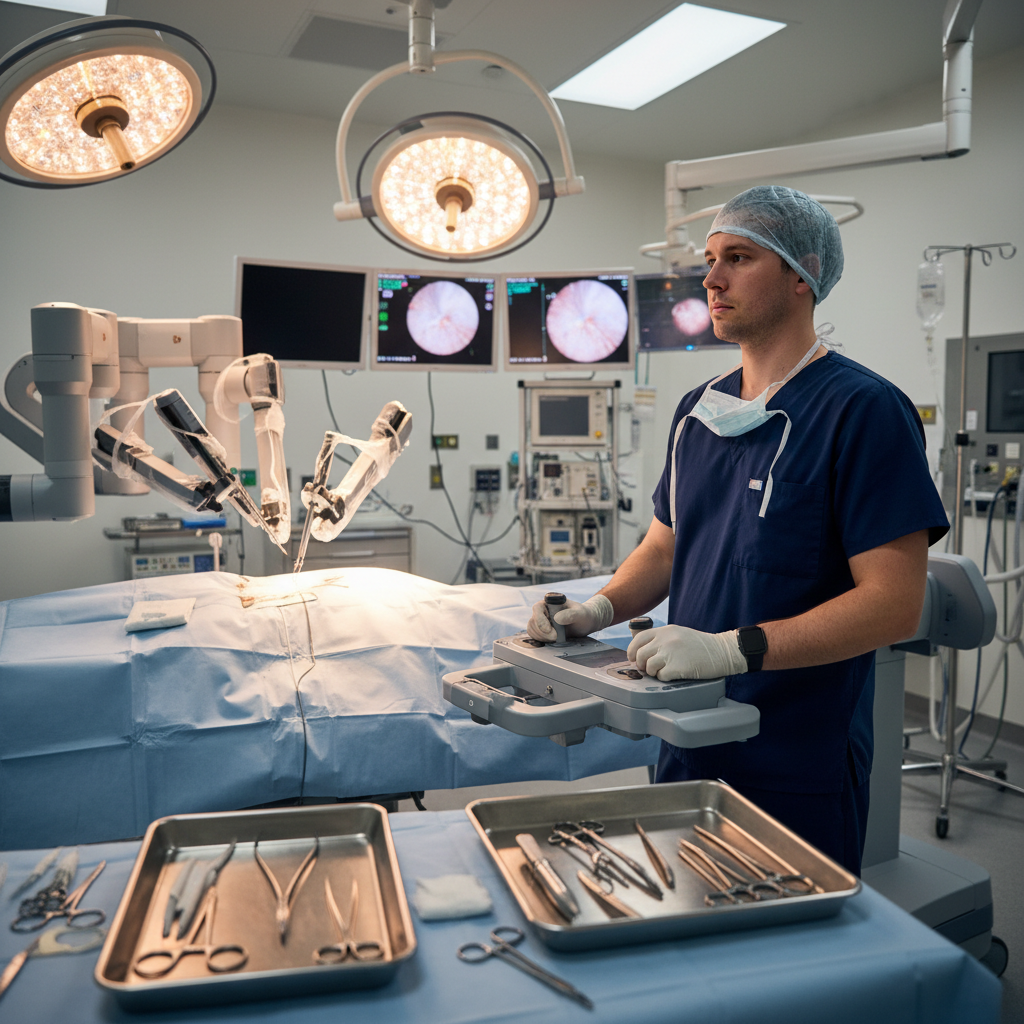
You have seen the da Vinci robot roll into the OR. You have watched the surgeon sit at the console while the robotic arms move with precision you cannot quite believe. And you have thought: I want to be part of that team.
Transitioning from traditional surgical cases to robotics is not about luck or waiting years for an opening. It is about intentional skill-building, strategic exposure, and the right conversations — all of which you can start this month.
Here is your 6-month roadmap to becoming a robotic surgical tech, broken into clear phases with actionable steps for CST career growth.
Month 1–2: Build Your Foundation Knowledge
Before you touch a robotic arm, you need to understand how robotic-assisted surgery works, what the team dynamics look like, and what makes a strong robotic surgical tech different from a traditional scrub role.
Start with self-education:
- Watch manufacturer training videos (Intuitive Surgical has public resources on the da Vinci system)
- Read case studies in your specialty — urology, gynecology, cardiothoracic, or general surgery
- Follow robotic surgery journals and podcasts to understand emerging techniques
- Join online forums or LinkedIn groups where surgical tech robotics professionals share tips
At the same time, talk to your manager. Schedule a one-on-one and say clearly: “I am interested in cross-training into robotics. What does that path look like here?” Some facilities have formal programs; others let you shadow first. Either way, stating your goal early puts you on the radar.
Month 2–3: Shadow and Observe Robotics Cases
You cannot learn robotics from a textbook alone. You need to see the workflow, the setup, the troubleshooting, and the team communication in real time.
Ask to observe during your off-shift or slow days. Most OR managers will say yes if you frame it as professional development. Watch at least three to five cases across different specialties if possible. Pay attention to:
- How the robot is draped and positioned
- How instruments are loaded and exchanged
- What the robotic surgical tech does when the surgeon is at the console
- Common troubleshooting moments (instrument jams, camera fogging, arm collisions)
- How the scrub tech and robotic tech divide responsibilities
Take notes. Ask questions afterward, not during the case. The robotic techs you shadow are your future colleagues and references — treat every observation as a networking opportunity.
Month 3–4: Get Hands-On Training (Formal or Informal)
By now, you understand the theory and have seen the practice. Time to touch the equipment.
Formal training options:
- Manufacturer-led training (Intuitive Surgical offers onsite and online modules for da Vinci)
- Facility-sponsored cross-training programs (often 2–4 weeks with a preceptor)
- Community college or continuing education courses in robotic surgery assistance
- Professional conferences with hands-on workshops (AST, AORN annual meetings)
Informal training: If your facility does not have a formal program, ask a senior robotic surgical tech if you can assist during setup and breakdown. Offer to help with instrument counts, draping, or console positioning during non-critical moments. Every minute you spend near the robot builds muscle memory.
This is also the time to update your resume and internal profile. Add “robotic surgery observation” or “da Vinci system training in progress” to your skills section. Document every hour of exposure.
Month 4–5: Start Scrubbing Robotics Cases with a Preceptor
You are ready to move from observer to participant. In most facilities, this means scrubbing robotics cases under the supervision of an experienced robotic surgical tech for at least 10–20 cases.
What to expect: You will start with simpler, lower-acuity cases — often robotic-assisted hysterectomies or prostatectomies. Your preceptor will handle the console-side tasks while you manage the traditional scrub responsibilities and learn to anticipate instrument exchanges.
Focus on:
- Speed and accuracy during setup (robotics cases have tight turnover windows)
- Sterile technique around robotic arms and drapes
- Communication with the surgeon at the console (they cannot see you, so verbal cues matter)
- Troubleshooting common issues without panicking
Ask for feedback after every case. What did you do well? What slowed things down? Where do you still hesitate? Robotic surgery is a team sport, and self-awareness accelerates your learning curve.
Month 5–6: Build Your Case Log and Have the Promotion Conversation
By month five, you should have at least 15–25 robotics cases under your belt, a mix of specialties if possible, and a clear sense of where you still need reps.
Document everything: Keep a case log with date, procedure type, surgeon, and your role (observer, assistant, primary scrub). This log becomes your evidence when you apply for robotics positions or ask for a pay adjustment.
Now comes the most important conversation: asking to be added to the robotics rotation. Schedule time with your OR director or manager. Bring your case log, your training certificates, and a short statement of what you bring to the robotics team. Be specific: “I have scrubbed 22 robotic cases across urology and gynecology, completed da Vinci system training, and I am ready to take primary robotic tech assignments.”
If your current facility does not have openings, this is also the moment to explore surgical tech robotics opportunities at other hospitals. Robotics programs are expanding rapidly, and facilities are actively recruiting techs with even basic robotic experience. A 6-month investment in training can unlock travel contracts, permanent roles, and significant pay increases.
Beyond Month 6: Keep Growing Your Robotics Expertise
Landing your first solo robotics case is not the finish line — it is the starting line. The best robotic surgical techs continue learning, cross-training in new specialties, and staying current with software updates and new instruments.
Consider pursuing advanced certifications (CST with robotics endorsement, manufacturer-specific credentials) and attending annual robotics surgery conferences. The field is evolving quickly, and staying ahead of the curve keeps you competitive.
Most importantly, mentor the next wave of surgical techs who want to break into robotics. You were the one shadowing six months ago — now you are the one who can open doors for others. That is how strong OR teams are built. ✨
If you are ready to take your CST career in a new direction — whether that means finding a facility with a strong robotics program, exploring travel opportunities, or negotiating for the training you deserve — the Intuites Recruiting Team is here to help. We work with surgical techs every day who are leveling up their skills and their careers. Reach out anytime at contact@intuites.healthcare or visit intuites.healthcare to explore what is next for you. We would love to hear where you are headed. 🤍
#RoboticSurgicalTech #SurgicalTechRobotics #CSTCareerGrowth #SurgicalTechJobs #RoboticSurgery #DaVinciRobot #ORJobs #SurgicalTechTraining #HealthcareCareers #AlliedHealthProfessionals #CSTLife #SurgicalTechnology #RoboticsInHealthcare #CareerDevelopment #IntuitesHealthcare
Looking for a healthcare team that truly sees your value?
The Intuites Recruiting Team is here to listen, support your career, and connect you with roles across the USA — when you're ready.