
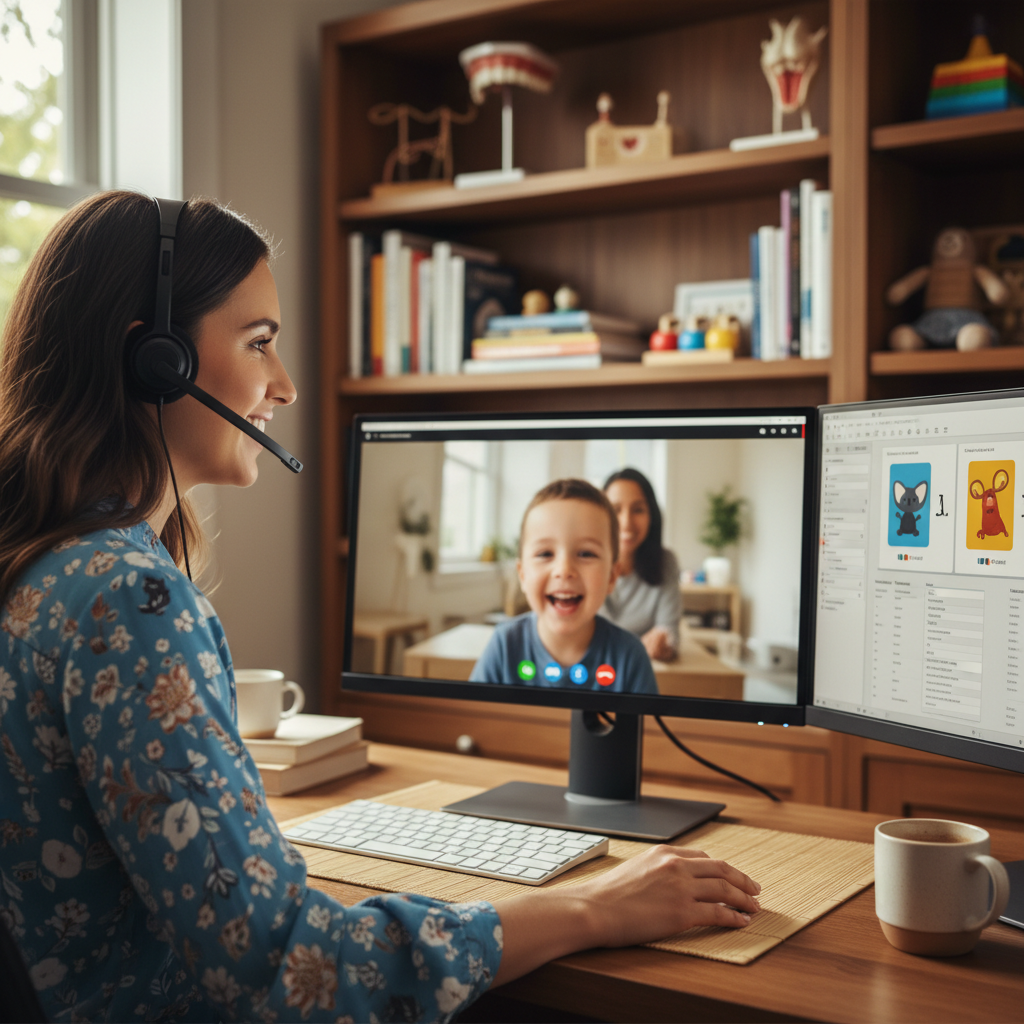
The telehealth SLP landscape in 2026 looks nothing like it did during the 2020 scramble. The initial surge has settled, payers have tightened reimbursement rules, and the market has segmented into distinct niches with very different rate structures and job security profiles.
If you're an SLP considering virtual work—or already doing it and wondering if the grass is greener elsewhere—here's an honest read on where demand actually lives right now, what settings pay what, and which markets are worth your time.
Spoiler: It's not one-size-fits-all anymore. ✨
Schools Still Dominate Volume (But Rates Haven't Kept Pace)
Public school teletherapy remains the largest single employer of virtual SLP jobs in 2026. Districts from rural Montana to suburban Texas continue contracting with telehealth platforms to fill caseload gaps, especially in underserved areas where on-site clinicians are impossible to recruit.
The reality: Schools offer the most consistent hours and the longest contract lengths—often full academic years with renewal options. But the rates have compressed. In 2020, some online speech therapist roles in schools paid seventy to eighty-five dollars per hour. By mid-2026, most platforms are offering fifty-five to sixty-five dollars per hour for W-2 employees, with 1099 contractors seeing sixty-five to seventy-five dollars before self-employment tax.
Why the drop? Payer pressure, increased supply of clinicians willing to work remotely, and platforms competing on price to win district contracts. If you value schedule predictability and don't mind IEP paperwork, school teletherapy still works—but it's no longer the gold rush it was.
Early Intervention and Pediatric Outpatient: Where Rates Hold
Private pediatric practices and early intervention agencies that pivoted to hybrid models during the pandemic have kept telehealth as a permanent option, and they're paying better than schools in many cases.
Rates for virtual SLP jobs in private pediatric outpatient settings typically range from seventy to ninety dollars per hour in 2026, especially if you're seeing patients through direct-pay or commercial insurance rather than Medicaid-only panels. Some practices in high-cost metro areas—think Seattle, Boston, the Bay Area—are paying ninety-five to one hundred ten dollars per hour for experienced clinicians who can manage their own scheduling and documentation with minimal supervision.
The trade-off: These roles often require you to handle your own marketing, maintain your own liability insurance if you're 1099, and navigate state licensure compacts if you're seeing kids across state lines. But if you're comfortable with a bit more autonomy, the rate premium is real.
Key settings hiring telehealth SLP roles in pediatrics:
- Private group practices offering hybrid in-person and virtual slots
- Early intervention programs (Part C) in states that permanently adopted telehealth rules
- Specialty clinics focusing on autism, feeding disorders, or AAC where virtual follow-ups are clinically appropriate
- Direct-to-consumer platforms that connect families with licensed SLPs for pay-per-session services
Adult Medical and Post-Acute: The Surprise Growth Pocket
Here's the 2026 trend that caught a lot of people off guard: telehealth for adult medical SLP—especially post-stroke, voice, and cognitive-communication cases—is quietly growing, and it's paying well.
Hospitals and health systems that initially resisted virtual SLP for medical patients have come around, partly because Medicare and many commercial payers now reimburse telehealth speech therapy at parity with in-person visits in most states. Skilled nursing facilities and home health agencies are also contracting with remote SLPs to provide consultations, swallow screenings, and cognitive therapy for patients in rural or underserved areas.
Rates in adult medical telehealth SLP roles range from seventy-five to one hundred dollars per hour, with some health system-employed positions offering full benefits, PTO, and CME stipends on top of base pay in the seventy to eighty-five thousand dollar range for full-time work.
The catch: You need solid clinical chops. These aren't scripted articulation drills. You're often triaging dysphagia risk over video, counseling voice patients on technique without hands-on palpation, or adapting cognitive tasks for someone with limited tech literacy. It's clinically interesting work, but it requires confidence and experience.
State Licensure Compacts and the Geography Question
One of the biggest operational headaches in telehealth SLP work in 2026 is licensure. Unlike nursing, which has the Nurse Licensure Compact covering thirty-nine states, speech-language pathology has no equivalent multi-state agreement.
That means if you want to see patients in multiple states as an online speech therapist, you need a separate license in each state—and that gets expensive fast. Application fees, CEU requirements, and renewal cycles vary wildly. Some states process applications in two weeks; others take four months.
The smart move if you're going into telehealth SLP: Pick two or three states where you want to work, get licensed there, and focus your job search accordingly. California, Texas, Florida, and New York have the highest patient volume and the most telehealth-friendly regulations in 2026, but they also have the longest licensure timelines. Smaller states like Colorado, Oregon, and North Carolina process faster and still have decent demand.
Some platforms will reimburse licensure costs; others won't. Ask upfront before you commit.
Platform Work vs. Direct Contracts: The Rate Spread Is Real
Most telehealth SLP jobs are intermediated by a platform—companies that contract with schools, hospitals, or families and then hire clinicians as W-2 or 1099 workers. The platform handles scheduling, billing, documentation software, and compliance. You show up and treat.
The convenience costs you. Platforms typically take a twenty to thirty-five percent cut. If a school district is paying the platform ninety dollars per session, you might see fifty-five to sixty-five dollars of that.
If you're willing to do the administrative work yourself—contracting directly with a school district, a private practice, or even marketing to families on your own—you can capture the full rate. Direct-contract SLPs in 2026 are earning eighty-five to one hundred twenty-five dollars per hour in some markets, but they're also handling their own liability insurance, malpractice coverage, billing, and taxes.
It's not for everyone, but if you've been doing telehealth for a few years and have the systems in place, going direct can be a significant income boost.
What to Actually Expect in 2026
The telehealth SLP market in 2026 is mature, segmented, and no longer offering the easy money some clinicians remember from the early pandemic days. But there's still real demand—just in specific pockets.
If you're chasing the highest rates, look at private pediatric practices in high-cost metro areas, adult medical roles with health systems, or direct contracts where you can keep the full fee. If you want the most stable hours and the simplest onboarding, school teletherapy still delivers, even if the rates have come down.
And if you're just starting out in virtual work, expect to spend as much time navigating licensure, platform contracts, and documentation software as you do treating patients—at least in the first few months.
The demand is real. The work is there. You just have to know where to look. 🌱
Let's Talk About Your Next Move
If you're exploring telehealth SLP opportunities—or if you're ready to transition back to in-person work and want to know what the market looks like right now—the Intuites Recruiting Team is here to help. We work with allied health professionals across the country to find roles that actually match what you're looking for, not just what's easiest to fill.
Reach out anytime at contact@intuites.healthcare or visit intuites.healthcare to see what's available. We're real people, and we'll give you a straight answer.
#TelehealthSLP #OnlineSpeechTherapist #VirtualSLPJobs #SpeechPathology #AlliedHealth #SLPJobs #TelehealthCareers #SpeechTherapist #RemoteSLP #HealthcareStaffing #SLPLife #TelehealthTrends #AlliedHealthCareers #SpeechLanguagePathology #HealthcareTrends
Looking for a healthcare team that truly sees your value?
The Intuites Recruiting Team is here to listen, support your career, and connect you with roles across the USA — when you're ready.