There are patients you remember by room number. Patients you remember by diagnosis. And then there are the ones you remember by name — the ones who make you check the assignment board before your shift even starts, hoping you’ll see their room listed next to yours.
For me, it was Mr. Chen in 412.
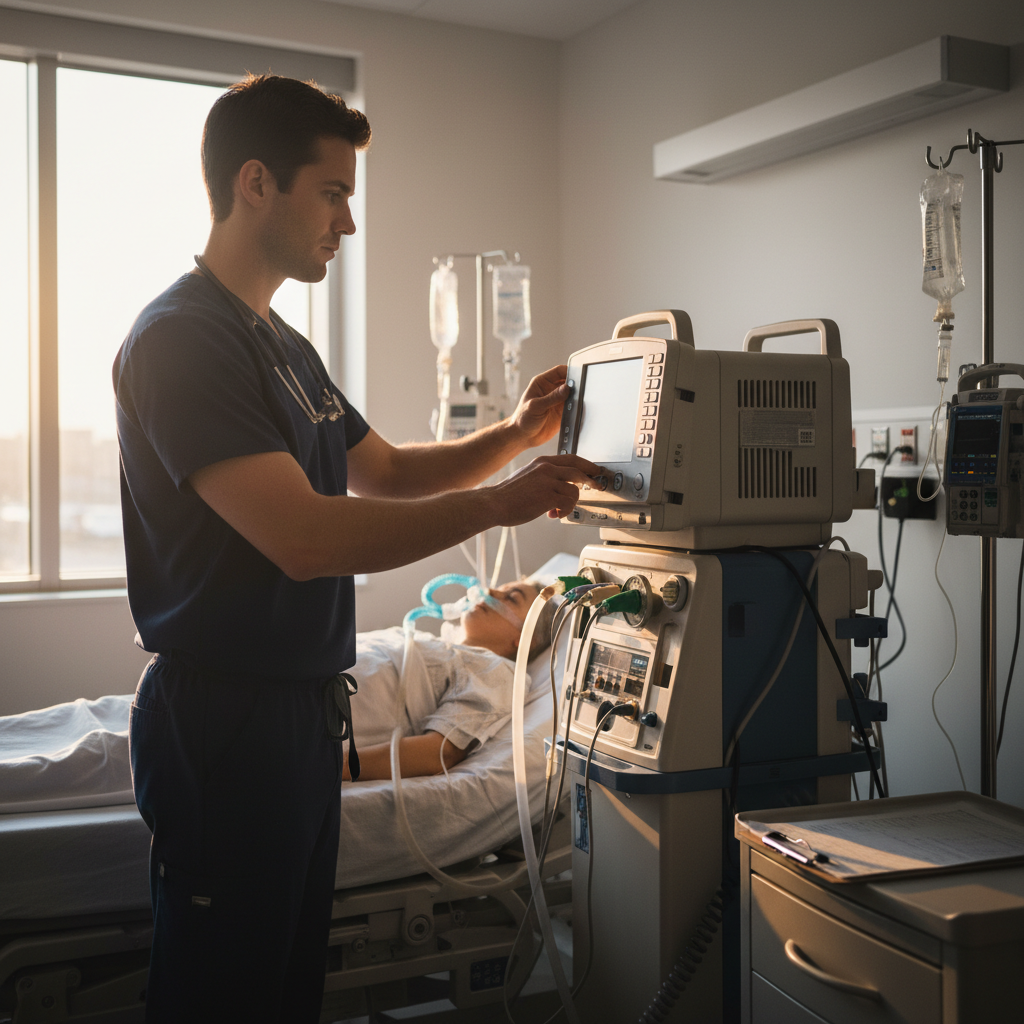
I’m a respiratory therapist, and I’ve worked enough long-term vent cases to know the rhythm. You build rapport. You do your job. You hand off to the next shift. But every so often, someone breaks that professional distance — not because you’ve done anything wrong, but because the work itself demands you show up differently.
The Pull You Do Not Talk About
Mr. Chen had been on our unit for sixty-three days when I first met him. ARDS post-COVID, trach, vent-dependent, and fighting like hell to wean. His wife visited every single day, brought photos of their grandkids, played music from his phone even when he was too sedated to respond.
I was assigned to him three shifts that first week. By the fourth, I started clocking in fifteen minutes early just to read his overnight notes before report. I wanted to know if he’d tolerated the pressure support trial. If his sats had held. If he’d squeezed his wife’s hand.
This is the part of allied health work we do not talk about enough. The clinician connection that forms across long admissions. The patients who stop being a room number and become someone you genuinely root for. Someone whose small wins — a successful wean, a clear chest X-ray, five minutes off the vent — feel like your wins too.
It is not unprofessional. It is not a boundary violation. It is what happens when you show up, shift after shift, and bear witness to someone’s hardest fight.
Why Certain Patients Pull Harder
Not every patient creates this kind of pull, and that is okay. But when it happens, there are usually patterns:
- Length of stay. The longer the admission, the more you see the whole person — not just the diagnosis. You learn their routines, their fears, their sense of humor, the way they communicate even without words.
- Family presence. When families are involved, engaged, and hopeful, it changes the emotional texture of the room. You are not just treating a patient; you are supporting a family system.
- The fighter instinct. Some patients just refuse to give up, and that tenacity is contagious. You find yourself matching their effort with your own.
- Shared humanity. Sometimes it is as simple as this: they remind you of someone you love. Or they see you — really see you — and thank you in a way that lands.
With Mr. Chen, it was all of the above. He was seventy-two but had the grip strength of someone decades younger. He mouthed ‘thank you’ every time I suctioned his trach. His wife learned to read the vent settings and would ask me questions that showed she understood the stakes.
I started picking up extra shifts on his unit. Not because I needed the hours. Because I wanted to be there for the wins — and, if I am honest, for the losses too.
The Emotional Labor No One Warns You About
There is a version of RT emotional work that gets talked about in school: compassion fatigue, secondary trauma, the importance of self-care. All true. All necessary.
But there is another version that does not fit neatly into those frameworks. The version where caring deeply does not drain you — it fills you up. Where showing up early is not a burden; it is a choice you make because the work matters and the person matters.
That does not mean it is easy. Mr. Chen had setbacks. A pneumothorax that required a chest tube. A failed extubation. Days where his O2 needs crept back up and I could see the exhaustion in his eyes.
On those days, I still clocked in early. I still checked his assignment. I still adjusted the vent settings with the same precision, but also with the quiet hope that this time, this trial, this shift might be the one where something clicked.
Because that is what allied health patient care looks like when it is personal. You do not do less. You do not step back. You lean in, even when it is hard, because the relationship you have built demands it.
The Day He Came Off the Vent
It happened on a Wednesday morning, seventy-nine days into his admission. I was not even assigned to him that day — I was covering the step-down unit — but his primary RT texted me during my break.
‘Chen’s off the vent. Breathing on his own. Thought you’d want to know.’
I finished my shift, then went upstairs before I left. Mr. Chen was sitting up in bed, nasal cannula in place, talking to his wife in Mandarin. When he saw me in the doorway, he smiled — a real, full smile — and waved me in.
We did not say much. He was tired, and I was trying not to cry in front of him. But he reached for my hand and held it for a moment, and his wife took a photo of the two of us. I have it saved on my phone. I look at it sometimes when I have a hard shift.
He was discharged to rehab two weeks later. I have no idea if he remembers my name. But I remember his, and I remember what it felt like to be part of his story during the hardest chapter.
What This Means for the Rest of Us
If you are an RT, a PT, an OT, a surgical tech, a pharmacy tech — any allied health professional who has ever felt that pull toward a specific patient — this is your permission to let it mean something.
You do not have to keep every relationship at arm’s length to be professional. You do not have to feel guilty for caring deeply or for clocking in early because you want to see how someone is doing.
The patients who pull us back, shift after shift, are often the ones who remind us why we chose this work in the first place. They are the ones who make the hard days bearable and the good days unforgettable.
And if you are in a season where the work feels heavy, where you are not sure if you are making a difference — I promise you, you are. Somewhere, there is a patient who remembers your name. Somewhere, there is a family who is grateful you showed up early, stayed late, and cared enough to see their loved one as a whole person.
That is the work. That is the privilege. That is what keeps us coming back. 🤍
If you are looking for your next role in allied health — a place where your skills and your heart are both valued — the Intuites Recruiting Team is here to help. We work with clinicians across the country to find positions that fit not just your resume, but the kind of work that matters to you. Reach out anytime at contact@intuites.healthcare or visit intuites.healthcare. We would love to hear your story.
#RespiratoryTherapist #RTLife #AlliedHealth #HealthcareStories #PatientCare #ClinicalConnection #RespiratoryCare #HealthcareProfessionals #MedicalStories #ICULife #VentManagement #CompassionateCare #HealthcareHeroes #TherapistLife #AlliedHealthCareers
Looking for a healthcare team that truly sees your value?
The Intuites Recruiting Team is here to listen, support your career, and connect you with roles across the USA — when you're ready.