
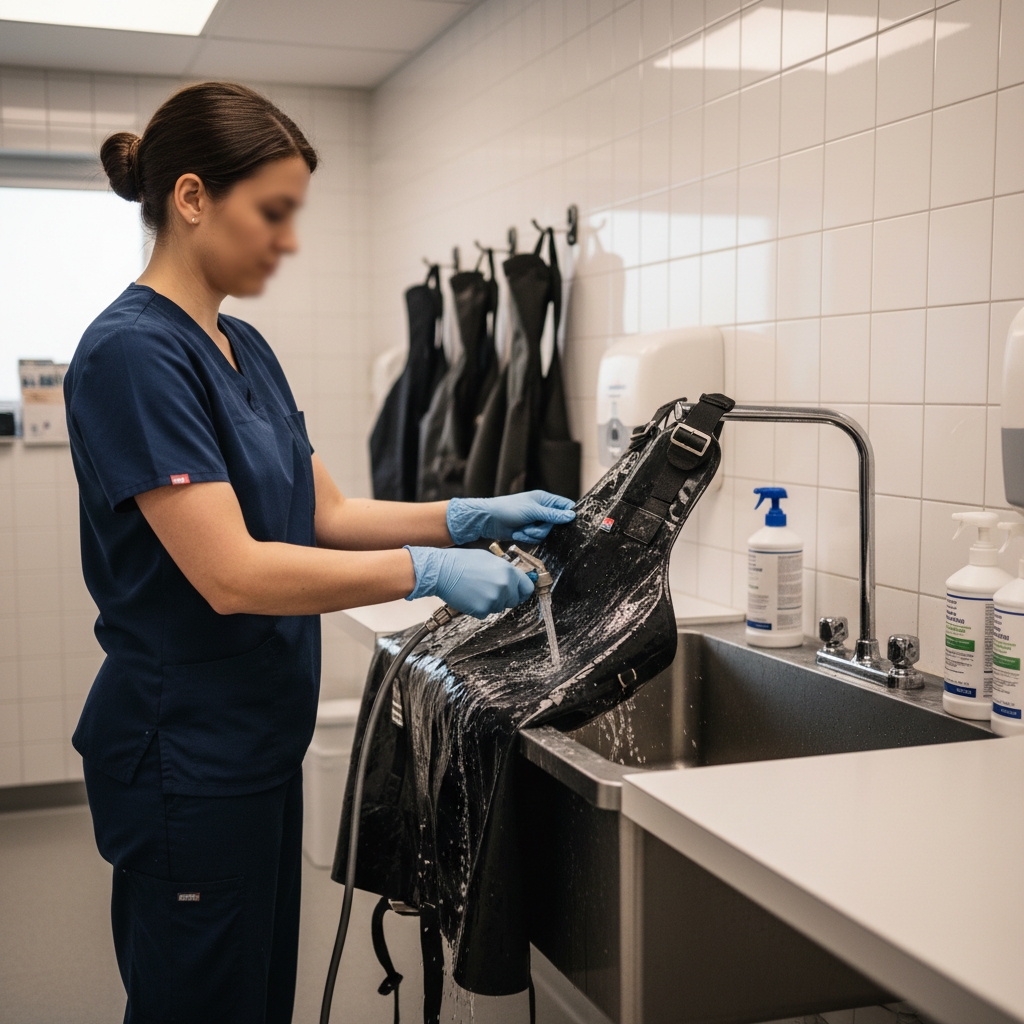
Here's a question that should make every imaging manager pause: When was the last time you actually inspected your department's lead aprons? Not just glanced at them hanging on the rack, but really looked.
If you're like most radiology departments, the answer is probably “too long ago.” Lead apron care sits in that awkward zone between critical safety equipment and “somebody else's job.” But cracked lead, contaminated surfaces, and mystery stains aren't just gross — they're compliance issues, safety risks, and expensive replacement costs waiting to happen.
Let's fix that. This is your complete guide to lead apron care that actually works in real-world imaging departments.
Why Lead Apron Care Actually Matters
Lead aprons are expensive. A single 0.5mm lead-equivalent apron runs $200-$400. Multiply that across your department, and you're looking at thousands of dollars hanging on those hooks.
But the real cost isn't replacement — it's what happens when protective equipment fails. Cracked lead means radiation exposure. Contaminated surfaces mean infection control violations. Missing aprons during inspections mean citations.
Most departments treat lead apron care like an afterthought until something breaks. The smarter approach? Build simple systems that catch problems early, when they're still fixable.
The Cleaning Protocol Nobody Follows (But Should)
Let's talk about what's actually on your lead aprons right now. Blood? Probably. Contrast media? Definitely. That mystery substance from the ER case last Tuesday? Don't ask.
Here's the cleaning protocol that balances thoroughness with reality:
- Daily wipe-down: After each patient contact, wipe visible surfaces with hospital-approved disinfectant wipes. This takes 30 seconds and prevents 90% of contamination buildup.
- Weekly deep clean: Use mild soap and warm water with a soft cloth. Never submerge aprons or use harsh chemicals that degrade vinyl.
- Immediate spot treatment: Blood, contrast, or bodily fluids get cleaned immediately — not at the end of the shift. Set that apron aside and clean it before it dries.
- Proper drying: Hang aprons to air dry completely before storage. Damp aprons in dark storage rooms grow things you don't want to think about.
What NOT to do: machine wash, use bleach, apply alcohol-based cleaners to vinyl surfaces, or leave aprons crumpled on counters. These shortcuts create cracks, degradation, and replacement costs.
The Product Reality Check
That fancy “lead apron cleaner” being pitched by your vendor? It's usually just diluted quaternary ammonium compound in a spray bottle. Your existing hospital disinfectant probably works fine — just check that it's vinyl-safe and doesn't contain harsh solvents.
Lead Apron Inspection: What You're Missing
Here's where most departments fail: inspection protocols that exist on paper but never happen in practice.
The Joint Commission wants annual fluoroscopic inspection of all lead aprons. But here's what actually catches problems: quarterly visual inspection plus annual fluoro.
Your quarterly visual inspection checklist:
- Run your hands over every inch of the apron surface, feeling for cracks, creases, or hard spots
- Check all buckles, straps, and closures for wear or damage
- Look for discoloration, peeling, or separation of vinyl from lead
- Verify the lead equivalency label is intact and readable
- Document the inspection date and inspector initials directly on the apron tag
The annual fluoroscopic inspection requires actual imaging. Drape the apron over a cassette or detector, expose it, and look for any discontinuities in the lead. Cracks show up as bright lines. This isn't optional — it's a regulatory requirement and a safety essential.
Pro tip: Schedule fluoro inspections right after your equipment's annual maintenance when the room is already down. Batch all aprons in one session instead of disrupting workflow multiple times.
Storage and Tracking Systems That Work
Most lead apron damage happens in storage, not in use. Folding creates permanent creases. Piling creates pressure points. Tossing them in corners creates... well, you've seen it.
Proper storage means:
- Hanging on wide, padded hangers or over apron racks — never folded
- Storing in a clean, dry location away from direct sunlight and heat sources
- Keeping aprons organized by size and type for easy access
- Maintaining adequate spacing so aprons don't press against each other
Now let's talk tracking, because “where did the medium vest go?” shouldn't be a daily scavenger hunt.
Simple Tracking Systems
You don't need expensive RFID systems. You need a system people will actually use:
The tag method: Each apron gets a numbered tag with a QR code. Scan out/scan in with a simple app. Takes five seconds, tells you exactly where every apron is.
The color-code method: Different colored tags for different areas (CT = blue, fluoro = red, mobile = green). Visual inventory at a glance.
The inspection sticker method: Bright stickers showing last inspection date. If the sticker's faded or missing, that apron's overdue.
Pick one system and enforce it. The worst tracking system is having three different systems that nobody follows.
When to Replace vs. Repair
This is where departments waste money — either replacing aprons too early or keeping damaged ones too long.
Replace immediately if you find: Any crack or discontinuity visible on fluoroscopy, separation of lead from vinyl covering, holes or tears that expose lead, or structural damage that prevents proper fit.
You can repair: Torn straps or buckles, minor vinyl surface damage that doesn't affect lead integrity, or worn name tags and labels.
The five-year rule is a myth. Well-maintained lead aprons can last 7-10 years. Poorly maintained ones fail in three. Inspection results matter more than age.
Making It Stick: Building a Culture of Care
The best lead apron care protocol in the world fails if nobody follows it. Here's how to make it stick:
Assign ownership. One person per shift is the “lead apron champion.” Not to do all the work, but to notice when things slip.
Make it visible. Post inspection schedules, cleaning protocols, and replacement dates where people actually see them — not in a binder nobody opens.
Celebrate wins. When your department passes inspection with zero apron citations, acknowledge it. When someone catches a cracked apron before it's used, thank them publicly.
Train new hires properly. Include radiology PPE care in onboarding. Show them the right way before bad habits form.
The goal isn't perfection — it's consistent, sustainable care that protects your team and your budget.
Connect With Intuites
Whether you're managing a team of imaging professionals or looking for your next opportunity in diagnostic imaging, the Intuites Recruiting Team understands the details that matter — like departments that actually maintain their safety equipment properly. If you'd like to explore imaging positions with facilities that invest in their teams and equipment, reach out at contact@intuites.healthcare or visit intuites.healthcare. We're here to help. ✨
#LeadApronCare #RadiologyPPE #LeadApronInspection #ImagingTech #RadTech #RadiologyManagement #HealthcareCompliance #MedicalImaging #CTTech #MRITech #XRayTech #DiagnosticImaging #HealthcareSafety #RadiologyLife #IntuitesCareers
Looking for a healthcare team that truly sees your value?
The Intuites Recruiting Team is here to listen, support your career, and connect you with roles across the USA — when you're ready.