
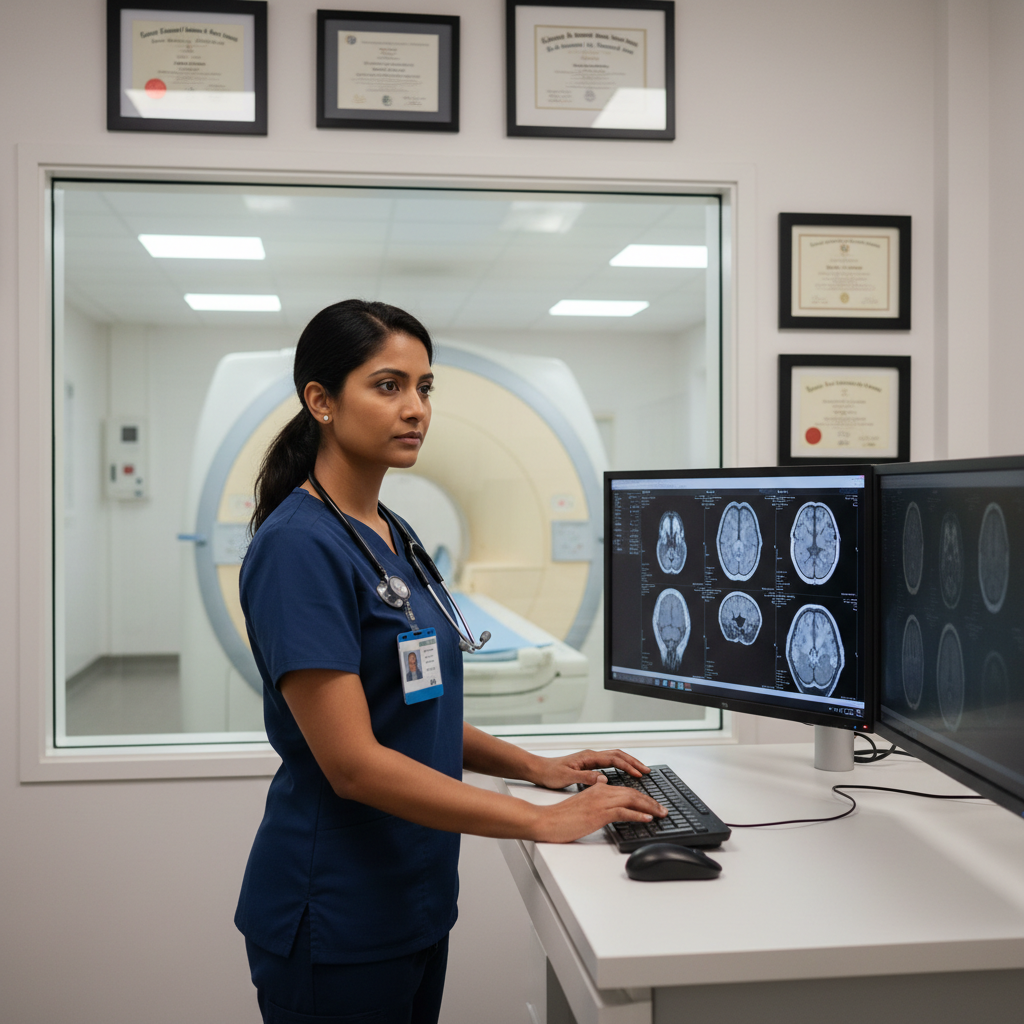
If you’re an MRI technologist scrolling job boards in 2026, you’ve probably noticed something: your inbox is busier than your scan schedule. Recruiters are texting at 7 a.m. Facilities you’ve never heard of are pitching relocation packages. Your current employer just floated a retention bonus out of nowhere.
Welcome to the 2026 MRI tech poaching wars. Imaging recruitment has never been this aggressive, and certain metros are leading the charge with sign-on bonuses that would make a travel nurse blush. Let’s break down where the action is, what’s driving it, and what it means for your career leverage right now.
Why the MRI Shortage Hit Critical Mass in 2026
The MRI tech shortage isn’t new, but 2026 is the year it became a full-blown staffing crisis. Three forces collided at once.
First, the pipeline problem finally caught up. JRCERT-accredited MRI programs graduate fewer than 2,000 techs per year nationwide, while an aging workforce is retiring faster than expected. Second, imaging volumes rebounded hard post-pandemic and kept climbing — outpatient MSK and neuro imaging centers are opening at record pace, and every one needs at least two full-time MRI techs to stay operational. Third, cross-training isn’t solving the gap. Hospitals tried converting X-ray and CT techs into MRI roles, but the physics coursework, registry requirements, and on-the-job training take 18–24 months. That’s too slow when you need coverage today.
The result? MRI tech jobs are sitting open for 90+ days in many markets, and facilities are willing to pay whatever it takes to fill them.
The Top Poaching Metros: Where Sign-On Bonuses Are Exploding
Not all markets are created equal. Based on recruiter intel, job board trends, and real offer letters circulating in tech communities, here are the metros where MRI techs are being aggressively poached in 2026:
Phoenix and Scottsdale, AZ
The Valley of the Sun is offering some of the fattest MRI sign on bonus packages in the country — $15K to $25K for permanent hires, sometimes structured as retention bonuses paid over 12–24 months. Why Phoenix? Explosive population growth (especially retirees needing imaging), a wave of new orthopedic and spine centers, and a shallow local talent pool. Travel MRI rates here are hitting $3,200–$3,600 per week for 13-week contracts, and perm jobs are starting at $85K–$95K base before bonuses.
Charlotte and Raleigh-Durham, NC
North Carolina’s research triangle and banking hub are both in full recruitment mode. Large health systems like Atrium and Duke are competing with private equity-backed imaging chains, and the result is a bidding war. Sign-on bonuses of $10K–$20K are standard, and some facilities are offering student loan repayment as a sweetener. Base salaries for experienced MRI techs are running $75K–$88K, and the cost of living is still reasonable compared to coastal markets.
Austin and San Antonio, TX
Texas has no state income tax, a booming healthcare economy, and a chronic MRI tech deficit. Austin’s tech-driven population growth means more imaging demand, while San Antonio’s military and academic medical presence creates steady volume. Facilities are offering $12K–$18K sign-ons, and travel rates are competitive at $2,800–$3,200 per week. One wrinkle: Texas doesn’t participate in the Interstate Medical Licensure Compact for imaging techs, so you’ll need a Texas-specific ARRT or state license.
Tampa and Jacksonville, FL
Florida’s retirement migration and medical tourism economy make it a permanent MRI hotspot. Both Tampa and Jacksonville are seeing aggressive imaging recruitment, especially in outpatient centers and surgical hospitals. Sign-on bonuses range from $8K to $15K, and some employers are offering relocation stipends on top. Base pay is $72K–$85K, and Florida’s lack of state income tax makes the effective take-home higher than it looks on paper.
Denver and Colorado Springs, CO
Colorado’s outdoor lifestyle is a retention advantage, but it’s also fueling demand — active populations mean more MSK imaging. MRI techs are being recruited with $10K–$15K sign-ons, and some facilities are throwing in PTO front-loading or tuition reimbursement for advanced modality cross-training. Base salaries are $78K–$90K, though cost of living is climbing fast.
Retention Counteroffers: What Current Employers Are Doing
Here’s the flip side of the poaching wars: if you’re already employed and hint that you’re looking, many hospitals and imaging centers will suddenly ‘find’ budget for a retention package. We’re seeing:
- Immediate raises: $3–$7 per hour, sometimes backdated to the start of the fiscal year
- Retention bonuses: $5K–$12K paid in installments over 12–18 months, contingent on staying
- Shift differentials: Enhanced evening, weekend, or on-call pay to keep techs from jumping to travel contracts
- Tuition reimbursement: Offering to fund MRI registry completion, advanced certifications, or even bachelor’s degrees in radiologic science
- Flexible scheduling: Four 10-hour shifts, self-scheduling, or guaranteed weekends off — lifestyle perks that cost less than a new hire
If you’re happy where you are but underpaid, now is the time to have that conversation. Managers know replacing an MRI tech costs $30K–$50K in recruiting fees, training, and lost productivity. A $10K retention bonus is a bargain by comparison.
Travel MRI Contracts: The Wild Card in 2026
Permanent poaching is one thing, but travel MRI rates are the elephant in the room. In high-demand markets, 13-week travel contracts are offering gross pay packages of $3,000–$3,800 per week, with tax-free stipends for housing and meals if you qualify under IRS rules (you must maintain a permanent tax home more than 50 miles from the assignment).
The math is compelling: a travel MRI tech working 48 weeks a year at $3,200 per week grosses $153,600 before overtime, versus a perm job at $85K. Even after accounting for your own health insurance, travel expenses, and gaps between contracts, many techs are clearing $120K–$140K annually.
But there’s a catch. Travel MRI gigs require fast onboarding, adaptability to different equipment (Siemens vs. GE vs. Philips), and comfort with short-term housing. And if the market softens — say, Medicare reimbursement cuts hit imaging volumes — travel rates can drop fast. For now, though, travel is the highest-earning path for MRI techs willing to move every few months.
What This Means for Your Career in 2026
If you’re an MRI tech, you have more leverage than you’ve had in a decade. Here’s how to use it:
Don’t settle for your current rate. If you haven’t had a meaningful raise in the past 18 months, ask. Bring data — show your manager what comparable MRI tech jobs are paying in your metro. Be prepared to walk if the answer is no.
Consider a strategic move. If you’re in a low-cost, low-wage market and you’re willing to relocate, 2026 is your year. A move to Phoenix, Charlotte, or Austin could mean a $15K–$25K income jump plus a sign-on bonus.
Explore travel if your life allows it. If you’re single, kid-free, or in a relationship where both partners can be mobile, travel MRI contracts are printing money right now. Just make sure you understand IRS tax-home rules and keep meticulous records.
Invest in certifications. MRI techs with advanced credentials — cardiac MRI, breast MRI, or MRI safety officer certification — command premium pay and are even harder to replace. Some employers will fund the training if you commit to staying.
The MRI shortage isn’t going away in 2026, and probably not in 2027 either. The programs that train new techs are too small, and the demand is only growing. That’s bad news for hospitals and imaging centers, but it’s very good news for you.
Let’s Talk About Your Next Move
Whether you’re curious about travel MRI contracts, exploring a perm relocation with a sign-on bonus, or just wondering what your market value really is, the Intuites Recruiting Team is here to help. We work with MRI techs across the country, and we have real-time intel on what facilities are paying, where the best opportunities are, and how to negotiate the package you deserve.
No pressure, no sales pitch — just honest conversation about your career. Reach out anytime at contact@intuites.healthcare or visit intuites.healthcare. We’d love to hear where you’re at and where you want to go.
#MRITechJobs #ImagingRecruitment #MRIShortage #MRISignOnBonus #TravelMRI #RadiologyCareers #MedicalImaging #HealthcareStaffing #MRITechnologist #DiagnosticImaging #TravelRadTech #HealthcareCareers #ARRT #ImagingJobs #MRITechLife
Looking for a healthcare team that truly sees your value?
The Intuites Recruiting Team is here to listen, support your career, and connect you with roles across the USA — when you're ready.