You know you've crossed over when you start assessing the veins of strangers in the grocery store checkout line. When medical terminology slips into everyday conversation and nobody at Thanksgiving dinner knows what you're talking about anymore. When you've developed opinions—strong ones—about which brand of compression socks reigns supreme.
Welcome to the club. If you've been in healthcare long enough, you've probably noticed some … changes. Little quirks that mark you as a healthcare veteran. And honestly? We wouldn't have it any other way. 💼
Here are twelve signs that healthcare isn't just what you do—it's who you are.
You've Developed Superpowers Nobody Asked For
Let's start with the abilities you didn't know you needed but now can't imagine living without.
Your bladder has evolved beyond normal human capacity. Twelve-hour shifts with maybe one bathroom break? No problem. You've trained your body to operate on a schedule that would baffle physiologists. Your non-healthcare friends complain about needing to stop every two hours on road trips, and you just smile knowingly.
You can sleep anywhere, anytime, in any position. Break room chair during a double? Easy. Sitting upright in a supply closet for seven minutes? Done it. You've mastered the art of the power nap in conditions that would leave most people wide awake and uncomfortable. The sound of alarms and call bells has become white noise.
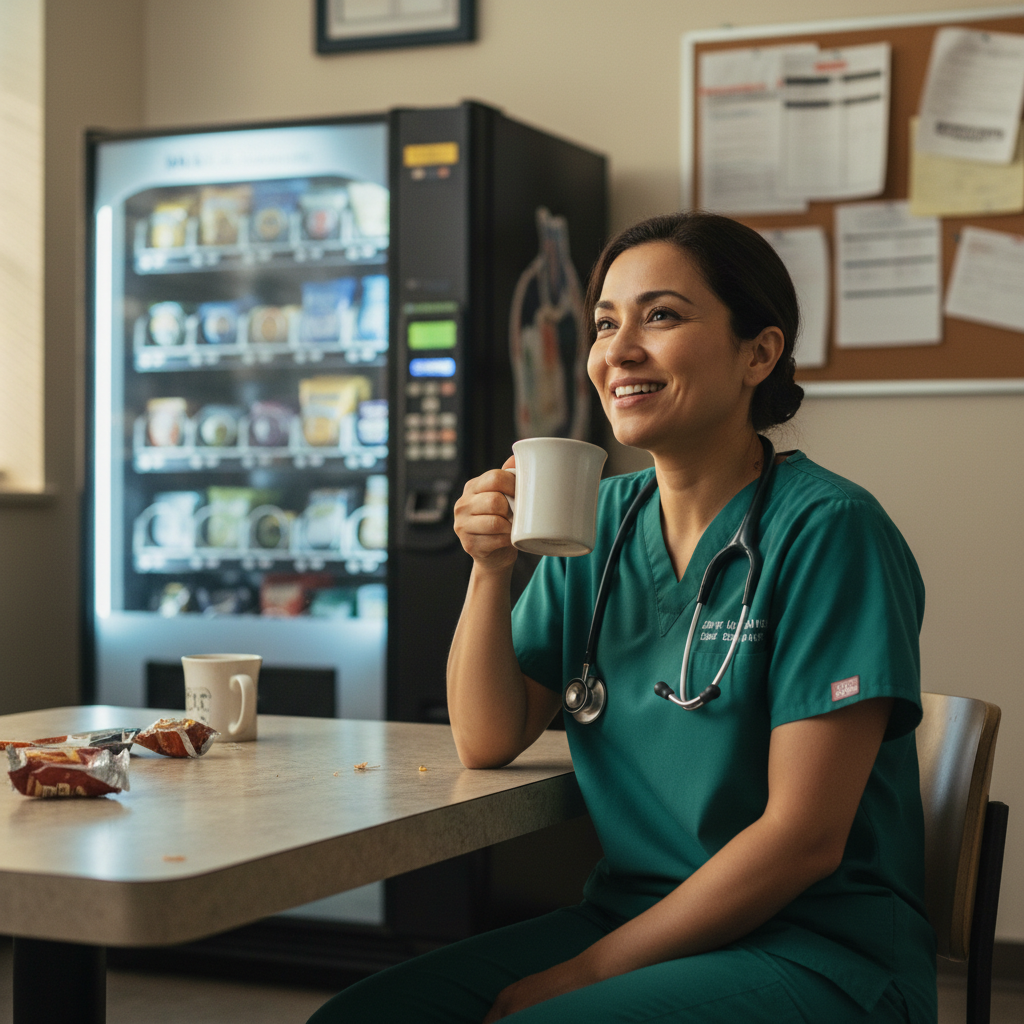
You can eat lunch in under four minutes. And you don't even taste it anymore. Food is fuel, break time is precious, and the concept of a leisurely meal during your shift is a distant memory from another life. You've perfected the art of inhaling a sandwich while simultaneously charting and keeping one eye on the unit.
Your Social Life Has … Adapted
Healthcare doesn't just change your work life. It seeps into everything else, too.
You've become the unofficial medical consultant for everyone you know. Family text chains light up with photos of rashes. Friends call asking if they should go to urgent care. Your neighbor knocks on your door at 9 PM because their kid has a fever. You've diagnosed more people at barbecues than some clinics see in a week, and you've learned to preface everything with “I'm not your provider, but…”
All your friends work in healthcare. Because nobody else understands why you can't commit to weekend plans three months in advance. Or why you're texting at 3 AM on a Tuesday. Or why you sometimes need to decompress in complete silence after a shift. Your people get it. They live it too.
Your idea of small talk has changed. You catch yourself starting sentences with “So this patient came in with…” at dinner parties, then remember that normal people don't actually want to hear about bowel movements or fascinating wound care cases while they're eating. You've had to create a mental filter for “stories appropriate for mixed company.”
Medical Dramas Are Basically Comedy Shows Now
You yell at the TV during medical shows. “That's not how chest compressions work!” “Where are their gloves?!” “No attending would ever let an intern do that procedure!” Your family has banned you from watching Grey's Anatomy in the living room because your running commentary ruins the drama. But you can't help it—the inaccuracies are painful.
You know exactly which shows get it right. And you have opinions. Strong ones. You've found your people in online forums dedicated to roasting the medical impossibilities in popular shows, and you feel personally validated when a series actually hires real healthcare consultants.
Your Body and Brain Have Permanently Adjusted
Some changes run deeper than habits. They're physical now.
You assess everyone's veins automatically. Good veins make you happy. You've complimented strangers on their antecubital access. You look at someone's forearms and think “18 gauge, easy stick.” This is just how your brain works now, and there's no going back.
Your immune system is basically titanium. Everyone around you is dropping like flies during cold and flu season, and you're fine. You've been exposed to everything, and your body has become a fortress. The trade-off? That one time you do get sick, it hits like a truck, because your body forgot how to have a proportional immune response.
The smell doesn't bother you anymore. C. diff? You eat lunch right through it. GI bleeds? No problem. You've become nose-blind to things that would send normal humans running for fresh air. Your olfactory tolerance is a badge of honor, even if it sometimes concerns your loved ones.
You've Developed Strong Opinions About Oddly Specific Things
Healthcare veterans know that the details matter—sometimes too much.
- You have a favorite brand of pen that writes on gloves
- You know which vending machine has the best snacks and which one eats your money
- You have feelings about different brands of medical tape
- You've ranked every pair of shoes you own by shift-survival capability
- You know exactly which bathroom on your unit is the quietest
- You have a preferred brand of hand lotion for post-sanitizer recovery
You've memorized dosage calculations that normal humans would need a calculator for. You can convert units in your head. You know medication compatibilities off the top of your head. Your brain has become a walking drug guide, and you sometimes catch yourself doing medical math while grocery shopping. “If this pasta is $2.50 per pound, and I need 12 ounces, that's… wait, why am I calculating this like it's a medication dose?”
You've Earned These Battle Scars
Here's the thing about all these signs—they're not really jokes. Well, they are. But they're also evidence of something deeper.
They're proof that you've stayed. That you've adapted. That you've built a career in one of the most demanding, rewarding, exhausting, and meaningful fields that exists. Every weird habit, every automatic assessment, every strong opinion about compression socks—they're all tiny markers of experience. Of resilience. Of showing up, shift after shift, even when it's hard.
Healthcare changes you. It gives you skills and perspectives that people outside the field will never fully understand. It makes you part of a community that speaks its own language and shares its own inside jokes. And yeah, sometimes it makes you a little weird at parties.
But you wouldn't trade it. Not really. Because this work matters, and you're good at it, and somewhere along the way it became part of who you are. ✨
Whether you're a seasoned healthcare veteran nodding along to every single one of these signs, or you're newer to the field and just starting to notice these changes in yourself, know that you're in good company. We're all out here assessing veins and yelling at medical dramas together.
The Intuites Recruiting Team works with healthcare professionals at every stage—from brand-new grads to seasoned travelers who've seen it all. If you're looking for your next opportunity, or if you're ready for a change that fits your evolved healthcare lifestyle, we'd love to hear from you. Reach out anytime at contact@intuites.healthcare or visit intuites.healthcare. We speak your language (medical jargon and all). 🤍
#HealthcareHumor #ClinicianLife #HealthcareVeteran #NurseLife #MedicalHumor #HealthcareMemes #IndustryJokes #HealthcareProfessionals #ClinicalLife #HealthcareReality #NurseHumor #TravelNursing #HealthcareCareer #MedicalProfessionals #HealthcareFamily
Looking for a healthcare team that truly sees your value?
The Intuites Recruiting Team is here to listen, support your career, and connect you with roles across the USA — when you're ready.