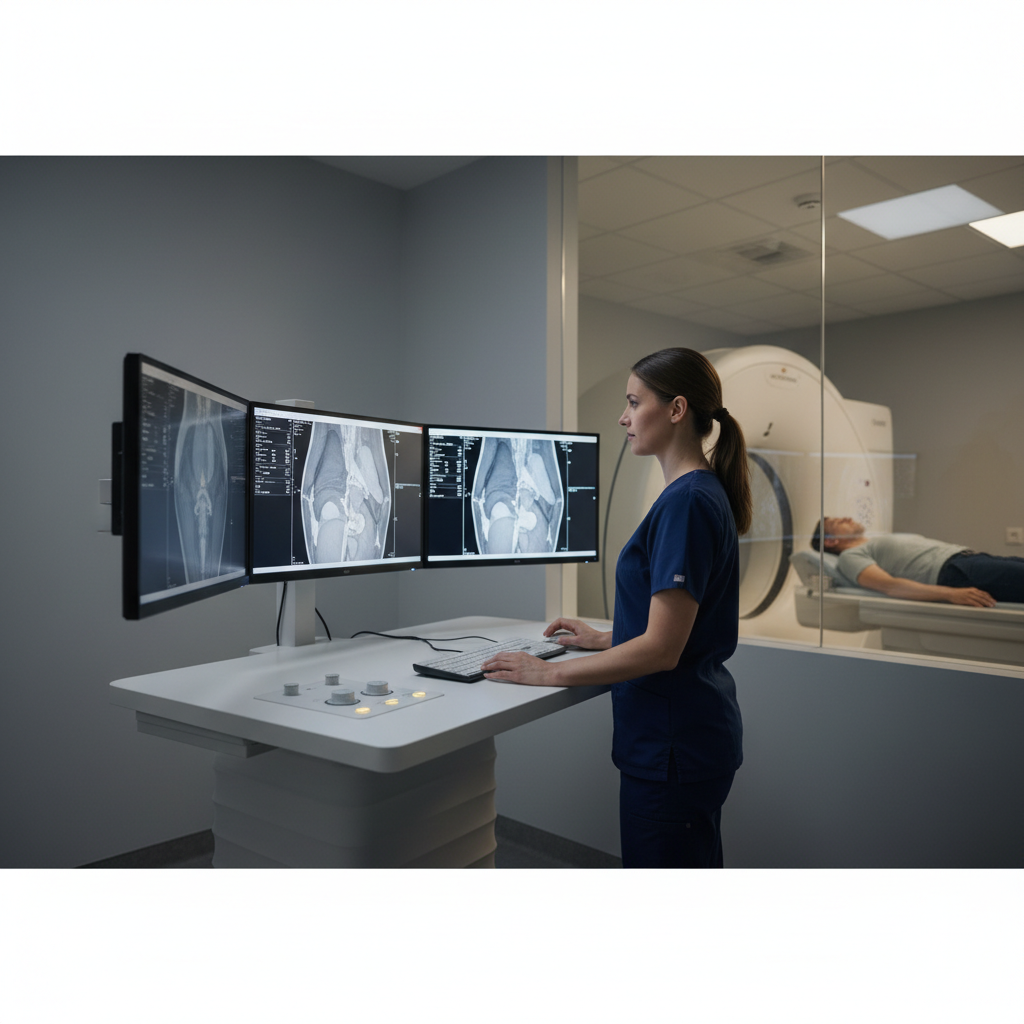
Let’s be honest: the radiology career path isn’t always glamorous. The pay often plateaus after a few years. Weekend rotations never stop. The call schedule can wreck your social life. And yet, imaging techs stay. Not just stay — many wouldn’t dream of leaving.
What keeps rad techs in the field when other clinical roles offer faster advancement or better schedules? It’s not one thing. It’s a constellation of reasons that, taken together, make imaging tech life uniquely rewarding. Whether you’re a seasoned CT tech or a new grad wondering if you made the right choice, here are eight real reasons why technologists stick with imaging — even when it’s hard.
The Diagnostic Puzzle Never Gets Old
Every scan tells a story. Every image is a mystery waiting to be solved — and you get to be part of that moment of discovery. Unlike roles where the routine becomes numbing, imaging keeps your brain engaged. One hour you’re scanning a shoulder, the next you’re doing a contrast-enhanced brain study, then a pediatric chest X-ray that requires all your patience and positioning skill.
Rad tech retention often hinges on intellectual stimulation, and imaging delivers. You’re constantly problem-solving: adjusting protocols for unusual anatomy, troubleshooting artifacts, optimizing images for the best diagnostic quality. The technology evolves, the cases vary, and boredom rarely creeps in.
Sure, there are days when it feels like you’re running an assembly line. But then you catch something subtle on a scout image, call the radiologist over, and watch the entire care plan pivot. That never stops feeling important.
You See Real Impact Without the Emotional Drain
Here’s something techs don’t talk about enough: imaging offers a sweet spot between clinical detachment and patient connection. You interact with patients during vulnerable moments — explaining procedures, easing anxiety, positioning them carefully — but you’re not managing their long-term care or watching prolonged suffering.
You get the satisfaction of helping without the emotional exhaustion that burns out nurses and bedside staff. A patient comes in scared about a lump. You perform the mammogram with skill and compassion. Then they move on to the next phase of care, and you reset for the next person. It’s meaningful work with built-in boundaries.
This emotional pacing is huge for technologist career longevity. You can sustain this work for decades without the compassion fatigue that drives people out of direct patient care roles.
The Tech Keeps You Learning (and Marketable)
Imaging technology doesn’t stand still. New software updates, AI-assisted protocols, advanced modalities — there’s always something to learn. For techs who like staying current, this is a feature, not a bug.
Cross-training opportunities abound. Start in general radiography, add CT, pick up MRI, maybe specialize in interventional or cardiac cath lab work. Each additional modality makes you more valuable and opens new opportunities. Travel positions, per diem gigs, leadership roles — they all favor techs who’ve diversified their skill set.
And let’s be real: in an era of automation anxiety, imaging techs are relatively insulated. Yes, AI will change workflows, but it won’t replace the human who positions the patient, selects the protocol, recognizes when something’s off, and ensures safety. Your expertise remains essential.
The Schedule Flexibility (Yes, Really)
Hear us out. Yes, imaging departments run 24/7. Yes, you’ll work weekends and holidays. But compared to bedside nursing or surgical schedules, many imaging roles offer surprising flexibility once you’ve got seniority or specialize in outpatient settings.
Per diem imaging work is abundant. Part-time positions exist. Some techs build careers around three 12-hour shifts, leaving four days free. Others go the travel route, working intense contracts with extended time off in between. Outpatient imaging centers often offer Monday-Friday schedules with no call.
The key is knowing your options. Rad tech retention improves dramatically when techs realize they can shape their imaging tech life around their needs — whether that’s parenting, education, side projects, or just avoiding burnout.
The Community Is Real
Walk into any radiology department and you’ll find a specific breed of people: detail-oriented, slightly nerdy about technology, dark-humored in the way all healthcare workers are, and fiercely protective of their team. There’s a camaraderie in imaging that’s hard to replicate.
Maybe it’s because you work in semi-darkness half the time, or because you share the unique experience of explaining to patients that no, the CT scan won’t make them radioactive. Whatever the reason, imaging departments tend to develop tight-knit cultures.
These relationships matter. When you’re deciding whether to stay in a radiology career or jump ship entirely, the people you work with often tip the scale. Good colleagues make hard shifts bearable. Great teams make you want to show up even on days you’d rather stay home.
You Control the Quality (and That Feels Good)
Unlike roles where you’re executing someone else’s orders with little autonomy, imaging techs have significant control over the final product. You choose the positioning, adjust the technique, optimize the contrast timing, minimize artifacts. The image quality is yours.
This ownership matters psychologically. When you produce a perfect lateral cervical spine or a textbook chest X-ray, there’s pride in that craftsmanship. When a radiologist compliments your work or a repeat rate drops because of your attention to detail, it registers as professional validation.
Technologist career satisfaction often hinges on feeling competent and in control. Imaging delivers both. You’re not just a cog — you’re a skilled professional whose expertise directly determines diagnostic outcomes.
The Work-Life Math Actually Works
Let’s talk money and lifestyle honestly. Yes, rad tech pay plateaus. You’re probably not getting rich unless you stack modalities, work travel contracts, or move into leadership. But here’s what imaging offers that many higher-paying roles don’t:
- Stable, predictable hours in many settings (outpatient, imaging centers, scheduled hospital shifts)
- Lower physical demand than nursing or surgical tech roles — your back and feet will thank you
- Decent benefits in hospital systems, including tuition reimbursement and retirement matching
- Geographic flexibility — imaging jobs exist everywhere, and credentials transfer across states relatively smoothly
- Low student debt compared to four-year degrees, meaning your salary goes further
When you add it up, many techs conclude the trade-off works. You earn enough to live comfortably, you avoid the worst aspects of bedside care, and you still get to do meaningful clinical work. That’s not a bad deal.
It’s Just... Yours
Here’s the intangible one, the reason that’s hardest to articulate but might be the most important: at some point, imaging becomes part of your identity. You stop being someone who works in radiology and start being a rad tech. It’s not just what you do — it’s who you are.
You know the equipment by sound. You can eyeball positioning and know it’s right. You understand radiation physics in your bones. You’ve developed instincts about when to call a radiologist stat and when to finish the protocol. This expertise took years to build, and walking away from it feels like abandoning a part of yourself.
Rad tech retention ultimately comes down to this: despite the frustrations, the work fits. It matches your brain, your temperament, your values. And once you find work that fits, leaving becomes harder than staying — even on the tough days.
If you’re an imaging tech reading this and nodding along, you’re not alone. And if you’re exploring new opportunities — whether that’s travel imaging, a different facility, or cross-training into a new modality — the Intuites Recruiting Team would love to hear from you. We specialize in placing rad techs, CT techs, MRI techs, and all imaging specialties in positions that actually fit your life. Reach out anytime at contact@intuites.healthcare or visit intuites.healthcare to explore what’s out there. Sometimes the best way to stay in imaging is to find the right imaging role. 🤍
#RadiologyCareer #RadTechRetention #ImagingTechLife #TechnologistCareer #CTTech #MRITech #RadiologicTechnology #DiagnosticImaging #HealthcareJobs #MedicalImaging #RadTechLife #ImagingCareers #AllianceForImaging #RadiologyTech #HealthcareCareers
Looking for a healthcare team that truly sees your value?
The Intuites Recruiting Team is here to listen, support your career, and connect you with roles across the USA — when you're ready.