
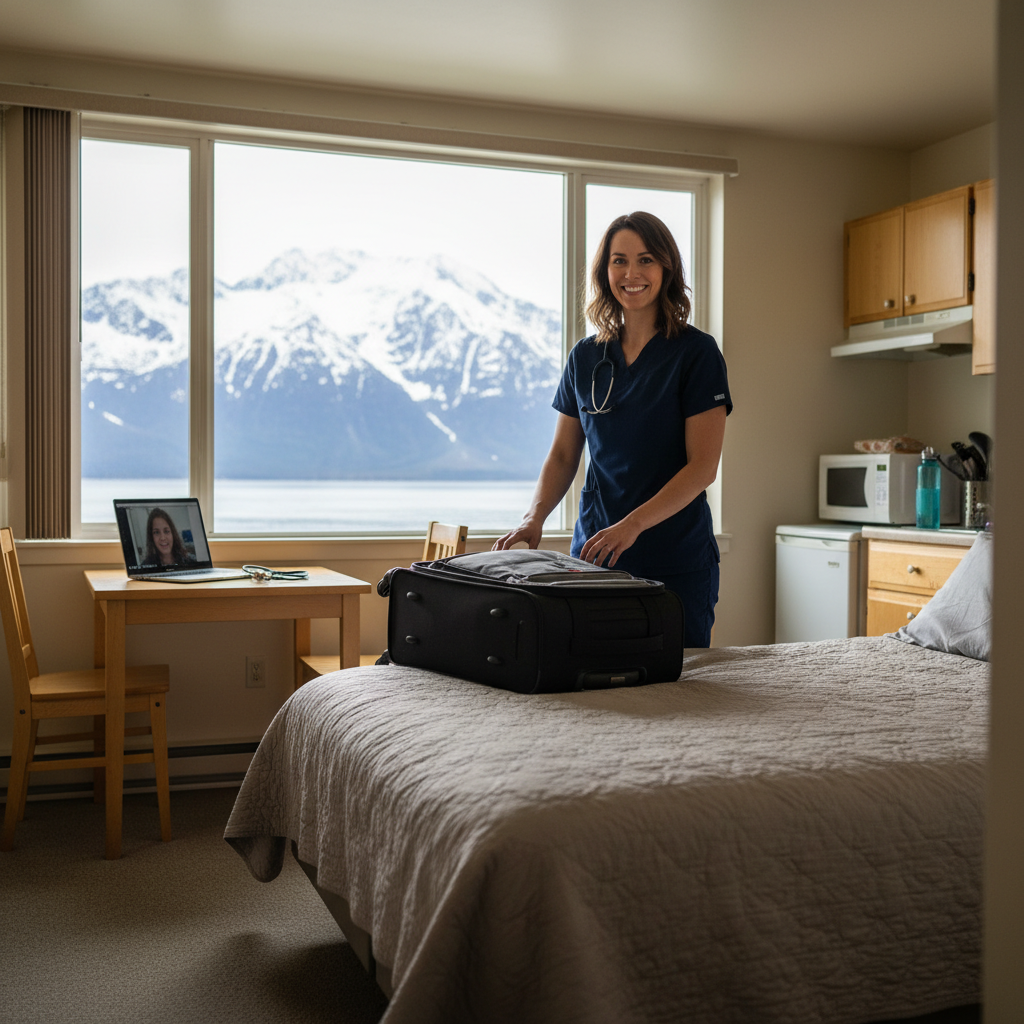
Alaska and Hawaii are the unicorn assignments in travel nursing. Jaw-dropping landscapes, premium pay packages, and the kind of adventure stories that dominate your Instagram feed for years. But before you accept that 13-week contract in Anchorage or Honolulu, it's worth understanding what “premium” actually means — and what trade-offs come with working thousands of miles from the Lower 48.
In 2026, both markets are seeing sustained demand for travel RNs, especially in med-surg, ICU, and ER. But the realities of Alaska travel nurse and Hawaii travel RN assignments go far beyond the glossy recruiter pitch. Let's break down the numbers, the logistics, and the fine print that actually matters when you're deciding whether to pack your winter gear or your swimsuit.
What Alaska and Hawaii Travel Contracts Actually Pay Right Now
Alaska travel nurse contracts in 2026 are running between $2,800 and $4,200 gross weekly, depending on facility, specialty, and shift. The higher end typically reflects critical-access hospitals in rural areas — think Bethel, Nome, or Kotzebue — where isolation is real and amenities are limited. Anchorage and Fairbanks assignments trend closer to $3,000 to $3,500 weekly for experienced med-surg or ICU travelers.
Hawaii travel RN pay is slightly lower on average — $2,600 to $3,800 weekly — but that range hides significant variation by island. Oahu (Honolulu) offers the most assignments and the most competitive pay. Maui, Kauai, and the Big Island have fewer contracts, but when they do open up, rates can spike due to limited traveler interest and housing scarcity. Neighbor island contracts sometimes include partial or full housing rather than a stipend, which changes your tax situation.
Here's what those numbers include:
- Taxable base pay: Typically $800–$1,200 per week, depending on your stated tax home and the agency's compliance posture.
- Non-taxable stipends: Housing and meals-and-incidentals (M&IE), which together make up the bulk of your take-home — but only if you qualify under IRS rules (more on that below).
- Travel reimbursement: Most agencies cover round-trip airfare to Alaska or Hawaii, but verify baggage allowances and whether you're booking or they are. Some contracts include a lump-sum travel stipend instead.
One critical note: remote travel nursing assignments like these often come with higher stipends because the IRS M&IE rates for Alaska and Hawaii are elevated compared to the continental US. But that only helps you if you maintain a qualifying tax home elsewhere.
Licensure: Compact Doesn't Work Here
This is where a lot of first-time Alaska travel nurse and Hawaii travel RN hopefuls hit a wall. Neither Alaska nor Hawaii participates in the Nurse Licensure Compact (NLC). That means your multi-state compact license is worthless for these assignments. You need a full Alaska or Hawaii state RN license before you can start.
Alaska licensure by endorsement typically takes 4 to 8 weeks if your application is complete and your primary state license is in good standing. The state board requires fingerprinting (which you can do at approved locations nationwide) and a $200 application fee. Some agencies will reimburse the fee; many won't.
Hawaii's process is similar in timeline but slightly more expensive — around $200 for the application plus additional fees for background checks. Processing can stretch to 10 weeks during busy periods, so start early. If you're eyeing a specific start date, apply for your license at least 12 weeks out.
Pro tip: If you're considering multiple Alaska or Hawaii contracts over the next few years, keep that state license active. Letting it lapse and reapplying later costs you time and money.
Housing and Isolation: The Part No One Warns You About
Alaska housing for travelers ranges from comfortable to spartan, depending on location. In Anchorage, you'll likely get a furnished one-bedroom apartment or a private room in a traveler house. It's functional, clean, and close to amenities. In rural Alaska — Bethel, Barrow, Dillingham — housing might be hospital-owned dormitory-style rooms with shared kitchens. Grocery costs are two to three times what you pay in the Lower 48, and restaurant options are minimal to nonexistent.
Hawaii housing is its own challenge. Oahu offers the most options, but even there, traveler-friendly rentals are tight. Expect older buildings, smaller square footage, and premium prices even when your agency is covering the stipend. Neighbor islands are harder: some contracts include agency-arranged housing because the private rental market barely accommodates travelers. If you're taking your own housing stipend, start your search the day you accept the contract.
Island contracts also mean isolation in a different way. Weekend trips home aren't realistic. If you have family obligations, pets, or a partner in a different state, 13 weeks without seeing them is the reality. Alaska's weather can ground flights for days in winter. Hawaii's distance means even emergency travel home is expensive and time-consuming.
Tax Home Rules: The IRS Doesn't Care About Your Adventure
This is the least sexy part of Alaska and Hawaii travel contracts, but it's the one that determines whether your “premium pay” is actually premium or just average with a tax penalty attached.
To receive tax-free housing and M&IE stipends, you must maintain a qualifying tax home — a permanent residence where you pay rent or a mortgage, return regularly, and incur duplicate expenses while on assignment. If you gave up your apartment, moved in with family rent-free, or stored your stuff and went nomad, the IRS considers your tax home to be wherever you're working. That means your stipends become taxable income.
For Alaska and Hawaii contracts, this is especially painful because the stipends are large. Losing tax-free status can cost you $800 to $1,200 per month in additional tax liability. Before you sign, talk to a travel-nurse-specialized accountant (not your recruiter, not TurboTax) and confirm your tax home qualifies.
Travel Logistics and What Agencies Actually Cover
Most agencies cover round-trip airfare to Alaska or Hawaii at the start and end of your contract. What they don't always cover:
- Baggage fees: Verify whether you get one checked bag or two, and whether overweight fees are reimbursed. Packing for 13 weeks in Alaska winter is not a carry-on affair.
- Rental cars: In Anchorage and Honolulu, you'll want one. In rural Alaska, the facility might provide transportation or you might not need a car at all (some villages are a few square miles). Confirm whether a car stipend or reimbursement is included.
- Mid-contract travel home: If you want to fly back for a wedding or holiday, that's on you. Budget accordingly — Alaska and Hawaii flights aren't cheap, especially last-minute.
Some agencies offer a lump-sum travel payment instead of booking your flight. This gives you flexibility but also puts the logistics on you. If you're considering this, compare the lump sum to actual ticket prices before you agree.
Is an Alaska or Hawaii Travel Contract Right for You?
These assignments aren't for everyone, and that's okay. If you thrive on routine, need frequent family contact, or prefer urban amenities and dining options, a 13-week contract in rural Alaska might feel like punishment, no matter how good the pay is. If you're energized by new environments, comfortable with solitude, and financially disciplined enough to maximize those stipends, these contracts can be career-defining.
The best candidates for Alaska travel nurse and Hawaii travel RN roles are adaptable, financially prepared for higher costs of living, and realistic about what “remote” actually means. If you've never done a travel contract before, consider starting with a Lower 48 assignment to learn the ropes before adding the complexity of island or Arctic logistics.
If you're ready to explore Alaska or Hawaii opportunities — or just want to talk through whether these markets make sense for your goals and tax situation — the Intuites Recruiting Team is here. We work with facilities in both states and can walk you through real contract details, housing options, and licensure timelines. Reach out anytime at contact@intuites.healthcare or visit intuites.healthcare to see what's currently available. We're travelers at heart, and we get it.
#AlaskaTravelNurse #HawaiiTravelRN #RemoteTravelNursing #IslandContracts #TravelNursing2026 #TravelNursePay #NurseLifeAlaska #HawaiiRN #TravelHealthcare #AdvancedPracticeTravel #ContractNursing #NursingAbroad #TravelRNLife #IntuitesTravelNursing #HealthcareStaffing
Looking for a healthcare team that truly sees your value?
The Intuites Recruiting Team is here to listen, support your career, and connect you with roles across the USA — when you're ready.