You remember the ones that stay with you.
Not because the scan was technically difficult. Not because the protocol was unusual. But because you saw it happen — that moment when the images on your screen confirmed what the patient and their family had been terrified to face.
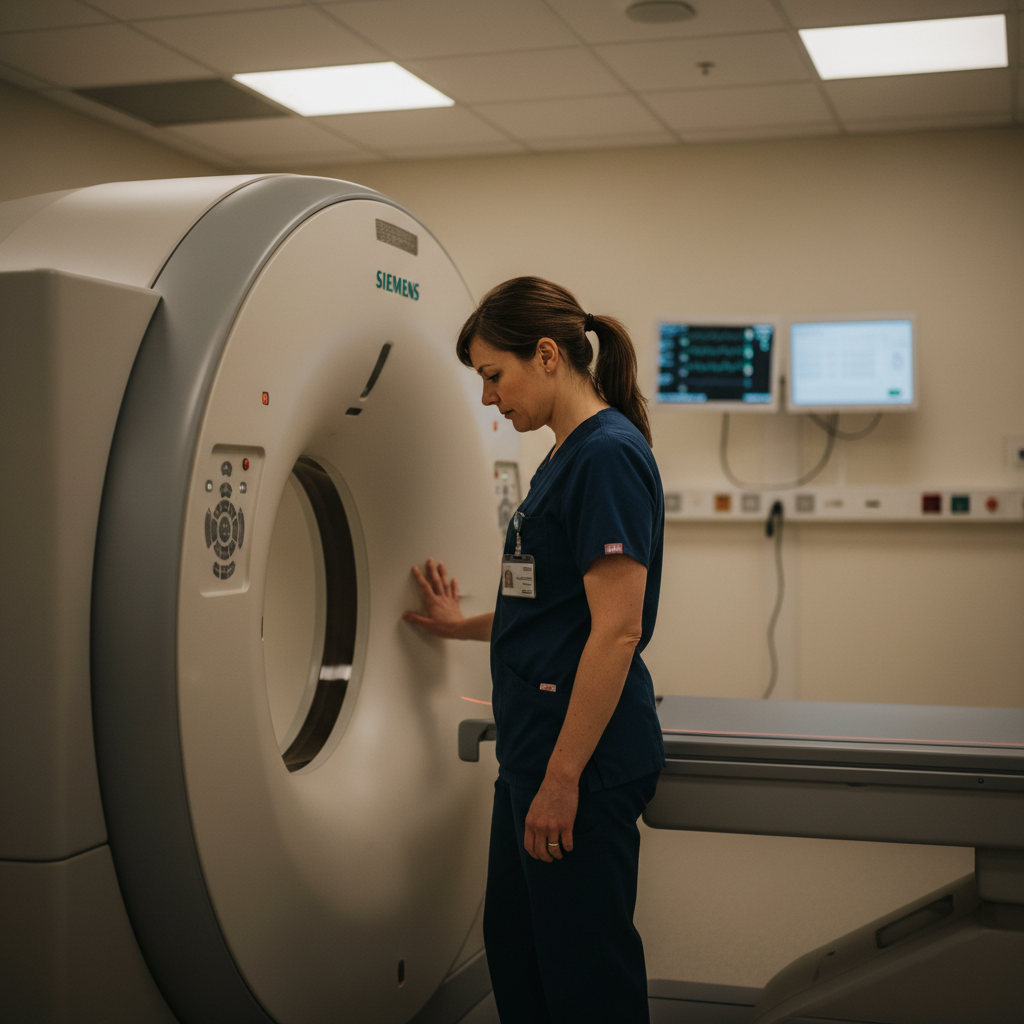
For me, it was a Tuesday afternoon. Routine chest CT with contrast. The patient was sixty-two, a retired teacher whose daughter kept smoothing her mother’s hair while we positioned her on the table. They’d been through weeks of persistent cough, weight loss, doctor visits that led to more doctor visits. This scan was supposed to give answers.
When the Images Start to Tell the Story
We talk about radiology as objective. Data. Attenuation values and Hounsfield units. But anyone who’s worked the scanner knows there are images that speak before the radiologist ever dictates a word.
I was halfway through the acquisition when I saw it. The mass in the right upper lobe, large and irregular, with satellite nodules scattered through both lungs like a constellation no one wants to see. Mediastinal lymph nodes lit up on the contrast series. My stomach dropped.
The protocol ran its course. I maintained my professional mask, helped the patient off the table, gave her the standard line about her doctor receiving results within twenty-four hours. Her daughter asked if everything looked okay.
This is the moment every imaging technologist knows. The space between what you see and what you’re allowed to say. The careful navigation of scope of practice, the awareness that interpretation belongs to the radiologist, the physician, not to you — no matter how many thousands of scans you’ve run.
‘The radiologist will review everything carefully,’ I said. ‘Your doctor will call you with results.’
The daughter nodded, but her eyes held mine for an extra beat. She knew. Somehow, she already knew.
The Weight Imaging Technologists Carry
This is the part of the job that doesn’t show up in the certification exam. The radiology emotional landscape that exists alongside the technical excellence.
We position bodies. We calibrate machines. We troubleshoot artifacts and optimize contrast timing. But we also hold space for people in their most vulnerable moments, and sometimes we bear witness to the images that will change everything.
After that scan, I went through the rest of my shift. Lumbar spine for chronic pain. Abdomen and pelvis for kidney stones. Head CT for a stroke rule-out that, mercifully, came back clean. But that chest CT stayed with me.
I thought about the daughter’s hand in her mother’s hair. The way the patient had squeezed my hand when I started the contrast injection. The quiet in the room that felt heavier than usual.
What We Owe Our Patients in These Moments
Technologist empathy isn’t soft skill. It’s core to what we do. When imaging confirms what families feared, our humanity matters as much as our technical precision.
Here’s what I’ve learned about showing up in these moments:
- Your composure is a gift. Patients and families read our faces, our body language, our tone. Staying calm and professional helps them feel held, even when everything feels uncertain.
- Small gestures carry weight. An extra warm blanket. Taking an extra thirty seconds to make sure they’re comfortable. Offering water after contrast. These aren’t trivial — they’re acts of dignity.
- Silence is okay. You don’t have to fill every quiet moment with reassurance you can’t give. Sometimes presence is enough.
- Respect your scope. It’s not withholding or cold to defer interpretation to the radiologist. It’s protecting the patient from premature or incomplete information, and protecting yourself from liability.
- Debrief when you need to. Talk to your lead tech, your supervisor, a trusted colleague. These cases accumulate if you don’t process them.
The Follow-Up You Don’t Usually See
A few weeks later, I saw the patient’s name on the schedule again. Follow-up CT chest after first round of chemotherapy. She came back with her daughter, thinner but steady, and she remembered me.
‘You were so kind,’ she said. ‘That day when everything fell apart, you made me feel like a person, not just a scan.’
I don’t tell this story to suggest we’re heroes or to romanticize the hard moments. I tell it because this is the reality of imaging work. We see things. We hold things. We carry pieces of people’s stories without always knowing how they end.
And sometimes, years into this career, you still leave work thinking about the scan that confirmed what they feared, and the daughter’s hand smoothing her mother’s hair.
Taking Care of Yourself in a High-Stakes Field
If you’ve worked in CT, MRI, X-ray, ultrasound, or any imaging modality long enough, you have your own version of this story. The case that stayed with you. The image you still see when you close your eyes.
This work asks a lot of us. Technical skill, yes — but also emotional resilience, ethical clarity, and the capacity to be present for people in crisis without absorbing their crisis as our own.
Here’s what helps:
- Build relationships with colleagues who get it. Radiology can feel isolating. Find your people.
- Set boundaries around what you carry home. Compassion doesn’t require taking on every patient’s pain.
- Recognize when you need a break. Burnout in imaging is real, and it often shows up as emotional numbing.
- Remember why you chose this work. Most of us got into imaging because we wanted to help people. That hasn’t changed, even when the job feels heavy.
If you’re feeling the weight of these moments more than usual, or if you’re looking for a work environment that values both your technical expertise and your humanity, the Intuites Recruiting Team understands what imaging professionals need. Whether you’re exploring new opportunities, seeking better support, or just want to talk through your options, reach out at contact@intuites.healthcare or visit intuites.healthcare. We work with facilities that recognize technologists as whole people, not just skilled hands.
The Images We Remember
Years from now, you won’t remember every scan. The routine studies will blur together — and that’s okay. That’s normal.
But you’ll remember the ones that mattered. The scans that changed lives. The moments when your technical skill and your human presence converged to help someone through the hardest day they’d had in a long time.
That’s the privilege and the burden of imaging work. We see inside people — not just their anatomy, but their fear, their hope, their courage. And when the scan shows what the family feared, we get to be there, steady and kind, as they begin to face what comes next.
That retired teacher is still fighting, last I heard. And her daughter still remembers the CT tech who treated her mother with gentleness on the worst Tuesday of their lives.
Sometimes that’s enough. Sometimes that’s everything. 🤍
#CTTech #RadiologyLife #ImagingTechnologist #HealthcareHeroes #MedicalImaging #RadiologicTechnologist #TechnologistEmpathy #DiagnosticImaging #HealthcareStories #RadTech #PatientCare #ImagingProfessionals #CTScanner #RadiologyCareers #HealthcareJourney
Looking for a healthcare team that truly sees your value?
The Intuites Recruiting Team is here to listen, support your career, and connect you with roles across the USA — when you're ready.