
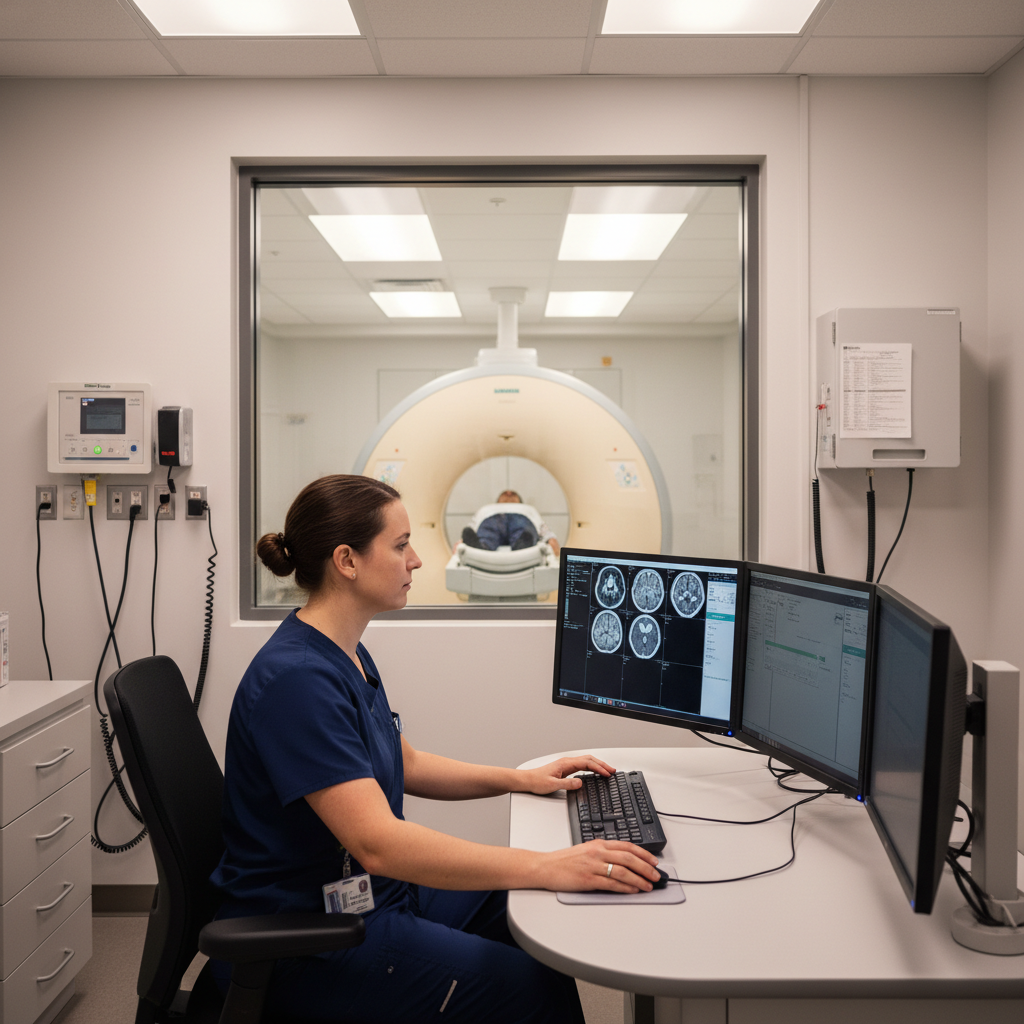
If you are an MRI technologist wondering where your skills are in highest demand this fall, the answer is not everywhere equally. The MRI tech shortage 2026 is hitting some US regions significantly harder than others, creating a patchwork of opportunity that savvy imaging professionals are already mapping out for Q4 contracts and permanent placements.
Hospital systems from the Sun Belt to the Upper Midwest are competing for a shrinking pool of qualified MRI techs, and the staffing gaps are widest in markets where population growth, aging demographics, and facility expansions are colliding with workforce attrition. Let us look at the data behind the imaging demand and what it means for your next career move.
The Numbers Behind the MRI Tech Shortage
The radiology staffing crisis is not abstract. According to facility census data aggregated across our recruiting network, unfilled MRI technologist positions have climbed 34% year-over-year in key metro markets. Hospitals that once posted openings for 60 days are now running 90- to 120-day searches, and many are turning to premium-rate travel contracts to keep scanners operational.
Three factors are driving the shortage:
- Retirement wave: Nearly 28% of credentialed MRI techs are over age 55, and exit rates accelerated post-pandemic as veteran imaging professionals opted for early retirement or reduced hours.
- Training pipeline lag: MRI programs graduate fewer than 4,000 new techs annually nationwide, while facility demand is growing at roughly 9% per year in high-growth states.
- Modality competition: Cross-trained radiologic technologists are being pulled toward CT and interventional roles that offer shift differentials or procedural variety, leaving MRI departments chronically understaffed.
The result is a seller market for MRI talent, especially in regions where imaging volumes are climbing faster than workforce supply.
Regional Hotspots: Where MRI Jobs by Region Are Concentrated
Not all markets are created equal. Based on open requisition counts, average time-to-fill, and premium rate activations, here are the five US regions with the widest MRI staffing gaps heading into Q4 2026.
1. Texas Triangle (Houston, Dallas-Fort Worth, Austin, San Antonio)
Texas continues to lead the nation in healthcare facility expansion, and MRI departments are struggling to keep pace. Houston alone has posted more than 140 MRI tech openings since July, spanning large hospital systems, freestanding imaging centers, and outpatient surgery facilities. Dallas-Fort Worth is seeing similar demand, driven by population inflow and an aging suburban demographic that relies heavily on diagnostic imaging.
Travel MRI techs in Texas are commanding 13-week contracts at $2,800 to $3,200 per week (tax-free stipend included), and several facilities are offering completion bonuses or early contract extensions. Permanent hires are seeing sign-on packages in the $8,000 to $12,000 range.
2. Florida Gulf Coast (Tampa, Naples, Sarasota, Fort Myers)
Florida Gulf Coast markets have the oldest median population in the continental US, and imaging volumes reflect that reality. Orthopedic, oncology, and neurological MRI scans are up double digits year-over-year, but the tech workforce has not expanded to match. Naples and Sarasota are particularly tight, with some facilities running single-scanner operations on skeleton crews.
Travel rates along the Gulf Coast are competitive with Texas — $2,700 to $3,100 weekly — and housing stipends are IRS-compliant for travelers who maintain a tax home outside Florida. Permanent roles are offering relocation assistance and flexible scheduling to attract out-of-state candidates.
3. Phoenix Metro and Tucson
Arizona has become a magnet for retirees and remote workers, and healthcare infrastructure is racing to catch up. Phoenix-area hospitals have added MRI capacity but cannot fill the tech seats. Tucson, with its smaller labor pool, is even tighter. Several Banner Health and HonorHealth facilities are running travel-heavy staffing models through the fall to cover gaps.
Rates in Arizona are slightly below Texas and Florida — $2,500 to $2,900 weekly for travelers — but cost of living is lower, and the state has no personal income tax, which improves net take-home for both perm and contract roles.
4. Carolinas Corridor (Charlotte, Raleigh-Durham, Greenville SC, Charleston)
The Carolinas are seeing steady population growth and corporate relocations, and imaging demand is spiking in both metro and regional markets. Charlotte has been particularly aggressive in recruiting MRI techs, with Atrium Health and Novant posting ongoing openings. Raleigh-Durham, anchored by Duke and UNC systems, is competing for the same candidate pool.
Travel contracts in the Carolinas are running $2,400 to $2,800 weekly, and several facilities are open to local contracts (no housing stipend) for techs already residing in-state who want higher hourly rates without the travel commitment.
5. Mountain West (Denver, Salt Lake City, Boise)
Colorado, Utah, and Idaho are experiencing some of the fastest population growth in the country, and rural facility expansions are creating demand in markets that historically relied on a stable local workforce. Denver metro has the most openings, but Boise and Salt Lake City are seeing tighter competition because fewer traveling MRI techs are willing to relocate to smaller markets.
Rates are comparable to the Carolinas — $2,400 to $2,900 weekly — and several Rocky Mountain facilities are offering outdoor recreation perks (ski passes, trail access) as unofficial recruiting sweeteners.
What This Means for Your Fall Job Search
If you are an MRI technologist evaluating your options for Q4 2026, the regional demand map gives you leverage. Markets with the widest gaps are not just offering higher pay; they are also more flexible on start dates, more willing to negotiate benefits, and more open to hybrid schedules or part-time arrangements.
For travel MRI techs, the sweet spot right now is 13-week contracts in Texas, Florida, or Arizona, where rates are highest and housing stipends are fully IRS-compliant. Multi-state license compact rules do not apply to imaging techs the way they do for nurses, so you will still need state-by-state ARRT registration, but most agencies handle that paperwork quickly.
For permanent candidates, the Carolinas and Mountain West offer strong quality-of-life trade-offs — slightly lower cost of living, less congestion, and family-friendly communities — while still paying competitive salaries in the $75,000 to $95,000 range depending on experience and shift.
Agency vs. Direct-Hire: Which Path Makes Sense?
One question we hear often: should I work with a staffing agency or apply directly to the facility?
The honest answer is that it depends on what you value. Agency contracts (travel or local) typically offer higher gross pay, housing stipends, and faster placement, but you sacrifice some benefits stability and have less control over schedule changes. Direct-hire roles offer PTO, retirement matching, tuition reimbursement, and long-term job security, but base pay is often 15–20% lower than equivalent travel rates.
In tight markets like those listed above, hospitals are increasingly willing to negotiate hybrid arrangements — direct-hire roles with travel-style pay premiums or six-month contract-to-perm pathways that let you test a facility before committing.
Looking Ahead: Will the Shortage Ease?
Short answer: not in 2026. The training pipeline will not catch up until late 2027 at the earliest, and retirement trends show no sign of slowing. Imaging demand, meanwhile, continues to climb as value-based care models emphasize early diagnosis and population health screening.
For MRI techs, that means the next 12 to 18 months will remain a candidate-driven market. Facilities that want to compete will need to offer more than base pay — flexible scheduling, continuing education support, and a workplace culture that respects imaging professionals as clinical partners, not just button-pushers.
If you are ready to explore your options in one of the hotspot regions above, or if you want a confidential conversation about what your credentials are worth in today market, the Intuites Recruiting Team is here to help. We work exclusively in healthcare staffing, and we know the imaging landscape inside out. Reach out anytime at contact@intuites.healthcare or visit intuites.healthcare to get started. 🤍
#MRITechShortage2026 #MRIJobsByRegion #RadiologyCareers #ImagingJobs #TravelMRITech #HealthcareStaffing #DiagnosticImaging #MRITechnologist #RadiologStaffingCrisis #MedicalImagingCareers #TravelRadTech #HealthcareTrends2026 #ImagingDemand #MRITechLife #RadiologyCommunity
Looking for a healthcare team that truly sees your value?
The Intuites Recruiting Team is here to listen, support your career, and connect you with roles across the USA — when you're ready.