It was a Tuesday in February when I almost walked out for good.
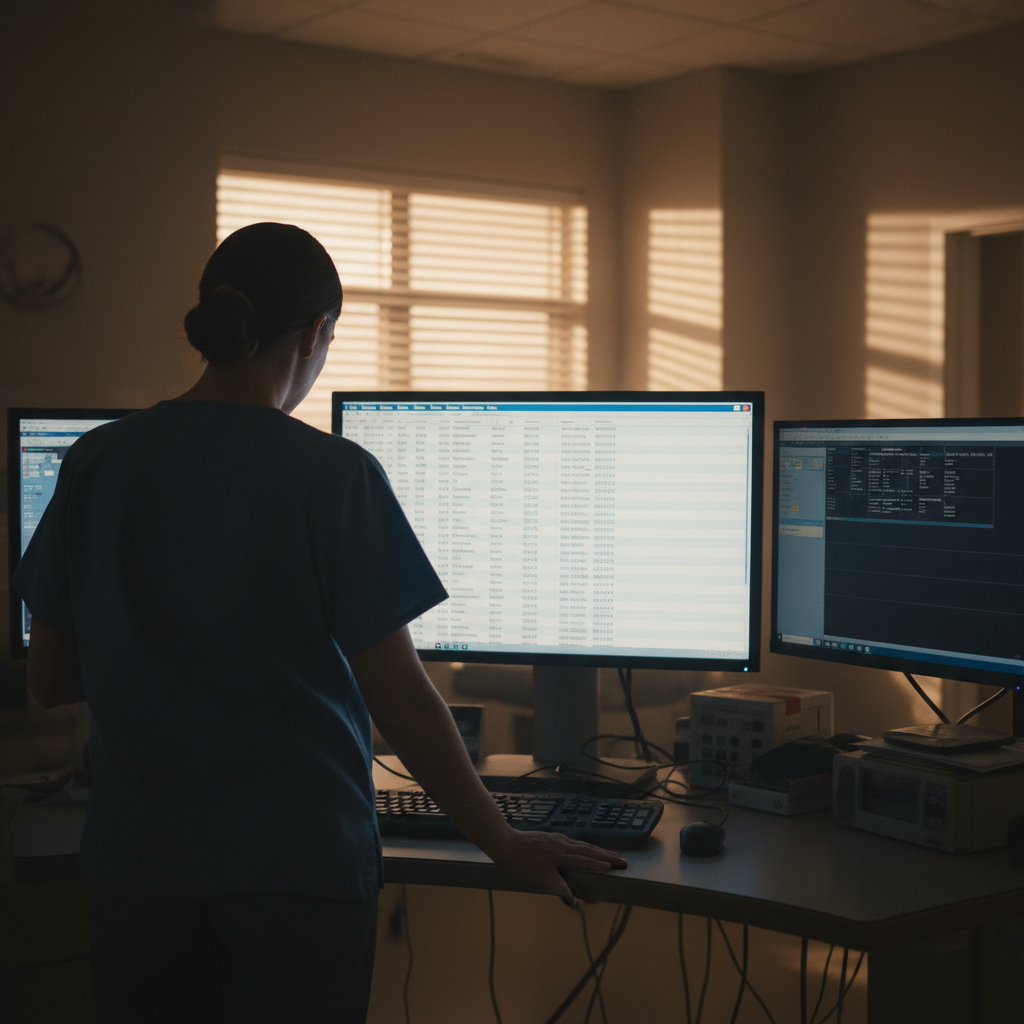
I had been a CT technologist for six years. I loved the work — the precision, the detective-work feeling of capturing the right image, the quiet moments with patients who were scared and needed someone steady. But that Tuesday, I clocked in to find 47 studies already waiting. By 10 a.m., the worklist had grown to 63. By noon, I had not taken a break, had not sat down, had not eaten. And the radiology backlog kept growing.
I remember standing in the control room, staring at that number on the screen, and feeling something crack inside me. Not anger. Not even exhaustion. Just a deep, hollow sense that I was failing people I would never meet, and there was no end in sight.
When the Backlog Becomes a Moral Weight
Radiology backlog is not just about being busy. It is about the specific, grinding knowledge that every delayed scan might be someone's cancer diagnosis, someone's stroke window, someone's answer. The imaging workload in most hospitals has climbed steadily since 2020, but staffing has not kept pace. We are scanning more, faster, with fewer hands — and every technologist I know carries the weight of that gap.
What I did not have language for, back on that Tuesday, was moral injury. It is the term used when healthcare workers are forced to operate in conditions that violate their core values. I became a rad tech because I wanted to help people. But when the system makes it impossible to do the work well — when you are rushing, cutting corners, missing details because there is simply no time — it stops feeling like help. It starts feeling like harm.
That is what almost broke me. Not the physical fatigue. The soul-level exhaustion of knowing I was not giving patients what they deserved, and that it was not my fault, but I still had to live with it.
The Shift That Did Not Happen Overnight
I did not quit that day. I did not have some grand epiphany in the parking lot or a manager who swooped in with solutions. What happened was smaller and slower.
I started talking. Not about how busy we were — everyone already knew that. I started naming what it felt like. I told my lead tech, 'I feel like I am drowning, and I do not know how to keep doing this.' She said, 'Me too.' That tiny moment of shared honesty was the first crack of light.
We started doing something we called end-of-shift check-ins. Just five minutes. Three or four of us in the break room. We would say one hard thing from the day and one thing we did well. It sounds corny, but it worked. It cut the isolation. It reminded us we were not failing individually — we were surviving a broken system together.
Then I made three small boundaries that probably saved my career:
- I stopped checking the worklist during my break. Fifteen minutes twice a day, I would not look. The world did not end.
- I started logging every time I skipped a meal or bathroom break. I showed my manager the data after two weeks. She was horrified. It started a conversation.
- I let go of the idea that I could fix the backlog. I could do my job well, one patient at a time. I could not control staffing, scheduling, or the ED's patient volume. That was not mine to carry.
These were not solutions. The radiology backlog did not go away. But these boundaries gave me enough air to keep breathing.
What Actually Helps (and What Does Not)
I have talked to a lot of imaging techs since that February. Here is what I have learned about technologist mental health in the face of chronic overwork:
What does not help: Pizza parties. Resilience training that puts the burden on individuals to cope better with impossible conditions. Being told we are heroes. We do not need to be heroes. We need adequate staffing and realistic expectations.
What does help:
- Transparency about the backlog. When leadership acknowledges the problem openly and shares what they are doing about it (even if it is slow), it reduces the feeling of being gaslit.
- Protected break time. Not suggested. Protected. If you are required to take a break, the worklist should not punish you for it.
- Peer support that is not forced. Informal debriefs. Slack channels. A culture where it is okay to say, 'Today was hard.'
- Real staffing solutions. Travel contracts. PRN pools. Cross-training. Overtime limits. These cost money, but they work.
One hospital system I heard about started doing daily huddles where the imaging scheduler, the charge tech, and the radiologist briefly aligned on priorities. It did not shrink the backlog, but it gave everyone a shared picture and reduced the chaos. Small things matter.
Finding a Way to Stay
I am still a CT tech. Some days are still brutal. But I am not standing in that control room feeling like I am breaking anymore.
Part of that is the boundaries I built. Part of it is the team culture we created — we take care of each other now in ways we did not before. And part of it, honestly, is accepting that I cannot save the system. I can only show up, do excellent work within my scope, and go home.
There is also this: I started looking at my options. Not because I wanted to leave, but because knowing I could leave gave me power. I updated my resume. I looked at travel contracts, PRN gigs, outpatient centers with better ratios. I talked to other techs about what their workplaces were like. It turns out, not every imaging department is drowning. Some are managed well. Some have reasonable workloads and sane schedules.
That knowledge — that I had choices — changed everything. I stopped feeling trapped. I started feeling like I was choosing to stay, at least for now, because there were still things I loved about the work. And if that ever stops being true, I know I can walk toward something better.
If You Are in the Control Room Right Now
If you are reading this and you are in that place — staring at the worklist, feeling the weight, wondering how much longer you can do this — I want you to know: it is not you. You are not weak. You are not failing. You are a skilled professional working in a system that is asking too much.
You deserve support. You deserve a workplace that respects your limits. And if you are not getting that where you are, it is okay to look for it somewhere else.
The Intuites Recruiting Team works with imaging and diagnostic professionals across the country, and they understand what you are dealing with. If you want to explore what else is out there — travel roles, permanent positions, PRN flexibility — reach out at contact@intuites.healthcare or visit intuites.healthcare. No pressure. Just options. 🤍
You do not have to stay somewhere that is breaking you. And you do not have to quit the field you love. There is space in between, and you are allowed to look for it.
#RadTechBurnout #RadiologySurvival #ImagingWorkload #TechnologistMentalHealth #CTTechLife #MedicalImagingCareers #HealthcareBacklog #RadiologyJobs #DiagnosticImaging #TravelRadTech #BurnoutRecovery #ImagingProfessionals #HealthcareStaffing #RadTechSupport #MoralInjuryInHealthcare
Looking for a healthcare team that truly sees your value?
The Intuites Recruiting Team is here to listen, support your career, and connect you with roles across the USA — when you're ready.