
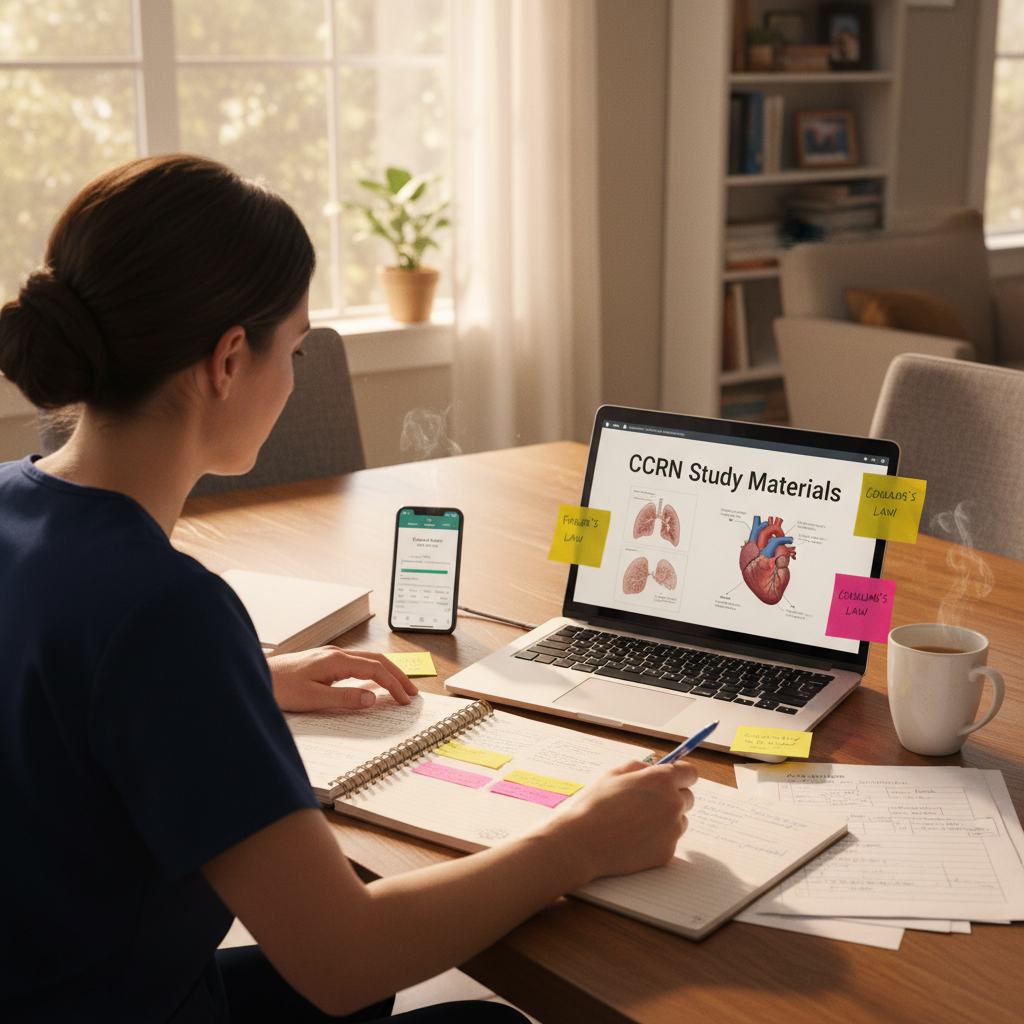
You've been thinking about it for months. Maybe years. That certification — CCRN, PCCN, CMSRN, or another specialty credential — keeps whispering your name during every shift. It promises better opportunities, deeper knowledge, and yes, often a meaningful pay bump. But between your current schedule, life obligations, and the sheer volume of material to master, it feels like climbing Everest in clogs.
Here's the truth: you don't need a year-long marathon to make real progress. What you need is a focused, realistic 90-day sprint with clear weekly milestones that fit around your actual life. Whether you're eyeing critical care, progressive care, or medical-surgical certification, the next three months can transform that “someday” goal into a scheduled exam date and a solid nursing certification plan.
Let's build your sprint together. 🌱
Why 90 Days Is Your Sweet Spot
Three months offers the perfect balance between urgency and sustainability. It's long enough to cover comprehensive content without cramming, yet short enough to maintain momentum and accountability. Most nurses who successfully pass certification exams report studying 8-12 weeks with consistent effort — not heroic all-nighters, but steady, intentional progress.
A focused CCRN study schedule or PCCN prep timeline also gives you natural checkpoints. You can break the massive content load into digestible weekly themes: cardiovascular week one, respiratory week two, and so on. This compartmentalization prevents overwhelm and lets you see tangible progress every single week.
Plus, 90 days from today lands you in mid-December — perfect timing to start the new year with a fresh credential on your resume and renewed confidence in your clinical expertise.
Week 0: Your Pre-Sprint Setup
Before you dive into content, spend one focused Sunday afternoon setting up your infrastructure. This isn't procrastination — it's strategic preparation that separates successful certification candidates from those who burn out by week three.
Gather your resources:
- Official certification review book for your target exam (AACN, AMSN, or relevant specialty organization)
- At least one online question bank or practice exam subscription
- Calendar app or physical planner for milestone tracking
- Study space with minimal distractions — even a corner of your dining table works
Baseline assessment: Take one full-length practice test this week. Don't study first. This diagnostic tells you where you're starting and which content areas need the most attention. Score below 60%? That's actually perfect — you've identified your growth zones. Above 75%? You have a strong foundation to build on.
Schedule your exam: Yes, right now. Before you feel ready. Booking your test date 12-13 weeks out creates healthy pressure and makes this sprint real. Most testing centers offer flexible rescheduling if needed, but that date on your calendar transforms vague intentions into concrete nursing career goals.
Weeks 1-8: Content Mastery Phase
This is where your 90-day nursing certification plan gets granular. Divide your exam content blueprint into eight weekly themes based on the percentage each topic represents on your target certification.
For a CCRN study schedule, that might look like:
- Week 1: Cardiovascular concepts (20% of exam weight)
- Week 2: Respiratory system and ventilation management
- Week 3: Neurological assessment and interventions
- Week 4: Multisystem issues including sepsis and shock
- Week 5: Renal and gastrointestinal systems
- Week 6: Endocrine and hematology/immunology
- Week 7: Behavioral and psychosocial support
- Week 8: Professional caring and ethical practice
Each week, commit to 60-90 minutes of study five days. Not seven — give yourself two complete rest days to prevent burnout. During your study sessions, use active learning: take notes by hand, teach concepts to an imaginary student, draw diagrams, create flashcards for medications and lab values.
End every week with 50 practice questions focused on that week's content. Track your percentage correct and review every wrong answer thoroughly. The question rationales teach as much as the review book.
Weeks 9-11: Integration and Practice Testing
You've built the knowledge base. Now it's time to think like the exam thinks. Shift from content review to full-length practice exams and mixed-topic question sets.
Week 9: Take two full practice tests under timed conditions. Simulate the real experience — same time of day you'll test, same break schedule, same endurance requirement. Score each exam and identify patterns in your wrong answers. Are you missing pharmacology? Struggling with prioritization questions?
Week 10: Target your weak areas with focused mini-reviews and question sets. If hemodynamic monitoring tripped you up, spend three sessions diving deep into PA catheter waveforms and cardiac output. Supplement your primary review book with YouTube lectures, podcasts during your commute, or study group discussions.
Week 11: One more full practice exam, plus daily 25-question quizzes on random topics. You're building stamina and reinforcing that nothing surprises you anymore. By the end of this week, you should consistently score above the passing threshold on practice tests.
Week 12: The Taper and Test Week
Resist the urge to cram. You're a well-trained athlete approaching race day — now you taper to arrive fresh and confident.
Monday-Wednesday: Light review only. Flip through your handwritten notes, skim high-yield summaries, do 25 easy questions daily just to keep your mind engaged. Focus on self-care: good sleep, nutrition, hydration, and stress management.
Thursday: If your exam is Friday or Saturday, do nothing academic. Prep your logistics instead — confirm your test center location, gather required ID, set two alarms, plan your outfit (comfortable layers), pack approved snacks.
Test day: You've done the work. Trust your preparation. Read each question carefully, flag uncertainties to revisit, and remember that most certification exams are pass/fail — perfection isn't required, competence is.
Your Week-by-Week Milestone Tracker
Print this checklist and tape it somewhere visible. Check off each milestone as you hit it — these small wins fuel your momentum.
- Week 0: Diagnostic test completed, exam scheduled, resources purchased ✨
- Weeks 1-8: Content chapter finished, 50+ weekly questions completed, 70%+ correct
- Week 9: Two full practice exams, weak areas identified
- Week 10: Targeted remediation sessions, confidence growing
- Week 11: Final practice exam, consistent passing scores
- Week 12: Taper completed, test conquered, celebration planned 🤍
When Life Happens (Because It Will)
You'll have bad weeks. A family emergency, a brutal stretch of shifts, or simple exhaustion might derail your plan temporarily. Build in grace from the start.
If you miss three days, don't quit — just extend that week's content into the following week and adjust your timeline. The 90-day framework is aspirational, not rigid. Even if your sprint becomes 100 or 110 days, you're still lapping everyone on the couch.
Consider finding an accountability partner — a colleague studying for the same or different certification. Weekly check-ins, shared resources, and mutual encouragement make the journey less lonely and more sustainable.
Beyond the Credential
Passing your certification exam is the visible win, but the real transformation happens during the sprint itself. You'll rediscover why you love nursing. You'll connect clinical dots you've been practicing by rote. You'll walk into shifts with deeper confidence because you understand the “why” behind every intervention.
And when you do pass — because you will — you'll have proven something invaluable: you can set an ambitious professional goal and execute a plan to achieve it, even while working full-time in one of the most demanding careers on the planet.
That's a skill set that opens doors far beyond one certification. It's the foundation for every nursing career goal you'll chase next.
Ready to start your sprint? The Intuites Recruiting Team works with certified nurses across every specialty and knows firsthand how credentials transform career trajectories. Whether you're planning your next move or just want to talk through professional development strategies, reach out anytime at contact@intuites.healthcare or visit intuites.healthcare. We're here to support your growth, one milestone at a time.
Your 90-day sprint starts today. Let's go. 🩺
#NursingCertification #CCRNPrep #PCCNStudy #NursingCareerGoals #RNDevelopment #CriticalCareNurse #NursingEducation #ProfessionalGrowth #HealthcareCareers #NurseLife #CertificationSuccess #StudySmart #NursingExcellence #CareerAdvancement #IntuitesHealthcare
Looking for a healthcare team that truly sees your value?
The Intuites Recruiting Team is here to listen, support your career, and connect you with roles across the USA — when you're ready.