
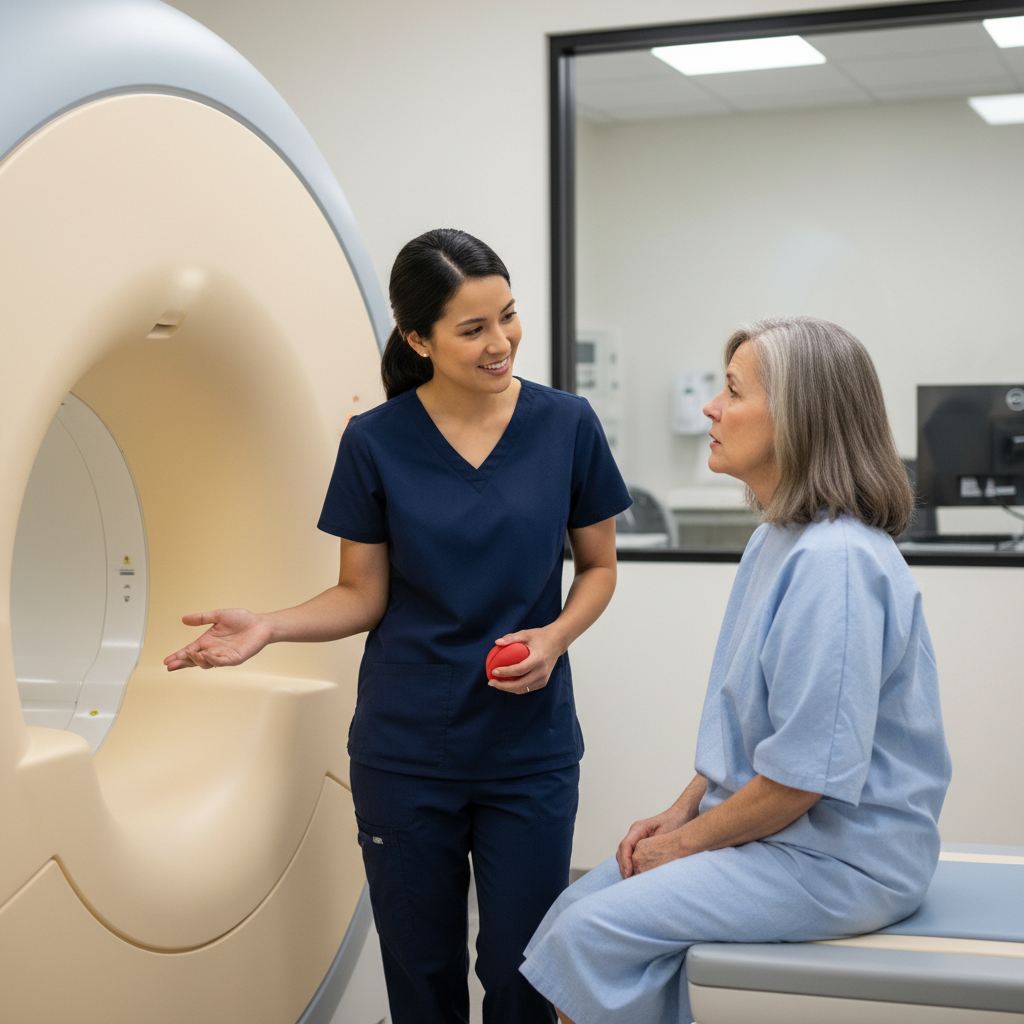
You see it the moment they walk through the door — the tight shoulders, the quick breathing, the eyes that widen when they catch their first glimpse of the bore. Claustrophobia affects an estimated 5-10% of MRI patients, and as an MRI tech, you become equal parts imaging specialist and calm-in-the-storm guide.
The good news? With the right approach, most claustrophobic patients can complete their scans successfully. The key lies in understanding that MRI claustrophobia is not about weakness or overreaction — it is a genuine physiological response that demands respect, preparation, and practical intervention.
Let us walk through the communication strategies, positioning techniques, and escalation protocols that turn anxious moments into completed exams.
Screen and Prepare Before the Patient Arrives
The best MRI patient communication starts before the patient ever enters your suite. When scheduling allows, a brief pre-scan phone conversation can make all the difference.
Ask directly: “Have you had an MRI before? Did you experience any anxiety or discomfort?” Many patients will not volunteer their fears unless you create space for the conversation. If they disclose claustrophobia, you gain crucial preparation time.
Document the concern in your pre-scan notes and consider these proactive steps:
- Schedule extra time for the appointment — rushing amplifies anxiety
- Coordinate with the radiologist about possible sedation or anxiolytic medication
- Confirm whether the exam can be performed feet-first instead of head-first
- Prepare comfort tools: extra blankets, eye masks, or aromatherapy options if your facility offers them
- Alert your team so everyone approaches the patient with extra patience
Prevention beats intervention. A five-minute scheduling conversation can save a cancelled exam and a rescheduling headache.
Master the Pre-Scan Conversation
Your words in those first few minutes set the tone for everything that follows. Claustrophobic patients need information, control, and validation — in that order.
Start with validation. “I understand this can feel overwhelming. Many people feel anxious about the MRI, and that is completely normal. We are going to work together to make this as comfortable as possible.”
Provide concrete details. Uncertainty feeds anxiety. Be specific about timing: “This exam will take approximately 25 minutes. You will hear loud knocking sounds — I will give you earplugs and headphones. I will be watching you the entire time through the window, and we will talk through the intercom.”
Demonstrate the panic ball. Place the squeeze ball in their hand and press it yourself to trigger the intercom. “If you need me at any point, squeeze this and I will stop the scan immediately and come get you. You are in complete control.” Let them practice it. This single action — proving they can stop the process — often dissolves the trapped feeling that triggers panic.
Explain what they will see and feel. “You will slide into the tube, but your head will not go all the way to the back. There is open space in front of your face. Some patients like to close their eyes before we start; others prefer to keep them open and look toward the light at the end.”
Offer choices wherever possible. “Would you like a blanket? Music or silence? A washcloth over your eyes?” Each small decision restores a sense of agency.
Positioning Strategies That Reduce Anxiety
How you position a claustrophobic patient matters as much as what you say. Small adjustments to standard protocol can mean the difference between a completed scan and an aborted exam.
Feet-first whenever feasible. For lumbar spine, knee, ankle, or abdominal imaging, feet-first positioning is standard. But did you know that some brain MRIs can also be performed feet-first with the right coil setup? Check with your radiologist. Many patients tolerate feet-first positioning significantly better because their face remains outside the bore.
Use the mirror strategically. Angled mirrors that let patients see out of the bore can be comforting — or disorienting. Ask: “Some people like to use a mirror to see the room. Would you like to try it?” Watch their response and adjust.
Minimize time in the bore before scanning. Do not position the patient and then leave them waiting while you adjust protocols or troubleshoot. Get everything ready first, then bring them in and start the scan promptly. Every extra minute of stillness inside the machine increases anxiety.
Consider partial extraction between sequences. If you are running a multi-sequence exam and the patient is struggling, ask the radiologist if you can pull them out slightly between sequences for a 30-second break. It is not always possible, but when it is, that brief respite can reset their nervous system enough to continue.
Real-Time Coaching During the Scan
Once the scan begins, your voice becomes the patient's anchor. Use the intercom strategically — not so often that it startles them, but enough that they know you are present.
Narrate the process. “This next sequence will be about four minutes. You are doing great. Halfway through now.” Time perception distorts under stress; your updates provide structure.
Guide their breathing. If you notice signs of panic — increased movement, rapid breathing visible on your monitor — use calm, paced instructions: “Take a slow breath in through your nose... and out through your mouth. You are safe. I am right here. Just a few more minutes.”
Praise incremental progress. “You are doing an excellent job staying still. We are almost done with this sequence.” Positive reinforcement matters, especially when someone is fighting their own nervous system.
Know When and How to Escalate
Despite your best efforts, some patients cannot complete the scan without medical intervention. Recognizing that moment — and having a clear escalation path — protects both the patient and your schedule.
Stop if they ask. If a patient squeezes the panic ball or verbally requests to stop, honor it immediately. Pushing through rarely works and can traumatize them for future imaging needs.
Discuss medication options. For patients with known severe claustrophobia, a mild anxiolytic prescribed by their physician before the appointment often makes the exam possible. If they arrive without medication and cannot continue, contact the ordering physician to discuss options for a future attempt.
Explore alternative imaging. In some cases, open MRI machines (though lower field strength) or CT scans may provide sufficient diagnostic information. This is a radiologist decision, but you can facilitate the conversation.
Document thoroughly. Note what strategies you tried, how far into the exam the patient progressed, and their specific responses. This information helps the team prepare better if the patient returns.
Self-Care for the Tech
Working with highly anxious patients is emotionally demanding. You absorb their stress, manage your own frustration when exams do not complete, and carry the pressure of tight schedules.
Build in micro-resets between patients — even 60 seconds of stepping outside, stretching, or taking three deep breaths helps. Debrief difficult cases with colleagues; shared strategies and mutual support make you better at this challenging aspect of imaging patient care.
Your ability to stay calm, present, and compassionate directly impacts outcomes. Protect that capacity.
You Are Part of Their Care Team
MRI claustrophobia is not a scheduling inconvenience — it is a patient care challenge that showcases your clinical skill. Every time you help an anxious patient complete their scan, you have directly contributed to their diagnosis and treatment. That is meaningful work.
If you are looking for an imaging role where your MRI tech tips and patient communication skills are valued, or if you are ready for a change that respects your expertise, the Intuites Recruiting Team would love to hear from you. Reach out at contact@intuites.healthcare or visit intuites.healthcare to explore opportunities that fit your career goals. We understand what makes great imaging professionals, because we listen. 🤍
#MRITech #RadiologicTechnology #MRIClaustrophobia #ImagingTech #PatientCare #MRIPatientCommunication #DiagnosticImaging #RadTech #MedicalImaging #HealthcareJobs #ImagingPatientCare #MRITechnologist #ClaustrophobiaSupport #HealthcareCareers #ImagingProfessionals
Looking for a healthcare team that truly sees your value?
The Intuites Recruiting Team is here to listen, support your career, and connect you with roles across the USA — when you're ready.