
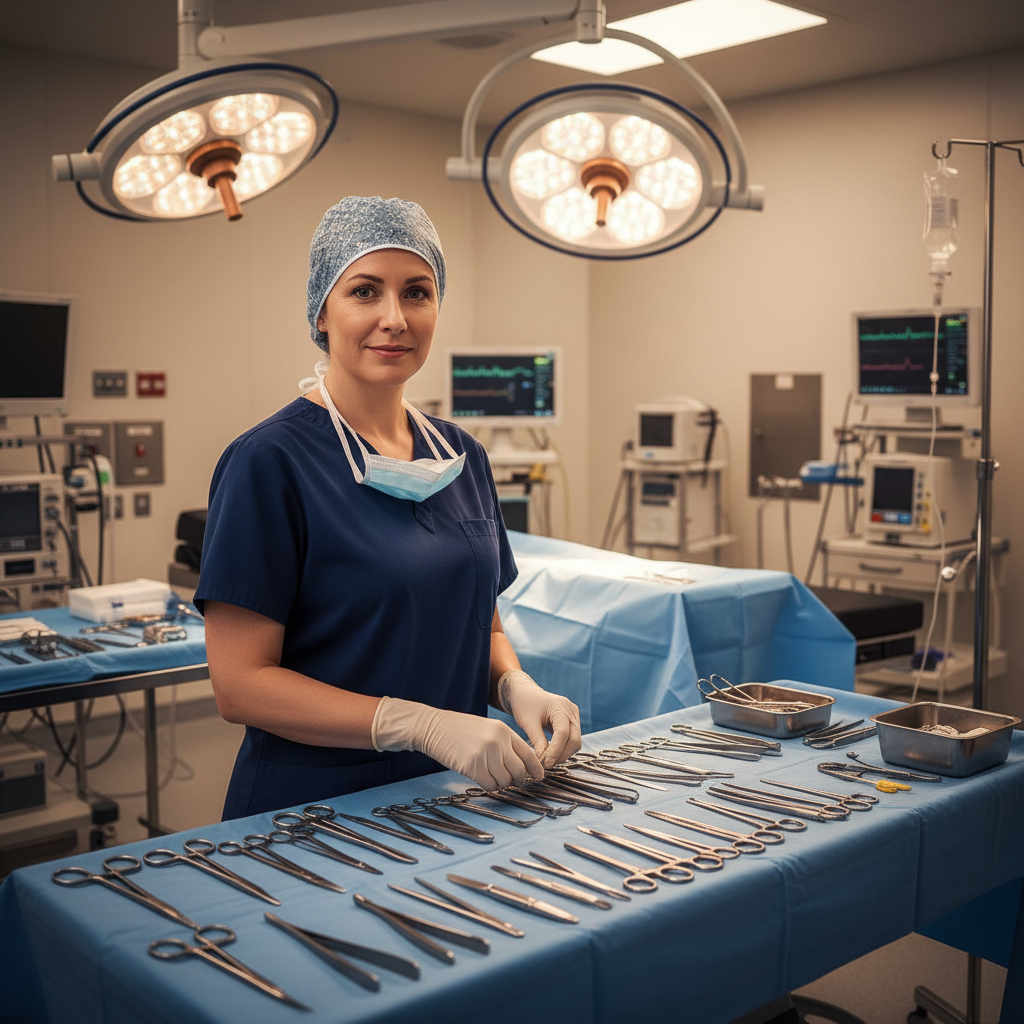
If you're working as a Certified Surgical Technologist right now, you already know the rhythm of the OR — the quiet intensity, the precision, the trust your surgeon places in your hands. But maybe you've started wondering: what's next? How do I move beyond passing instruments to becoming a true surgical partner?
The jump from CST to Certified Surgical First Assistant isn't just a title change. It's a career transformation that puts you directly in the operative field, retracting tissue, controlling bleeding, and suturing — all under the surgeon's supervision. And the best part? With the right plan, you can make that leap in about five years.
Let's map out the surgical tech career path from where you are now to where you want to be. 🤍
Year One: Build Your Foundation as a CST
Before you can run, you need to walk with confidence. Your first year post-certification is about mastering the fundamentals and proving you're reliable in any OR setting.
Focus on:
- Rotating through multiple specialties — ortho, neuro, cardiothoracic, general surgery, robotics
- Learning surgeon preferences and building strong working relationships
- Documenting your case logs meticulously (you'll need these later)
- Seeking out complex cases that stretch your skills
- Asking questions during downtime — surgeons love teaching engaged techs
This is also the year to get financially stable. Many CST to CSFA programs require significant investment, so start setting aside funds or researching employer tuition assistance programs. Some hospitals will help pay for your first assistant certification if you commit to staying on staff afterward.
Years Two and Three: Gain Diverse Clinical Experience
Here's where your surgical tech advancement really accelerates. The National Board of Surgical Technology and Surgical Assisting requires candidates to have at least two years of experience as a CST before entering most first assistant programs.
Use this time strategically:
Aim for 1,000+ surgical cases across diverse specialties. The broader your exposure, the more confident you'll be when you step into the first assistant role. If your current facility only does general surgery, consider picking up PRN shifts at a larger hospital or trauma center.
Start shadowing surgical assistants and physician assistants in the OR. Watch how they retract, how they anticipate the surgeon's next move, how they communicate during critical moments. Most are happy to mentor a motivated CST.
Take anatomy and physiology courses if your original surgical tech program was light on these. Many community colleges offer evening or online options. You'll need a strong A&P foundation for first assistant training, and refreshing now will make your coursework much easier later.
The Mid-Career Reality Check
By year three, some techs hit a plateau. The cases feel repetitive. The schedule is exhausting. This is the moment when having a clear goal — like first assistant certification — keeps you moving forward. You're not just surviving another ortho total knee; you're logging case experience that counts toward your next credential.
Year Four: Enroll in a CSFA Program
Now comes the formal education piece. To earn your Certified Surgical First Assistant credential, you'll need to complete a program accredited by CAAHEP (Commission on Accreditation of Allied Health Education Programs) or approved by the NBSTSA.
Your options include:
- Community college programs — Often 12-18 months, certificate or associate degree, most affordable option
- University-based programs — Bachelor's completion programs if you want the four-year degree
- Military programs — For active duty or veteran surgical techs
- Distance/hybrid programs — Didactic coursework online with intensive clinical rotations
Expect your program to cover surgical procedures in depth, advanced anatomy, pharmacology, wound management, and hemostasis techniques. You'll complete a minimum of 120-150 clinical hours in the first assistant role — essentially an apprenticeship under experienced surgeons and SAs.
The coursework is rigorous. You're no longer just maintaining the sterile field; you're learning to think like a surgeon's right hand. Budget time for studying, especially if you're working full-time while enrolled.
Year Five: Pass the CSFA Exam and Launch Your New Role
After completing your accredited program, you're eligible to sit for the CSFA exam administered by the National Board of Surgical Technology and Surgical Assisting. The exam covers:
- Preoperative patient care and assessment
- Intraoperative first assisting skills
- Anatomy, physiology, and pathophysiology
- Surgical pharmacology and anesthesia basics
- Legal and ethical responsibilities
Pass rates vary, but candidates who've worked consistently in the OR and taken their coursework seriously typically pass on the first attempt. Once you're certified, the job market opens up.
Surgical first assistants earn significantly more than CSTs — often $60,000 to $85,000+ depending on region and specialty. More importantly, you'll have autonomy, respect, and the deep satisfaction of being an integral part of the surgical team.
What Happens Next?
Some CSFAs stay in hospital ORs. Others join private surgical practices or ambulatory surgery centers where they work closely with one or two surgeons. A few go on to pursue PA or RN programs, using their first assistant experience as a springboard.
The surgical tech career path doesn't end at CSFA. You can specialize further — robotics, cardiothoracic, neuro — or move into leadership roles training the next generation of surgical techs and assistants.
The Real Talk: Is This Path Right for You?
Five years is a significant commitment. Before you start, ask yourself:
- Do I genuinely love being in the OR, or am I just looking for higher pay?
- Am I comfortable with more responsibility and closer scrutiny from surgeons?
- Can I handle the academic rigor of A&P, pharmacology, and pathophysiology?
- Do I have the financial resources or employer support to fund my education?
If the answers are yes, then the CST to CSFA journey is one of the most rewarding paths in allied health. You'll go from being a skilled technician to a trusted surgical partner — and you'll have the credentials and paycheck to match. ✨
Whether you're just starting as a CST or you're three years in and ready for the next step, having a clear roadmap makes all the difference. Map out your timeline, talk to first assistants at your facility, and start building the experience and education you'll need.
If you're exploring surgical tech opportunities or looking for facilities that support first assistant training, the Intuites Recruiting Team works with ORs across the country that value career growth. Reach out anytime at contact@intuites.healthcare or visit intuites.healthcare — we'd love to help you find the right environment to build your skills.
Here's to the next five years. 🤍
#SurgicalTech #CST #CSFA #SurgicalFirstAssistant #SurgicalTechCareerPath #CSTtoCSFA #FirstAssistantCertification #AlliedHealth #ORJobs #SurgicalTechAdvancement #HealthcareCareers #SurgicalTechnology #ORCareers #SurgTechLife #HealthcareEducation
Looking for a healthcare team that truly sees your value?
The Intuites Recruiting Team is here to listen, support your career, and connect you with roles across the USA — when you're ready.