
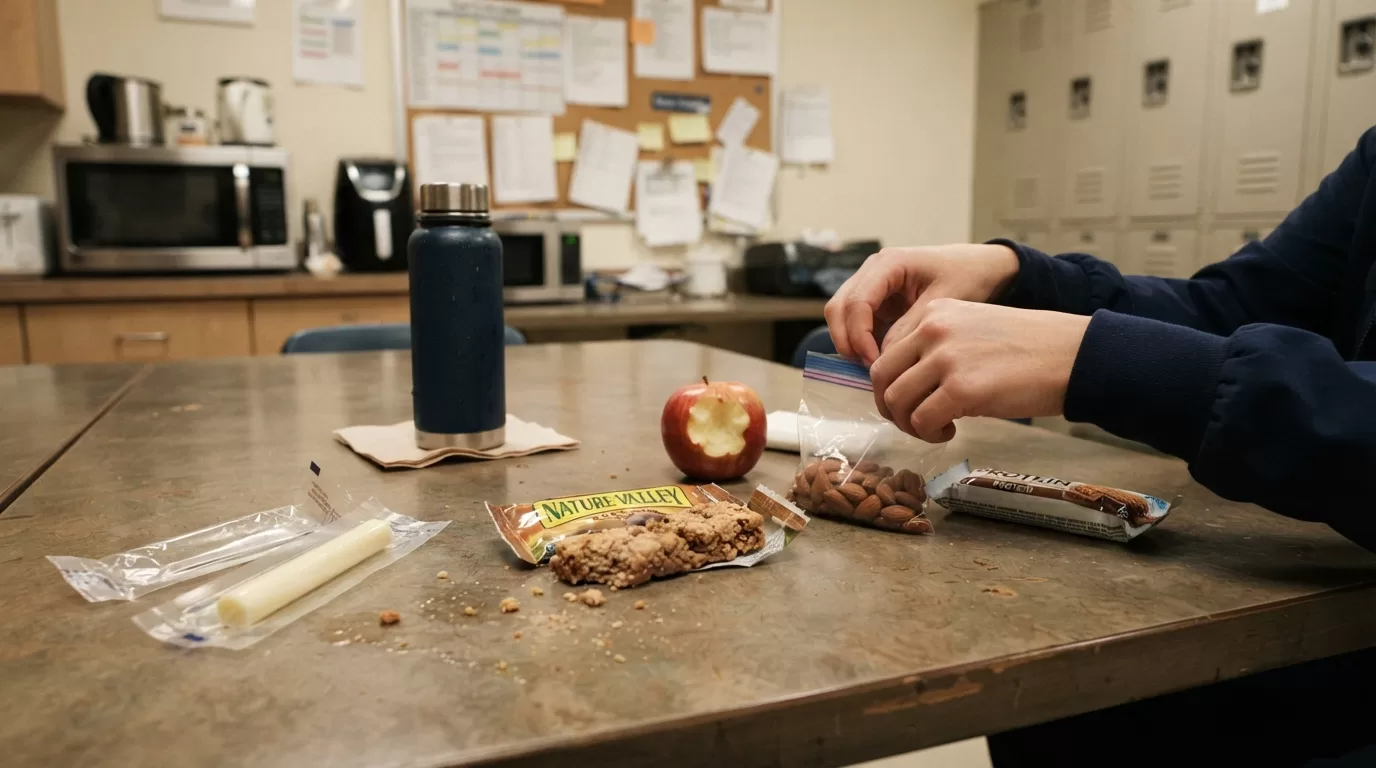
Let's be honest: that beautiful bento box you packed at five this morning? It's been fermenting in your locker since seven-thirty. Your actual fuel source is whatever fits in a scrub pocket, survives being sat on during a code, and doesn't require silverware you don't have time to find.
After polling hundreds of floor nurses, travel RNs, and CNAs across the country, we've built the definitive ranking of shift work snacks. This is science. This is survival. This is what actually makes it to hour eleven.
Welcome to the official nurse snack tier list.
S-Tier: The Invincible Pocket Legends
These are the workhorses. The survivors. The snacks that have seen things and lived to tell about it.
Individually wrapped nuts and seeds. Almonds, cashews, those little sunflower seed packets—these are your pocket-friendly MVPs. They don't melt. They don't leak. You can eat them one-handed while charting. A travel nurse in Phoenix told us she once found a two-week-old almond packet in her backup scrub pants, opened it mid-shift, and it tasted exactly the same. That's S-tier durability.
String cheese (if refrigerated). The caveat matters here. String cheese that makes it to an actual break room fridge is golden. Portable protein, peelable for stress relief, and it takes thirty seconds to eat. But string cheese that lives in your pocket becomes a biohazard by ten a.m. Store it right, and it's top tier. Forget it in your jacket, and you'll discover it three days later as a science experiment.
Protein bars with minimal chocolate. We're talking the dense, slightly chalky ones that taste like compressed oats and determination. They're not winning flavor contests, but they won't turn into soup when you sprint to a rapid response. According to the Bureau of Labor Statistics, registered nurses walk an average of four to five miles per shift—you need fuel that can keep up with that kind of movement without falling apart.
A-Tier: Solid Performers with Minor Flaws
These snacks do the job most days. They're reliable ninety percent of the time, with occasional situational failures.
Apples and firm fruit. An apple is nature's original portable snack. It fits in a pocket, doesn't need prep, and the crunch is oddly satisfying during a frustrating shift. The downside? You need both hands and about three uninterrupted minutes. That's a luxury on some floors. Also, biting into a mealy apple at two a.m. is a morale destroyer.
Pretzels in a sealed bag. Salty, crunchy, and they don't go bad. The challenge is volume—pretzels are loud. If you're trying to sneak a handful at the nurses' station during night shift, everyone within twenty feet knows exactly what you're doing. Still, they deliver quick carbs and don't require refrigeration, which earns them a spot here.
Beef jerky or turkey sticks. High protein, shelf-stable, and tough enough to survive anything your shift throws at them. The trade-off is smell. Eating jerky in a shared break room is a gamble—you're either the hero who brought extra or the person everyone silently resents. Also, some brands require the jaw strength of a determined toddler. Choose wisely.
B-Tier: Functional but Situational
These snacks work under the right conditions. They're not your everyday carry, but they have their moment.
Granola bars with chocolate chips. Here's the thing about granola bars: they're a beautiful idea that falls apart in execution. The ones with chocolate chips turn into pocket lava by noon if you're anywhere south of the Mason-Dixon line or working near a window. Even in climate-controlled units, they crumble into a thousand sticky shards that coat the inside of your scrub pocket like edible glitter. You'll be finding granola dust in that pocket for three wash cycles.
That said, if you can eat one immediately after clocking in—before it has time to melt or disintegrate—it's decent fuel. Just don't trust it past nine a.m.
Crackers with peanut butter or cheese. The little sandwich crackers are a nostalgia win and genuinely filling. The problem is structural integrity. They're fragile. One good sit-down and you're eating cracker dust with a side of regret. If you can stash them in a locker and retrieve them intact, they're B-tier solid. If they're bouncing around in your pocket during a transfer, you're getting crumbs.
Trail mix. This should be higher, but let's address the reality: most trail mixes are sixty percent M&Ms by the time you reach the bottom of the bag. The chocolate melts, the raisins stick to everything, and suddenly your “healthy snack” is a candy delivery system with a few nuts as an alibi. Make your own mix—heavy on nuts and seeds, light on chocolate—and it jumps to A-tier.
C-Tier: High Risk, Moderate Reward
Proceed with caution. These snacks require planning, timing, or a very specific set of circumstances to work.
Bananas. A banana is a perfect snack until the exact moment it isn't. There's a forty-five-minute window where a banana goes from firm and edible to bruised mush that smells like defeat. If you're working a twelve-hour shift, you're racing the clock. Eat it early or accept that you're carrying around a brown, squishy reminder of poor timing. Also, banana peels in scrub pockets are a recipe for disaster.
Yogurt cups. Only viable if you have immediate refrigerator access and a spoon. Room-temperature yogurt is a health code violation waiting to happen. We heard from a CNA in Ohio who forgot a yogurt cup in her bag during a double shift in July. She said the smell haunted her car for two weeks. If you can keep it cold and eat it within an hour of retrieval, it's good protein. Otherwise, it's a gamble.
Rice cakes. Light, crunchy, and they take up minimal space. They also taste like crunchy air and provide approximately twelve calories of energy. You'll need to eat four of them to feel anything resembling fullness, and by then you've spent more time chewing than charting. They're fine as a vehicle for peanut butter, but on their own? C-tier at best.
D-Tier: Why Did You Even Try?
These are the snacks that sounded good at the grocery store and turned into regret by mid-shift.
Chips. Greasy, fragile, and loud. Chips crumble into dust the second you sit down. They leave your hands coated in orange powder or salt, which is less than ideal when you're about to put on gloves for the fiftieth time that shift. If you're working night shift and the break room is silent, opening a bag of chips is basically an announcement that you're not working. Hard pass.
Chocolate bars. Unless you're working in the Arctic, chocolate bars melt. Even the ones that claim to be heat-resistant turn into a gooey mess by mid-morning. You'll end up with chocolate smeared inside your pocket, on your scrubs, and somehow on your stethoscope. It's not worth it. Save the chocolate for post-shift, at home, where you can eat it with dignity.
Anything requiring a fork or reheating. Leftover pasta, yesterday's stir-fry, that quinoa bowl you were excited about—these are not shift snacks. These are meals that require time, utensils, and a microwave that isn't currently being used by three other people. By the time you get access to the break room microwave, your thirty-minute break is down to eight minutes and you're eating cold noodles over the sink. Plan better.
The Real Winner: Hydration and Realistic Expectations
Here's the truth that doesn't fit neatly into a tier list: the best shift work snacks are the ones you actually remember to bring and have time to eat. According to the American Nurses Association, many nurses report skipping breaks entirely during high-acuity shifts, which makes even the best snack useless if it never leaves your locker.
Pair your S-tier snacks with serious hydration. The Centers for Disease Control and Prevention notes that even mild dehydration can impair concentration and physical performance—two things you can't afford to lose on a busy floor. Keep a water bottle within reach, refill it every chance you get, and don't wait until you're lightheaded to take a drink.
And if you're between assignments or considering a travel contract? Pack a variety. What works on a quiet post-op floor might not cut it in a Level I trauma center. Adjust your snack strategy the same way you adjust to a new unit—test, evaluate, and keep what works.
If you're looking for your next nursing contract in a unit where you might actually get a real lunch break—or at least a locker that fits more than string cheese—browse the open RN and LPN positions at Intuites or email contact@intuites.healthcare with your ideal shift structure and snack storage requirements. We'll find you a place where your almonds stay crunchy and your yogurt stays cold.
Sources
Ready for your next nursing assignment?
Browse open nursing jobs across the US — weekly pay, stipends, and a recruiter who reads every application.