
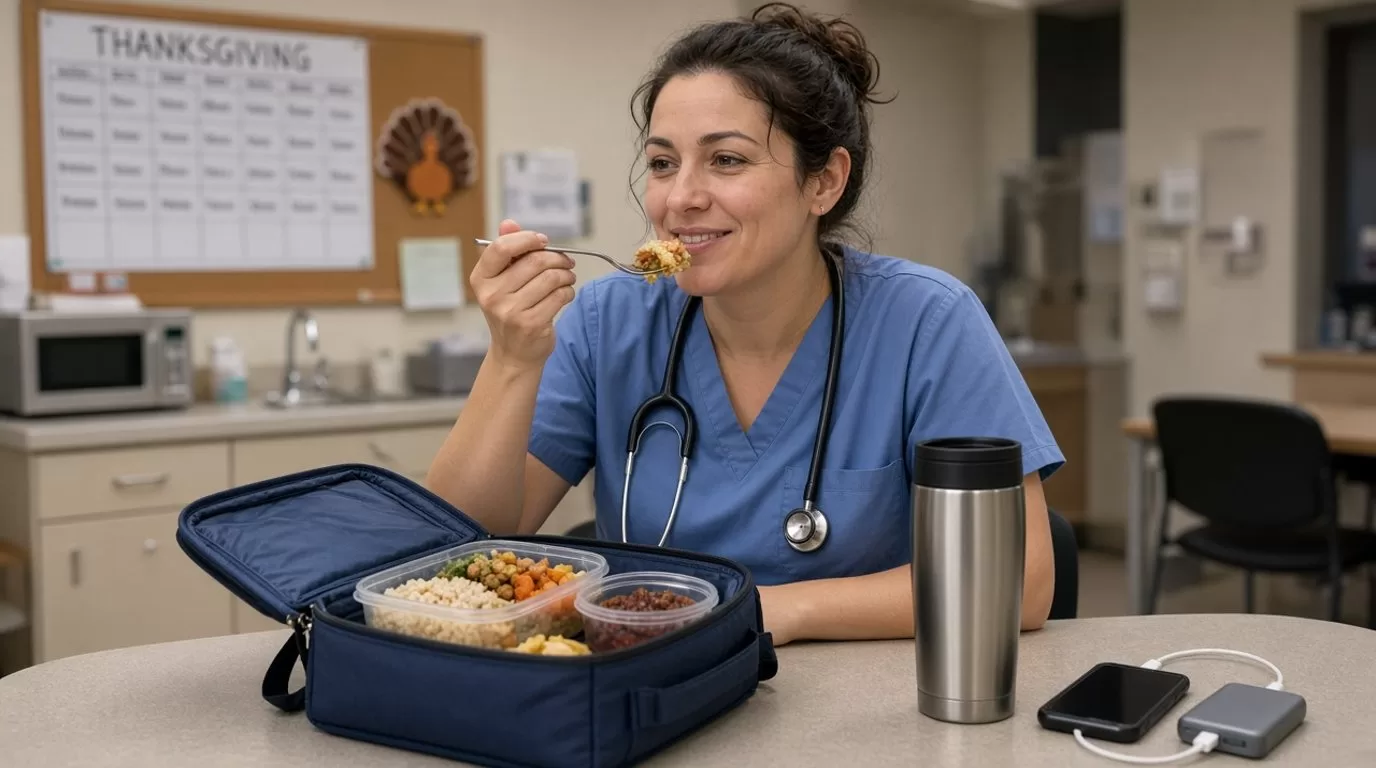
So you drew the short straw. Or maybe you volunteered because someone on your unit has little kids and you figured you'd take one for the team. Either way, you're working Thanksgiving, and while your family group chat fills with photos of golden turkeys and pumpkin pies, you'll be charting vitals and troubleshooting IV pumps.
But here's the thing: the Thanksgiving shift doesn't have to be miserable. With the right prep, a little humor, and a solid starter pack, you can get through the day—maybe even find a few moments of unexpected gratitude. According to the Bureau of Labor Statistics, healthcare practitioners and technical occupations employ over eight million workers in the United States, and a significant portion of them work holidays to keep facilities running. You're part of that essential crew, and you deserve to be comfortable.
This is your playful, practical guide to assembling the ultimate Thanksgiving shift survival kit. Consider it the healthcare humor version of packing for a long trip, except your destination is a twelve-hour shift and your luggage is a tote bag stuffed with snacks.
The Fuel Section: Food That Won't Let You Down
Let's start with the most important category: what you're going to eat. Hospital cafeterias on Thanksgiving are a gamble. Some facilities go all out with turkey dinners for staff. Others... do not. Even if your facility promises a meal, you might be too slammed to get to it before it's gone.
Pack food that travels well, doesn't need reheating if the microwave is occupied for thirty minutes straight, and won't make you feel worse three hours into your shift. Here's what belongs in your bag:
- A real sandwich or wrap—something with protein and vegetables that tastes good cold
- Trail mix or nuts that give you sustained energy without a sugar crash
- Cut vegetables with hummus or another dip in a sealed container
- Cheese sticks or hard-boiled eggs if you have fridge access
- One comfort food item that reminds you of Thanksgiving—a slice of pie, stuffing in a container, cranberry sauce—whatever makes you smile
- A large insulated water bottle, already filled, because you'll forget to hydrate otherwise
Avoid anything that smells overly strong in shared spaces. Your coworkers will thank you. And if you're working a night shift, pack breakfast foods too—you'll want something decent at three in the morning when the vending machine's remaining options are stale crackers and despair.
The Tech Arsenal: Charged and Ready
Your phone will die. It always does on the days you need it most. Whether you're texting family, looking up a drug interaction, or just scrolling during a rare break, dead battery equals bad day.
Your tech starter pack should include a fully charged phone, a backup portable charger (power bank), and your charging cable. If you use wireless earbuds for quick listening breaks, make sure those are charged too.
Here's the pro move: before you leave for your shift, screenshot or write down important numbers. The unit's main line. The pharmacy extension. Your supervisor's cell. On holidays, hospital IT support runs on skeleton crews, and if the internal directory app goes down or you can't get signal in certain areas, you'll want those numbers accessible offline.
Also consider downloading a couple of podcasts, a playlist, or an audiobook episode for any downtime. Even fifteen minutes of something engaging can reset your mood mid-shift.
The Comfort Kit: Small Things That Make a Big Difference
Twelve hours is a long time to be uncomfortable. The little physical annoyances—cold hands, dry lips, aching feet—compound over a shift until you're just enduring rather than functioning well.
Smart thanksgiving nurse veterans pack a comfort kit. It doesn't have to be elaborate, just intentional:
- Lip balm and hand lotion, because hospital air is drying
- An extra pair of socks if yours get wet or sweaty
- A lightweight cardigan or jacket—hospital thermostats are either arctic or tropical, never just right
- Comfortable shoes you've already broken in (not the day to debut new clogs)
- Pain reliever of choice, in case a headache hits mid-shift
- Mints or gum for a quick refresh
- If you wear them, backup contacts or glasses
These aren't luxuries. They're the difference between getting through your shift and barely surviving it. The American Nurses Association emphasizes self-care as a professional responsibility, not a selfish indulgence, and that includes the small acts that maintain your physical comfort during long shifts.
The Mental Game: Strategies for the Long Haul
The hardest part of working Thanksgiving isn't usually the work itself—it's the emotional weight of missing out. Seeing holiday shift memes on social media can be funny and validating, but they can also amplify the feeling that you're sacrificing while everyone else celebrates.
Reframe it. You're not missing Thanksgiving; you're having a different version of it. You're part of a team keeping people safe and cared for on a day when they might be scared, in pain, or alone. That's not nothing.
Pack a mental game plan too:
Set micro-goals throughout your shift. “I'll make it to lunch.” Then, “I'll make it to 3 p.m.” Breaking twelve hours into smaller chunks makes it manageable. Celebrate the small wins—a successfully placed difficult IV, a patient who finally smiled, an admit that went smoothly.
Connect with your coworkers. You're all in this together, and that shared experience builds camaraderie. Some units do potluck snacks or a quick toast at shift change. If your unit doesn't have a tradition, start one. Even five minutes of group venting or laughing can lighten the mood.
Give yourself permission to feel however you feel. It's okay to be a little sad about missing family time. It's also okay to be totally fine with it, or even relieved to skip family drama. Healthcare humor often comes from acknowledging the complicated, mixed emotions of the job.
The ‘Just in Case’ Essentials
Every experienced clinician has a mental list of “things I wish I'd brought that one time.” Here's the collective wisdom for Thanksgiving specifically:
An extra scrub top. Holidays bring unpredictable moments, and you don't want to spend eight hours in a stained shirt.
Cash or a loaded payment app. If the cafeteria is cash-only for the holiday or the card reader goes down, you'll still be able to get coffee.
A pen that works. Obvious, but how many times have you grabbed one that's dead? Bring two.
Something to do if it's slow. A crossword, a Kindle, knitting—whatever your version of a low-key activity is. Some Thanksgiving shifts are slammed; others are eerily quiet. Be ready for both.
A mindset of flexibility. Plans will change. Patients will surprise you. The turkey dinner promised for 2 p.m. might arrive at 4:30 p.m. Roll with it. Getting frustrated won't change it, and adaptability is a survival skill in healthcare.
The Gratitude Moment (Yes, Really)
This might sound cheesy in an article full of practical packing lists and healthcare humor, but bear with it: take thirty seconds during your shift to notice something you're genuinely grateful for. Not in a forced, toxic-positivity way, but in a real, grounded way.
Maybe it's a coworker who made you laugh. Maybe it's a patient who said thank you. Maybe it's the fact that your shoes didn't give you blisters today. Maybe it's just that you have a job, benefits, and skills that keep you employed.
The National Center for Biotechnology Information has published research showing that gratitude practices can reduce burnout and improve psychological well-being among healthcare workers. It doesn't erase the hard parts, but it can provide a small counterbalance.
You don't have to Instagram it or announce it. Just notice it. That's your Thanksgiving moment, right there in the middle of vitals and call lights.
After the Shift: The Real Reward
When your Thanksgiving shift finally ends, you've earned something most people don't get: leftover turkey at discount prices, the quiet satisfaction of a job completed, and probably holiday pay or a comp day, depending on your facility's policies.
Give yourself a little grace on the drive home. If you're too tired to feel triumphant, that's normal. If you feel emotional, that's normal too. Working holidays is hard, even when you do it willingly.
Plan something small but nice for yourself in the days after. A favorite meal. A long sleep. A walk outside. A video call with the people you missed. The best part of working Thanksgiving is that you can celebrate it later, on your own terms, without the pressure of the actual day.
And next year? Well, next year you'll have this starter pack ready to go. You'll know what works, what to skip, and how to make the best of a holiday shift. That's the real takeaway: every shift teaches you something, even the ones that fall on Thanksgiving.
If you're a travel nurse or per diem clinician weighing contracts for the holiday season, reviewing assignments that offer holiday incentives can make a real difference. Email contact@intuites.healthcare with questions about Thanksgiving and winter holiday staffing options—rates, locations, and shift structures vary widely, and finding the right fit matters.
Sources
Ready for your next healthcare assignment?
Browse open healthcare jobs across the US — weekly pay, stipends, and a recruiter who reads every application.