
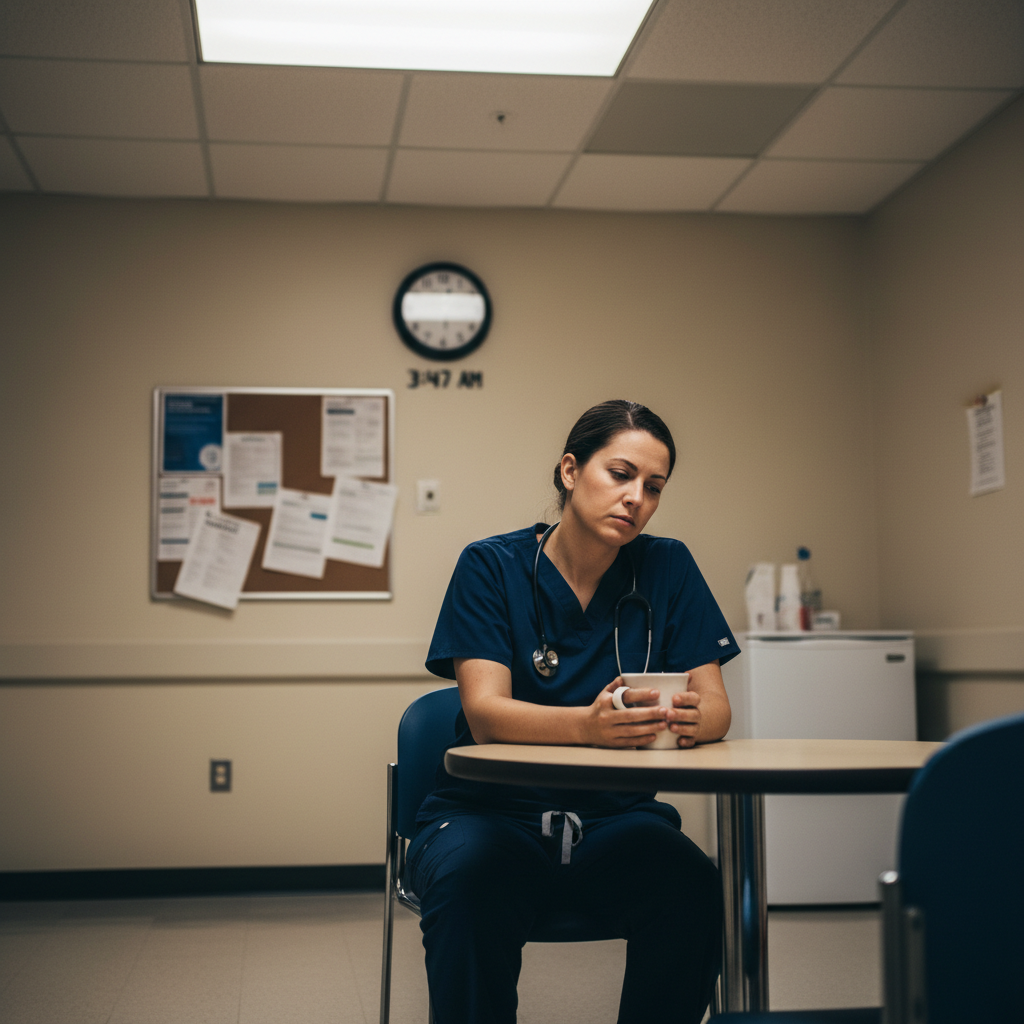
It was a Tuesday night. Three hours into a twelve-hour shift. I was standing at the med cart, scanning a patient's wristband for the fourth time because I kept forgetting what I'd already checked.
Not because the EMR glitched. Not because I was interrupted.
Because I couldn't hold a single thought for more than six seconds.
I remember looking down at my hands — steady, competent, doing exactly what they'd done a thousand times before — and feeling absolutely nothing. Not tired. Not stressed. Just... absent. And that's when I knew. This wasn't a bad shift. This was nurse burnout admission I'd been avoiding for months.
The Moment You Stop Recognizing Yourself
Burnout doesn't always announce itself with tears in the supply closet or a dramatic exit. For me, it was quieter. More insidious.
I stopped listening to music on my commute. Stopped texting back friends. Stopped caring whether I ate lunch. I told myself I was just busy, just focused, just getting through a rough patch. But the truth was simpler and harder: I wasn't okay, and I'd known it for weeks.
The specific moment of reckoning came when a patient's daughter thanked me — genuinely, warmly — for taking time to explain her mom's new medication. And I felt nothing. Not satisfaction. Not connection. Just a hollow awareness that I was performing empathy instead of feeling it.
That's when the nurse burnout admission became unavoidable. I wasn't just tired. I was disappearing.
What Asking for Help Actually Looked Like
I didn't walk into my manager's office the next day and deliver some eloquent speech about clinician mental health. I didn't have a plan or a list of solutions.
What I did: I called our Employee Assistance Program hotline during my lunch break two days later. I sat in my car and said, “I think I need to talk to someone.”
The intake coordinator asked three questions, scheduled me with a counselor for that Thursday, and reminded me the first six sessions were completely confidential and free. No approval needed. No report to my employer unless I chose to share.
Here's what I wish someone had told me earlier:
- EAP services are separate from your employer. They don't report back unless you're in danger or request coordination for accommodations.
- Most programs offer 3-8 free sessions per issue, per year. You can use them for burnout, grief, financial stress, family conflict — anything affecting your wellbeing.
- You don't need to be in crisis to call. Asking for help when you're struggling is exactly the right time, not too early.
- If you're in immediate distress, 988 is the national crisis line — call or text anytime, and it's specifically trained for mental health support.
That first session wasn't magic. I cried more than I talked. But I left with one concrete thing: permission to admit this was real.
The Small Shifts That Followed
I didn't quit my job or take a month off or move across the country. What changed was smaller and, honestly, harder.
I started saying no. To extra shifts. To committee meetings. To the guilt that came with both.
I talked to my charge nurse about nursing wellbeing — not as a formal meeting, just a honest conversation during downtime. She admitted she'd noticed I seemed “flat” lately and asked if there was anything the team could do. We adjusted my schedule so I had two consecutive days off instead of scattered singles. It wasn't a cure, but it was something.
I also did the uncomfortable thing: I told two coworkers I trusted that I was struggling. Not for advice. Just to stop pretending. One of them said, “Yeah, I could tell.” The other said, “I've been there. It gets better, but you have to let people help.”
Asking for help as a nurse feels counterintuitive. We're the ones who help. We're the ones who hold it together. But clinician mental health isn't a luxury or a sign you're not cut out for this work. It's a requirement for doing this work sustainably.
What I Know Now That I Didn't Then
Burnout doesn't mean you're weak or bad at your job. It means you've been running on empty long enough that your body and mind are forcing a reckoning.
The nurse burnout admission — saying it out loud, to yourself and to someone else — is the hardest part. Everything after that is just logistics. Scheduling the appointment. Adjusting the schedule. Letting someone cover your shift without apologizing seventeen times.
I'm not going to tell you I'm “healed” or that everything is perfect now. Some days are still hard. Some shifts still feel long. But I'm present again. I feel things again. And when a patient's family thanks me, I can receive it instead of just performing the smile.
If you're reading this and recognizing yourself — the numbness, the forgetting, the going-through-the-motions — please hear this: You're not alone. You're not failing. And asking for help isn't the end of your nursing career. It's how you protect it. 🤍
You Don't Have to Carry This Alone
At Intuites Healthcare Staffing, we work with nurses, CNAs, and LPNs every day who are navigating burnout, looking for better environments, or simply trying to find a role that fits their life right now. If you're thinking about a change — or just need someone to talk through your options with zero pressure — our recruiting team is here.
Reach out anytime at contact@intuites.healthcare or visit intuites.healthcare. We're not here to sell you a job. We're here to help you find work that supports your wellbeing, not just your résumé. ✨
#NurseBurnout #ClinicianMentalHealth #NursingWellbeing #AskingForHelp #HealthcareWorkers #RNLife #NursesOfInstagram #MentalHealthMatters #BurnoutRecovery #NurseSupport #SelfCareForNurses #EAPResources #988Lifeline #HealthcareBurnout #NursingCommunity
Looking for a healthcare team that truly sees your value?
The Intuites Recruiting Team is here to listen, support your career, and connect you with roles across the USA — when you're ready.