
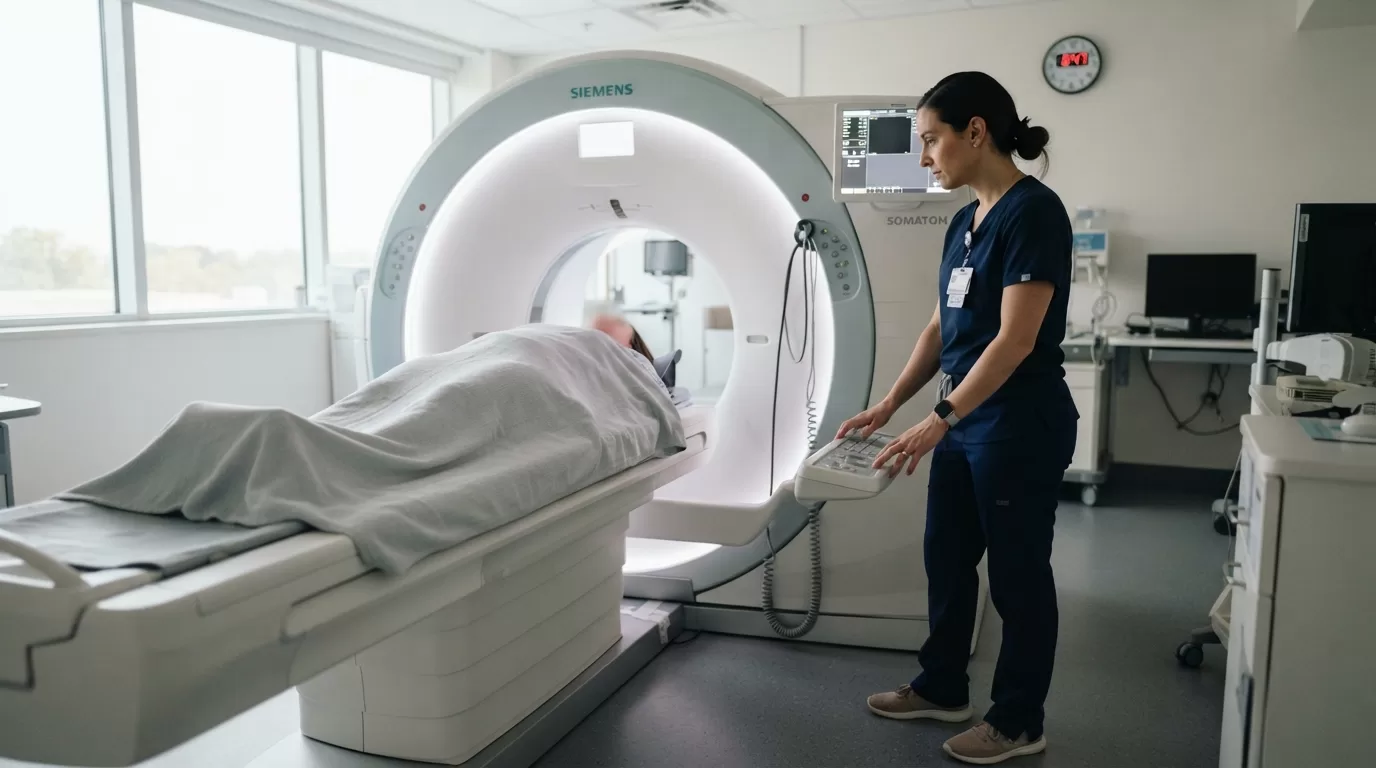
If you're scrolling through rad tech job boards in late 2026, you've probably noticed something different: a sudden surge of weekend-only positions. Not traditional full-time roles with rotating weekends. Not PRN fill-in shifts. But structured contracts that ask you to work Saturday and Sunday — and only Saturday and Sunday — for premium pay that often rivals or beats a standard 40-hour week.
This isn't a niche experiment anymore. Hospitals, imaging centers, and urgent care networks from Phoenix to Charlotte are actively recruiting weekend rad tech staff as a core scheduling strategy. The model is reshaping how diagnostic imaging departments think about coverage, and it's creating opportunities that didn't exist even six months ago.
Here's what's driving the boom, what the contracts actually look like, and how to evaluate whether a weekend-only imaging role makes sense for your career right now.
Why Facilities Are Building Weekend-Only Imaging Teams
The weekend rad tech hiring wave stems from three converging pressures that hit critical mass in 2026. First, volume. According to the Bureau of Labor Statistics, radiologic and MRI technologist employment is projected to grow 6 percent from 2022 to 2032, faster than the average for all occupations. But weekend imaging demand has grown even faster — driven by urgent care expansion, same-day outpatient procedures, and patients who can't take weekday time off work.
Second, labor cost control. When a hospital schedules a full-time rad tech to cover weekends as part of a rotating schedule, every hour beyond 40 in a week triggers time-and-a-half overtime under the Fair Labor Standards Act. A dedicated weekend-only tech working 24 hours over two 12-hour shifts costs the facility straight-time wages plus a weekend differential — but no overtime multiplier. Even with a generous differential, the math often works out cheaper than overtime for existing staff.
Third, retention. Burnout among imaging staff spiked during the pandemic and hasn't fully receded. The American Society of Radiologic Technologists reported in 2024 that irregular scheduling and mandatory weekends were top drivers of technologist turnover. By hiring dedicated weekend staff, facilities can offer their Monday-through-Friday teams predictable schedules with no weekend rotation — a retention tool that costs less than replacing experienced techs.
What Weekend Rad Tech Contracts Actually Offer
Not all weekend-only roles are created equal, but a pattern has emerged across the market in late 2026. Here's what competitive contracts typically include:
- Shift structure: Two 12-hour shifts (Saturday and Sunday), totaling 24 hours per week. Some facilities offer 10-hour shifts (20 hours total) or allow you to pick up Friday evening as an optional third shift.
- Hourly differentials: Weekend premiums now average $15 to $22 more per hour than the facility's base weekday rate for the same modality. CT and MRI roles command the highest differentials due to tighter labor supply. General X-ray and mammography weekend roles typically sit at the lower end of that range.
- Benefits eligibility: Many hospitals classify weekend-only staff as full-time (since 24 hours over two days meets the threshold in some benefits plans) and offer health insurance, 401(k) match, and PTO accrual. Others classify you as part-time but allow benefits enrollment if you commit to a minimum number of weekends per quarter.
- Contract vs. permanent: Travel staffing agencies are placing rad techs in 13-week weekend-only assignments with housing stipends (if the assignment qualifies under IRS rules — meaning you maintain a tax home more than 50 miles away). Direct-hire weekend roles are increasingly permanent positions with the same job security as weekday staff.
A concrete example: a Phoenix-area hospital system posted a weekend-only CT tech role in October 2026 at $52 per hour for Saturday and Sunday 7 a.m. to 7 p.m. shifts, plus full benefits and four weeks of PTO annually. That's $62,400 in gross annual pay for 24 hours of work per week — comparable to what many full-time techs earn for 40 hours in that market.
Which Modalities See the Highest Demand
Weekend imaging volume isn't evenly distributed across modalities, and neither is weekend hiring. Here's where facilities are concentrating their weekend-only recruitment in late 2026:
CT technologists top the list. Emergency departments run seven days a week, and CT is the workhorse modality for trauma, stroke protocol, and acute abdomen cases. Hospitals need weekend CT coverage at the same staffing levels as weekdays, but many legacy schedules left weekends understaffed. Weekend CT roles now represent about 40 percent of all weekend-only imaging job postings.
MRI technologists follow closely. Outpatient MRI centers — especially those in retail or standalone locations — have extended weekend hours to capture patients who work Monday through Friday. The same tech shortage that drives MRI travel rates above $3,000 per week is pushing weekend differentials into the $20-plus-per-hour range in competitive markets.
General radiography (X-ray) weekend roles concentrate in urgent care networks and hospital emergency departments. These positions often require ARRT certification in radiography and BLS, with no advanced modality cross-training needed, making them accessible to newer grads.
Ultrasound and mammography weekend hiring is more sporadic. Some breast imaging centers offer Saturday-only screening mammography (rarely Sunday), and a few hospitals staff weekend ultrasound for OB triage and limited abdominal studies. These roles are less common but can offer strong differentials when posted.
Nuclear medicine and interventional weekend-only roles remain rare. Most facilities handle these modalities with on-call staffing or limited weekend scheduling rather than dedicated shifts.
Tax and Compact License Considerations
If you're considering a travel contract for a weekend-only rad tech assignment, two details matter more than most job ads explain.
First, IRS housing stipend eligibility. Travel contracts often advertise tax-free housing stipends and per diems, but those benefits require you to maintain a tax home — a primary residence where you pay rent or a mortgage, return to regularly, and incur duplicate living expenses while on assignment. The IRS doesn't care whether you work weekends or weekdays; it cares whether the assignment is temporary and far enough from your tax home (generally 50-plus miles) to justify duplicate expenses. If you live in the same metro area as the assignment, the stipend isn't tax-free, and agencies should pay it as taxable wages. Many don't explain this clearly.
Second, multistate licensure. As of late 2026, radiologic technologists are not covered by an interstate compact like nurses (the Nurse Licensure Compact covers RNs and LPNs in 41 states). Every state where you work requires a separate state license or permit. Some states have streamlined endorsement for ARRT-certified techs, but processing times vary. If you're eyeing weekend travel contracts in multiple states, budget time and fees for each license application.
How to Evaluate Whether a Weekend Role Fits Your Life
Premium pay sounds great on paper, but weekend-only work isn't for everyone. Here are the questions to ask before you commit.
Do you have weekday obligations that make weekend work ideal? Parents with school-age kids, students enrolled in weekday classes, or techs caring for family members often find weekend-only schedules solve conflicts that rotating weekends don't. If your life is already built around a Monday-through-Friday structure, two weekend shifts might integrate smoothly.
Can you sustain 12-hour shifts without burning out? Twelve-hour imaging shifts are physically demanding — standing, positioning patients, moving equipment. Two in a row means limited recovery time. If you've never worked 12-hour shifts, consider whether your body and focus can handle the pace before signing a long-term contract.
What's your social and family calendar like? Weekend-only work means you'll miss Saturday weddings, Sunday brunches, and most social events that happen outside of Friday night and weekday evenings. Some techs thrive on the trade-off (five free weekdays beats two free weekend days). Others find the isolation harder than expected.
Does the facility staff weekends adequately? A weekend shift at a hospital with full radiology, lab, and clinical support feels very different from a weekend shift at an outpatient center where you're the only imaging tech on-site and physician coverage is thin. Ask during the interview how many staff work weekends, what the patient volume looks like, and who you call if equipment fails or a patient codes.
Is the pay genuinely competitive once you account for hours? Divide total annual pay by annual hours worked and compare it to full-time roles in your market. A weekend-only job paying $62,400 for 1,248 hours per year (24 hours/week × 52 weeks) equals $50 per hour. If full-time roles in your area pay $45 per hour for 2,080 hours ($93,600 annually), the weekend role pays more per hour but significantly less per year. Know which comparison matters to your financial goals.
Where Weekend Imaging Jobs Are Concentrating Right Now
Geographic demand for weekend rad tech roles in late 2026 clusters around Sun Belt metro areas with population growth, aging demographics, and expanding urgent care networks. Phoenix, Las Vegas, Austin, Charlotte, and Tampa have posted the highest volume of weekend-only imaging contracts since September. These markets also tend to offer higher base pay and differentials due to tight labor supply.
Rural and critical-access hospitals in the Midwest and Southeast are posting weekend roles too, often with sign-on bonuses or loan repayment assistance to attract techs willing to serve underserved areas. These positions may offer lower hourly rates but sometimes include housing stipends or relocation packages that improve total compensation.
West Coast markets — particularly California — have seen fewer dedicated weekend-only postings, likely because California's overtime rules (daily overtime after 8 hours, not just weekly after 40) make the cost-saving logic less attractive to facilities. When California hospitals do post weekend imaging roles, they're more often PRN or per-diem rather than structured contracts.
What This Means for the Imaging Job Market in 2027
The weekend rad tech boom isn't a short-term staffing fix. It's a structural shift in how healthcare organizations think about imaging coverage. Facilities that have successfully hired weekend-only teams are now exploring the model for evening shifts, holiday-only coverage, and other non-traditional schedules. For imaging professionals, that means more options — but also more complexity in comparing offers.
If you're an experienced CT or MRI tech accustomed to full-time roles with rotating weekends, a weekend-only contract might let you work fewer hours for similar or better annual pay, with predictable days off. If you're a newer grad looking to build skills quickly, a weekend role at a high-volume ER might offer more hands-on experience in two shifts than a weekday outpatient job provides in five.
The key is matching the structure to your goals. Weekend-only imaging work is no longer a niche or last resort — it's a legitimate career path with competitive pay, benefits, and stability.
If you're ready to explore weekend rad tech jobs or want to discuss whether a weekend-only contract fits your situation, email our imaging placement team at contact@intuites.healthcare with “weekend imaging” in the subject line, and we'll walk through current openings in your modality and preferred markets.
Sources
Ready for your next imaging assignment?
Browse open imaging jobs across the US — weekly pay, stipends, and a recruiter who reads every application.