
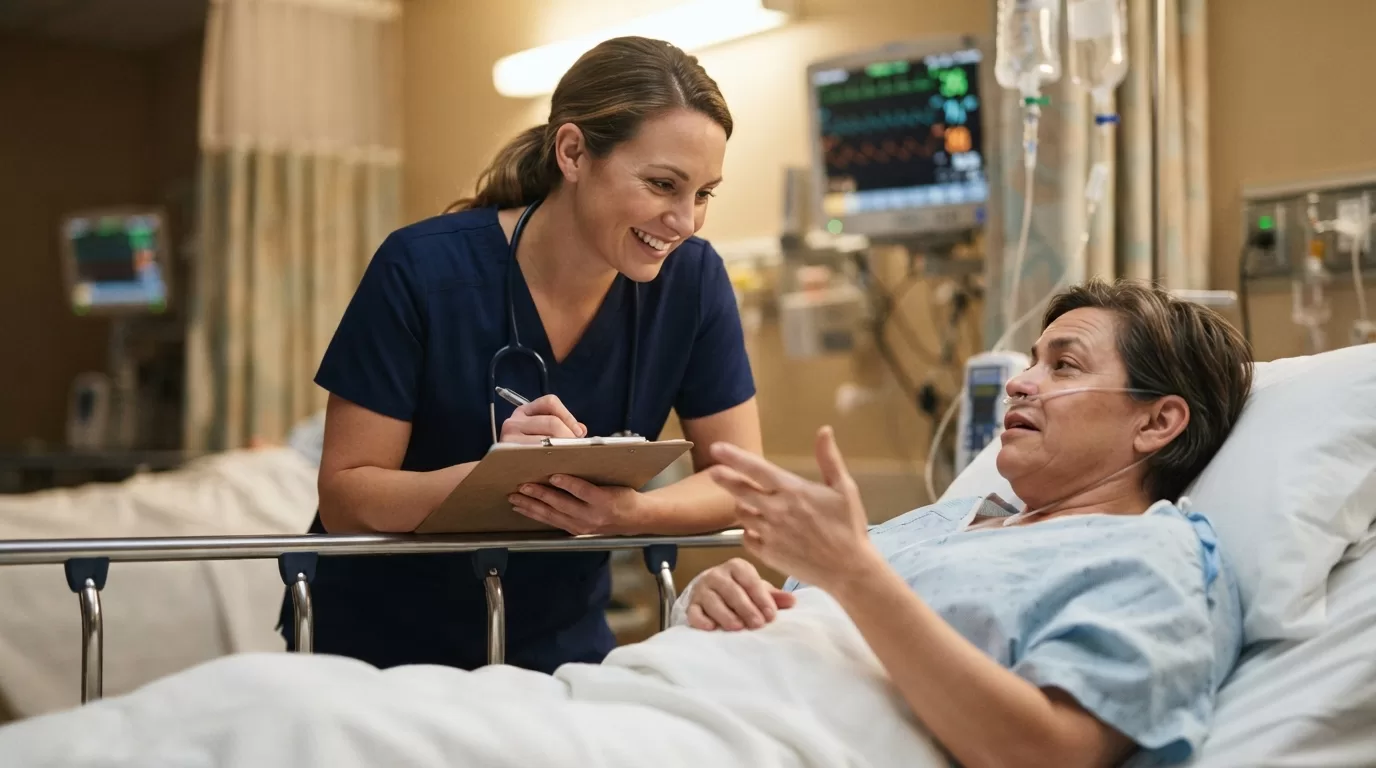
If you have ever worked in a post-anesthesia care unit, you know the script. Patients wake up, blink at the ceiling, and within seconds they are either crying, proposing marriage, or asking if the surgery revealed that they are secretly a robot. It is one of the most unpredictable — and honestly, one of the funniest — parts of perioperative nursing.
Emergence delirium is real, it is common, and it creates moments that become legend in break rooms across the country. According to the American Society of PeriAnesthesia Nurses, up to one in four adult patients experience some form of confusion or agitation as they wake from general anesthesia. Most of it resolves quickly and harmlessly, but in those few minutes, you hear things that no amount of nursing school could prepare you for.
This article is a love letter to every PACU nurse who has kept a straight face while a patient insisted they invented velcro, and to every LPN and CNA who helped redirect a post-op patient convinced they were late for a meeting with the President. These stories are HIPAA-safe, stripped of identifying details, and shared with the deep affection we all feel for the people we care for — even when they are hilariously, temporarily out of their minds.
Why Anesthesia Makes People Say the Wildest Things
Before we dive into the stories, it helps to understand what is happening in the brain. Anesthetic agents — particularly volatile gases like sevoflurane and intravenous drugs like propofol — work by suppressing activity in the central nervous system. As those agents wear off, the brain does not wake up all at once. Different regions come back online at different speeds, and the result is a kind of cognitive patchwork.
The prefrontal cortex, which handles impulse control and social filters, is one of the last areas to fully recover. Meanwhile, the limbic system and other emotion-processing centers may already be active. That is why patients can be intensely emotional, say things they would never say while fully conscious, or react to internal thoughts as if they were real external events.
The clinical term is emergence delirium, and it is more common after certain types of surgery, in older adults, and in patients who received longer anesthesia exposure. The American Society of Anesthesiologists notes that it usually resolves within fifteen to thirty minutes and rarely indicates a serious problem. But in that window, you are going to hear some unforgettable sentences.
Classic Categories of Post-Anesthesia Declarations
Over the years, PACU humor has revealed a few recurring themes. Here are the greatest hits, based on real stories shared by nurses across the country.
The Oversharer
These patients wake up and immediately confess things they have never told another soul. One nurse reported a patient who woke up and said, “I have been lying about my age for twelve years and my husband does not know.” Another patient opened her eyes and announced, “I have never actually liked my mother-in-law's casserole, but I eat it every Sunday.”
The filter is gone. Every secret, every grudge, every weird habit — it all comes tumbling out. And you, the nurse, become the unwitting keeper of these truths.
The Marriage Proposal
This one is so common it practically deserves its own checkbox on the PACU flowsheet. Patients wake up, see a nurse, and decide that nurse is the most beautiful, kindest, most perfect person they have ever met. Proposals follow. Sometimes with requests for the nurse's phone number. Sometimes with promises of tropical vacations.
One nurse shared that a patient woke up, grabbed her hand, and said, “Will you marry me? I do not care if you say no, but I need to ask before I forget.” Ten minutes later, he had no memory of the conversation.
The Paranoid Theorist
These patients are convinced something has gone terribly wrong. One patient insisted the surgery team had implanted a tracking chip. Another was certain the IV pole was actually a time machine and kept asking what year it was. A nurse in Texas shared that a patient woke up whispering, “Did you get the secret documents out? Do not let them know I told you.”
It is a reminder that emergence delirium can include genuine fear and confusion, not just humor. These moments require the same gentle reorientation we give to any disoriented patient.
The Overly Confident
Some patients wake up and believe they are invincible. One nurse reported a patient who tried to get out of bed because he was “late for his black belt test.” Another patient, fresh out of a knee arthroscopy, announced she was going to run a marathon that weekend. A CNA in Oregon said a patient woke up, looked at his surgical site, and said, “I do not need stitches. I heal like Wolverine.”
These patients require extra vigilance because confidence and coordination do not return at the same time.
The Profoundly Philosophical
Anesthesia sometimes turns people into accidental poets. One patient woke up and said, “Time is just a sandwich we all take bites from.” Another asked, “If a tree falls in the hospital, does it make a code blue?” A nurse in Pennsylvania shared that a patient opened his eyes and whispered, “We are all just soft tacos in the burrito of life.”
No one knows what these things mean. But they sound important.
Real Stories from the PACU Frontlines
Here are some of the best anonymous submissions we have collected from nurses over the past year. Every one is real, every one is HIPAA-safe, and every one made someone laugh so hard they had to step out of the unit for a minute.
- A patient woke up, looked at the ceiling, and said, “I thought heaven would have better lighting.”
- A patient asked the nurse if the surgery had revealed that she was actually a mermaid, because “it would explain so much.”
- A patient tried to order a pizza from the anesthesiologist, insisting he looked like the guy from the pizza commercial.
- A patient woke up crying because she thought she had missed her high school prom. She was sixty-two.
- A patient asked if the surgery was over, and when the nurse said yes, he replied, “Good, because I have been holding in a fart for three hours.”
- A patient announced she could now speak to animals and wanted to start with the therapy dog down the hall.
- A patient woke up and immediately asked the nurse, “Did I say anything weird?” The nurse said no. The patient said, “Good, because I had a plan and I did not want to ruin it.”
- A patient insisted the anesthesia had given him the ability to see the future, then predicted the nurse would have a good day. She did.
When Post-Anesthesia Confusion Is More Than Funny
While most emergence delirium is harmless and temporary, it is important to recognize when confusion signals a problem. Prolonged disorientation, violent agitation, or neurological changes require immediate assessment. The American Society of Anesthesiologists recommends that PACU nurses monitor for signs of postoperative delirium, particularly in older adults, and document any unusual behavior that persists beyond the initial recovery period.
That documentation is not just for the chart — it helps anesthesia teams plan safer care for future procedures. If a patient had severe emergence agitation, the anesthesiologist may choose different agents or adjust dosing next time. So even when the moment is funny, it is worth noting in detail.
And for patients who do experience distress during emergence, your calm presence is everything. Reorientation, a gentle voice, and simple reassurance that they are safe and the surgery is over can make all the difference.
Why PACU Humor Matters for Nurse Resilience
Laughter is not just a byproduct of PACU work — it is a survival tool. Perioperative nursing is high-stakes, fast-paced, and emotionally intense. You are managing airways, titrating medications, watching for complications, and comforting patients who are scared, in pain, or deeply confused. The ability to find humor in the absurd moments is what keeps many nurses going.
A 2025 study published in the Journal of PeriAnesthesia Nursing found that nurses who reported sharing humorous stories with colleagues also reported lower rates of burnout and higher job satisfaction. The act of storytelling — especially in a way that is respectful and affectionate toward patients — builds team cohesion and reminds nurses why they chose this work in the first place.
So the next time a patient wakes up and asks if they are on a spaceship, take a breath, smile, and know that this moment will become a story you tell for years. And that story will make another nurse laugh on a hard day, and that laughter will carry them through their shift.
How to Share PACU Stories Safely and Respectfully
If you want to share your own post-anesthesia funny moments, here is how to do it without violating HIPAA or disrespecting your patients.
- Remove all identifying details: no ages, no locations more specific than a state, no physical descriptions, no dates.
- Change the context if needed. If the story is about a specific surgery or condition, make it generic or swap in a different scenario.
- Focus on the humor, not the person. The joke is what they said, not who they are.
- Never share photos, videos, or audio. Even if you think it is funny, it is a HIPAA violation and it is not worth your license.
- Ask yourself: would I be okay if someone shared this story about me? If the answer is no, do not share it.
When done right, these stories celebrate the resilience, vulnerability, and strange beauty of the human body under stress. They are told with love, and they remind us that nursing is as much about witnessing humanity as it is about administering care.
What This All Means for Your Next PACU Shift
Post-anesthesia humor is a gift. It breaks the tension, it bonds your team, and it reminds you that even in the most clinical environments, people are still wonderfully, weirdly human. The next time a patient wakes up and says something completely off-the-wall, let yourself smile. Document it if it is clinically relevant, laugh about it in the break room, and then get back to the serious work of keeping that patient safe.
Because at the end of the day, that is what PACU nursing is: holding space for people at their most vulnerable, their most confused, and sometimes their most hilarious. And doing it with skill, compassion, and just enough humor to keep yourself whole.
If you are looking for your next PACU or perioperative assignment — or if you just want to swap stories with a recruiter who gets it — email contact@intuites.healthcare and let us know what kind of role you are searching for.
Sources
Ready for your next nursing assignment?
Browse open nursing jobs across the US — weekly pay, stipends, and a recruiter who reads every application.